

- India,
- 26-Nov-2025 08:35 AM IST


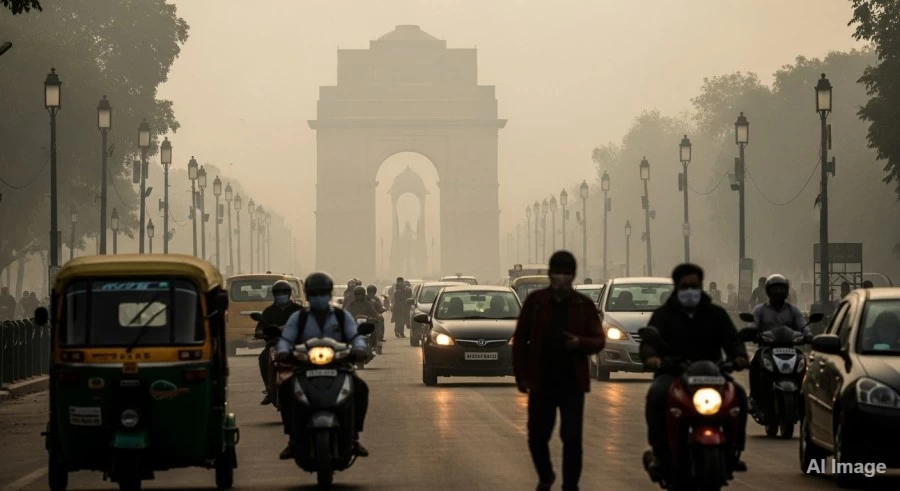
The Delhi-National Capital Region (NCR) and surrounding areas are currently experiencing an alarming and 'hazardous' level of air pollution, a situation that has intensified Notably by Wednesday morning, while the air quality has deteriorated to such an extent that residents are facing severe respiratory distress and discomfort. According to the latest data released by the Central Pollution Control Board (CPCB), the air quality in numerous cities within the region has fallen into the 'severe' to 'hazardous' categories, marking a critical public health crisis.
This pervasive smog and particulate matter in the atmosphere are making it exceedingly difficult for people to breathe normally, leading to widespread concern among the populace and health experts alike. The persistent presence of thick, polluted air underscores the urgent need for effective and sustained intervention to safeguard public health.
Alarming AQI Readings Across Key Cities
The air quality index (AQI) readings from various cities paint a grim picture of the current environmental crisis. As of Wednesday morning, Delhi recorded an average AQI of 389, categorizing its air quality as 'severe'. This level indicates that the air is highly polluted and poses a significant health risk to all residents, particularly those with pre-existing conditions. Even more concerning are the readings from the satellite cities of Noida and Greater Noida,. Where the AQI soared to 409 and 414 respectively, placing them firmly in the 'hazardous' category. Ghaziabad also registered a 'hazardous' AQI of 395, just shy of the 400 mark. Other major cities in the vicinity are also struggling, with Chandigarh reporting a 'severe' AQI of 306 and Meerut at 297, also in the 'severe' bracket. While comparatively better, Dehradun's AQI of 155 still falls into the 'poor' category, indicating unhealthy air for sensitive groups. Experts have unequivocally stated that an AQI level above 400 is extremely dangerous, presenting a life-threatening risk, especially for vulnerable populations such as children, the elderly, and individuals suffering from respiratory ailments.
Government Implements Stricter Measures Under GRAP-3 and GRAP-4
In response to the escalating pollution crisis, authorities have been compelled to take stringent measures to curb the deteriorating air quality. The Commission for Air Quality Management (CAQM) has officially implemented Stage-3 of the Graded Response Action Plan (GRAP), which now incorporates several strict regulations typically associated with GRAP-4. This comprehensive plan is designed to address the various sources. Of pollution and bring about an immediate reduction in airborne pollutants. The implementation of GRAP-3 means that a wide array of activities are now completely prohibited across the NCR. These restrictions primarily target major contributors to air pollution, aiming. To Notably reduce emissions from both industrial and vehicular sources.
Ban on Construction and Old Diesel Vehicles
Among the key measures enforced under the expanded GRAP framework is a complete ban on construction activities within the National Capital Region. This prohibition covers all types of construction and demolition work, which are known to generate substantial amounts of dust and particulate matter, exacerbating air pollution. The objective behind this ban is to eliminate a significant source of airborne pollutants that contribute to the overall AQI. On top of that, the use of old diesel vehicles has also been entirely restricted. This measure targets vehicles that are typically less fuel-efficient and emit higher levels of harmful pollutants, including nitrogen oxides and particulate matter. By removing these older, more polluting vehicles from the roads, authorities aim to improve the vehicular emission profile and contribute to cleaner air. These bans are critical components of the strategy to achieve an immediate and noticeable reduction in pollution levels.
Mandatory Work From Home for Private Offices
A significant and unprecedented step taken by the Delhi government to combat the severe pollution is the mandatory implementation of work from home (WFH) for 50 percent of employees in all private offices. This directive marks a departure from previous approaches, where only advisories were issued to the private sector regarding WFH. For the first time, district magistrates, police, and local bodies. Have been explicitly instructed to ensure strict compliance with this order. The primary goal of this mandatory WFH policy is to drastically reduce the number of vehicles on the roads, thereby cutting down vehicular emissions, which are a major contributor to air pollution in the city. By reducing daily commutes, the government hopes to alleviate traffic congestion and the associated exhaust fumes, contributing to a tangible improvement in air quality. This move reflects the gravity of the situation and the government's resolve to employ more forceful measures to protect public health.
Crucial Health Advisories for Residents
Given the perilous state of the air quality, the pollution control board has issued critical health advisories to the public, urging them to take necessary precautions. Residents are strongly advised to wear N95 masks whenever they step out of their homes. These masks are designed to filter out fine particulate matter and offer a significant level of protection against inhaling harmful pollutants. Plus, people are encouraged to avoid unnecessary travel, especially during peak pollution hours, to minimize exposure to the toxic air, while special recommendations have been made for vulnerable groups: children and the elderly are advised to remain indoors completely to shield themselves from the severe outdoor pollution. On top of that, the use of air purifiers equipped with HEPA filters is recommended for indoor environments, particularly for these sensitive populations, to ensure that the air inside homes remains as clean as possible. These advisories underscore the severe health risks posed by the current air quality and the importance of personal protective measures.
