

- India,
- 08-Nov-2025 09:40 PM IST


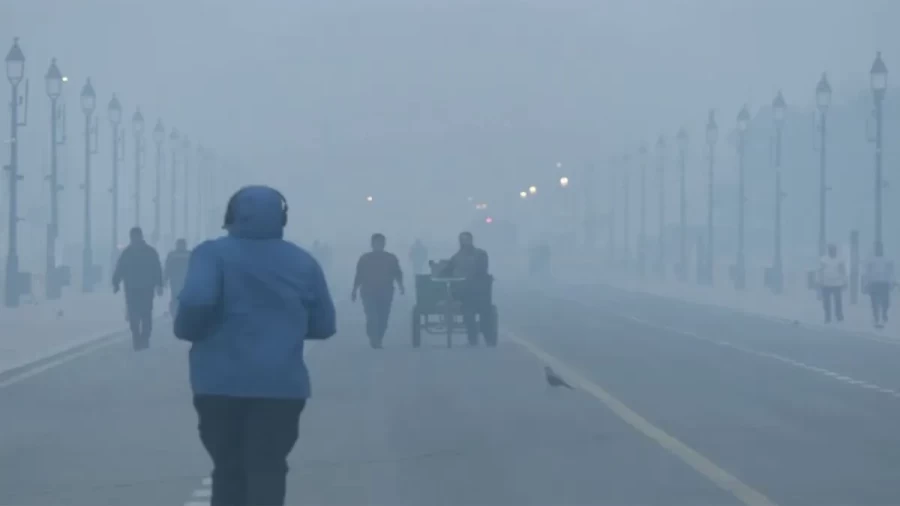
As winter sets in, Delhi is once again grappling with a severe air pollution crisis, with the national capital's air turning 'toxic' and causing residents to 'choke'. On Saturday, the Air Quality Index (AQI) in several parts of Delhi surged past the 400-mark, pushing the city into the 'severe' category. This critical situation has placed Delhi in the 'red zone', solidifying its position as one of the most polluted cities in the country.
Rapid Deterioration in Air Quality
Delhi's air quality witnessed a rapid deterioration on Saturday. According to data from the Central Pollution Control Board (CPCB), the city's 24-hour average AQI, measured at 4 PM, stood at 361. This figure, as per a report by news agency PTI, ranks Delhi as the second most polluted city across the country. On Friday, the city had recorded an AQI of 322, which was the highest in the country at that time. The significant jump in AQI within a mere 24 hours highlights the alarming speed at which the air quality is worsening, raising serious concerns among public health officials and residents alike.
Key Areas in 'Severe' Category
Among the city's 38 monitoring stations, several areas recorded particularly hazardous pollution levels. As per the CPCB's SAMEER app, Wazirpur registered an AQI of. 420, placing it at the higher end of the 'severe' category. Similarly, Burari recorded an AQI of 418, Vivek Vihar 411, Nehru Nagar 406, Alipur 404, and ITO 402, while all these figures fall within the 401-500 'severe' category, indicating a significant health risk to the residents. People living in these areas are likely to experience respiratory discomfort and other health complications due to the extremely poor air quality.
Impact on National Capital Region (NCR)
Beyond Delhi's borders, cities within the National Capital Region (NCR) are also experiencing the brunt of the deteriorating air quality, with their AQI levels falling into the 'very poor' category. Noida recorded an AQI of 354, while Greater Noida registered 336, and Ghaziabad stood at 339. These figures, ranging from 301-400, classify the air quality in these regions as 'very poor', signifying a concerning level of pollution, while residents in these NCR cities are also susceptible to respiratory issues and other adverse health effects from the persistent smog and particulate matter.
Dominant Pollutants and Dense Fog
On Saturday, PM 2. 5 (Particulate Matter 2. 5) and PM 10 (Particulate Matter 10) were identified as the primary pollutants. These microscopic particles remain suspended in the air and can penetrate deep into the lungs upon inhalation, leading to severe health problems. The high concentration of these pollutants contributed to a dense fog blanketing the city, Notably reducing visibility and creating a hazy atmosphere even during daylight hours. This condition not only poses health risks but also disrupts traffic and daily activities, making commutes difficult and outdoor activities hazardous.
Contributing Factors to Pollution
The Decision Support System (DSS) for air quality forecasting estimated that stubble burning accounts for approximately 30 percent of Delhi's pollution. This seasonal phenomenon, involving the burning of crop residues in neighboring states, severely impacts Delhi's air quality every year as winter approaches. Also, vehicular emissions contribute 15, while 2 percent to the overall pollution, serving as a significant source of urban air contamination. While other factors like construction activities and industrial emissions also play a role, stubble burning and vehicular emissions are currently the dominant contributors to the city's toxic air.
Understanding AQI Categories
According to the Central Pollution Control Board (CPCB) standards, air quality is categorized to help understand its severity. An AQI between 0-50 is considered "Good", while 51-100 is deemed "Satisfactory", while an AQI between 101-200 falls into the "Moderate" category, and 201-300 is considered "Poor". An AQI ranging from 301-400 is classified as "Very Poor", and anything between 401-500 is labeled "Severe". With several areas in Delhi currently reporting an AQI above 400, the air quality is at a. "Severe" level, which can affect even healthy individuals and is extremely dangerous for those with pre-existing health conditions.
Future Outlook and Persistent Challenge
The air quality early warning system for Delhi forecasts that the city's air is unlikely to improve soon, while the AQI is expected to remain in the 'very poor' category in the coming days, meaning residents will continue to face prolonged periods of unhealthy air. Since Diwali, Delhi's air quality has consistently fluctuated between 'poor', 'very poor', and occasionally 'severe', indicating that pollution has become a persistent problem requiring immediate and effective measures. This ongoing situation poses a significant challenge to the health and quality of. Life for Delhi's residents, demanding urgent attention and comprehensive strategies to mitigate the crisis.
