
- India,
- 23-Oct-2026 10:36 AM IST



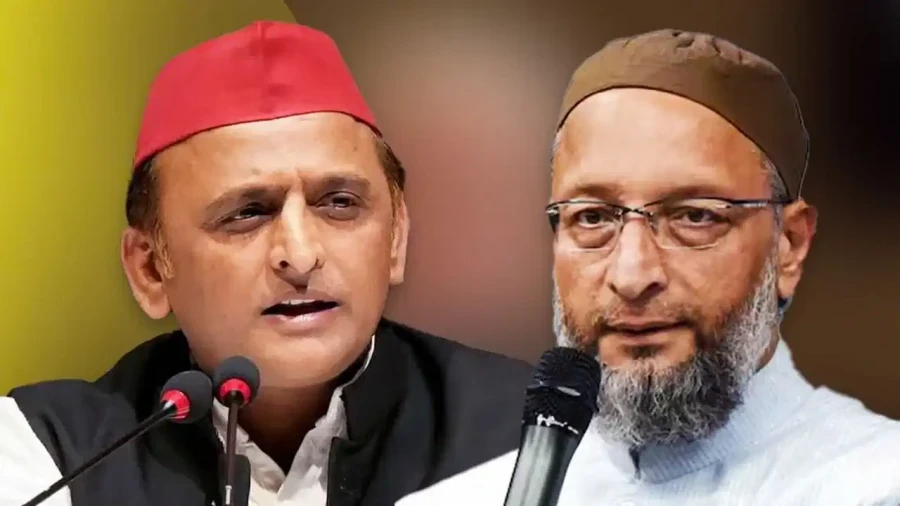
Assembly elections in Uttar Pradesh are still quite far away, but political moves on the chess board have already begun. The recent developments in Rampur aren't merely a story of two leaders visiting a city, but rather a strategic maneuver over claiming Muslim votes, a battle for leadership, and an attempt by various parties to secure and protect their respective spaces in anti-BJP politics, while this entire political stir began on October 18 when All India Majlis-e-Ittehadul Muslimeen chief Asaduddin Owaisi arrived in Rampur, where he raised sharp questions regarding the guardianship of Muslims and highlighted a major political issue.
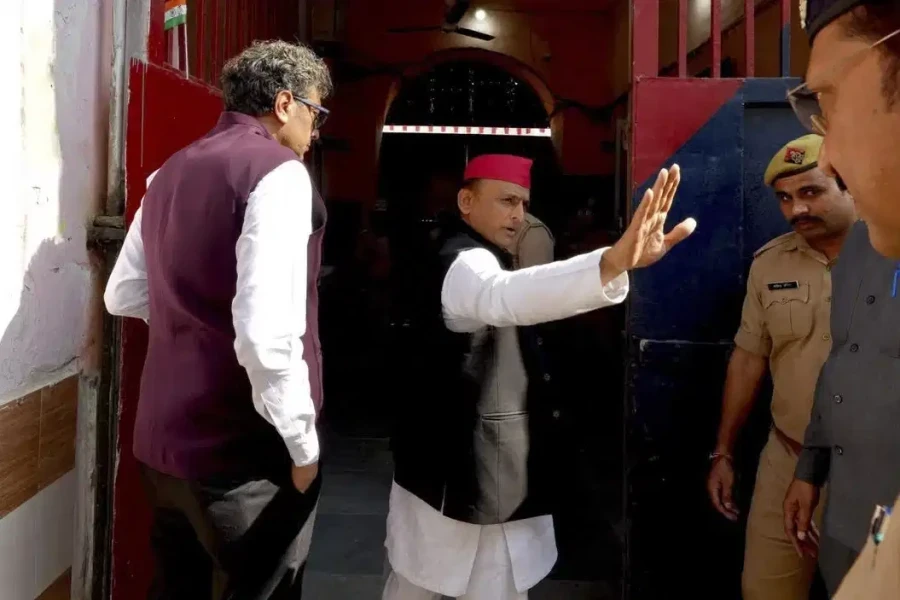
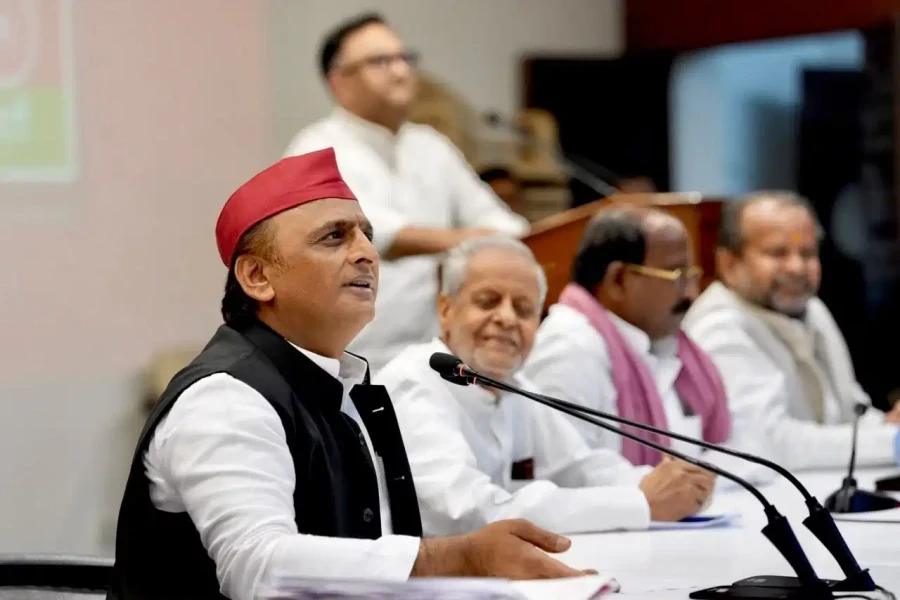
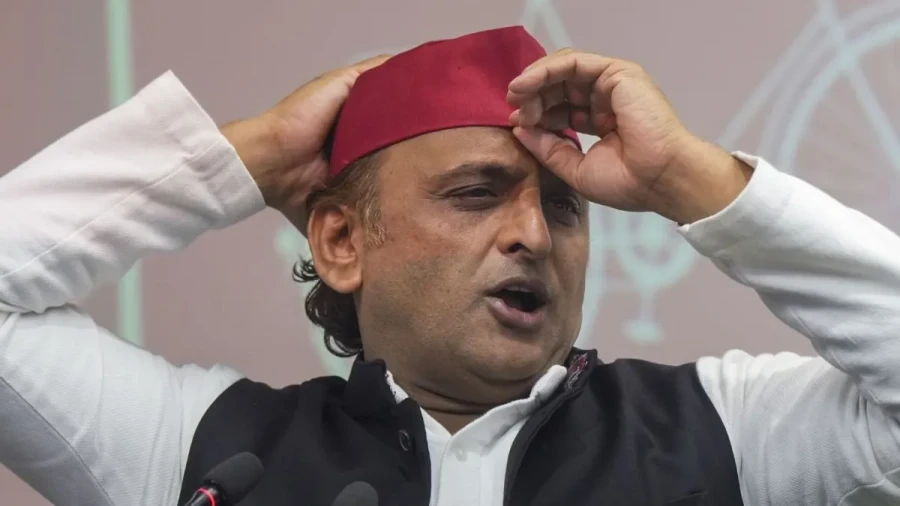
During his visit, Asaduddin Owaisi raised the glaring absence of Muslim leadership amidst prominent political names like Gandhi, Nehru, and Yadav. Targeting the Samajwadi Party, he launched a scathing critique regarding the neglect of jailed senior leader Azam Khan. Just four days after Owaisi's fierce attack, on October 22, Samajwadi Party national president Akhilesh Yadav himself reached Rampur. Akhilesh Yadav complete itinerary remained centered entirely around Azam Khan. From landing at Jauhar University in a helicopter to meeting Azam Khan and his son inside the district jail, every single step carried a distinct political message. Meeting Azam Khan wife Tazeen Fatima on his way back was also considered a crucial part of this calculated political strategy.
Akhilesh Yadav attempted to stand alongside Azam Khan precisely to reassure the same Muslim psyche upon which the electoral strength of the Samajwadi Party is built, a demographic that Owaisi had targeted by questioning the state of Muslim leadership, while in reality, Owaisi's target wasn't just Akhilesh Yadav; his primary allegation was directed at the traditional politics of the Congress and the Samajwadi Party, where the Muslim voter has been reduced merely to a captive vote bank. Owaisi openly declared that Muslims possess the inherent capability for leadership themselves, questioning why they should remain dependent on others.
By mentioning Gandhi and Nehru, he indirectly attacked the Congress party, while directly targeting the politics of the Samajwadi Party by invoking the name of Yadav. In a large state like Uttar Pradesh, this attack holds immense significance because the Muslim-Yadav combination remains the greatest strength of the Samajwadi Party. Owaisi wants to detach Muslims completely from this equation. His core argument is that secular parties remember Muslims only during election times, and despite having a massive share in votes, secular parties routinely ignore their political strength while finalizing candidates.
The context of Azam Khan in Rampur proved to be particularly advantageous for this political strategy of Owaisi. Azam Khan is a very senior leader of the Samajwadi Party with his own independent political base, while among a significant section of the Muslim community, his image has consistently been that of an influential and formidable leader. Due to prolonged legal troubles and a long stint in jail, sympathy towards him has grown considerably among a large section of anti-BJP voters. Owaisi precisely touched the right nerve, asking the public that a leader who worked for years as a strong face of Muslim politics for the Samajwadi Party was largely abandoned by the party leadership during times of severe crisis.
The timing and political implications of Akhilesh Yadav visit to Rampur have generated immense curiosity in political circles. Although it's possible that Akhilesh Yadav visit might have been scheduled beforehand, the fact that his entire itinerary remained exclusively centered around Azam Khan reignited all the sensitive issues that Owaisi had raised during his public address. Akhilesh Yadav landed directly at the Jauhar University helipad and proceeded straight to the district jail. Inside the jail, he held a detailed conversation with Azam Khan and his son, and subsequently visited Azam Khan residence to meet Tazeen Fatima.
Every single link in this program of Akhilesh Yadav has its own deep political meaning, while jauhar University has always been an ambitious project of Azam Khan. The moment this university is mentioned, Azam Khan entire political journey and all associated controversies naturally come into the limelight. Visiting him inside the jail directly sends out a clear message that the party stands firmly with Azam Khan during times of crisis. Visiting his family at his home further reinforces this message. This meeting between Akhilesh Yadav and Azam Khan, happening after an interval of approximately one year, came to light precisely at a time when Owaisi had thoroughly cornered the Samajwadi Party leadership on Rampur soil. It's natural for political analysts to question whether Akhilesh visit was a direct response to Owaisi aggressive onslaught.
The mathematics of Muslim votes in the electoral arena of Uttar Pradesh has always been extremely crucial. How much and what kind of impact Muslim voters can make on election results in the state is no secret. In several assembly constituencies of the state, their numerical presence has the definite capacity to decisively influence the entire electoral equation, while in other regions, they must rely on the support of other communities to build political strength. The Muslim population exceeds 30 percent in 73 constituencies of the state, while it ranges between 20 and 30 percent in another 70 seats. The regions of Western Uttar Pradesh and Rohilkhand are considered particularly special and sensitive from this electoral standpoint.
In numerous districts such as Saharanpur, Shamli, Muzaffarnagar, Bijnor, Moradabad, Rampur, Sambhal, Amroha, Meerut, and Bareilly, the voting pattern of Muslim electors exerts a notable influence on the final outcome. While local candidates, various caste equations, farm politics, and law-and-order dynamics certainly play their own roles in any election, the consolidated inclination of Muslim voters brings any political party directly into a strong competitive position. The Samajwadi Party has maintained a very strong grip on the Muslim vote bank ever since the era of the Babri Masjid movement. Following Mulayam Singh Yadav, current leader Akhilesh Yadav has also carefully nurtured this equation.
A major reason behind this is the ideological distance of the Muslim voter from the Bharatiya Janata Party. The Muslim voter invariably leans towards the party that possesses the proven capacity to defeat the BJP directly. Presently, the Samajwadi Party stands tall as the single largest and strongest challenge against the BJP in the political landscape of Uttar Pradesh, while another critical question is just how formidable a challenge Owaisi party can genuinely pose in the politics of Uttar Pradesh. An interesting and unique aspect of Owaisi politics is that his public meetings consistently draw a substantial crowd from the Muslim community. However, this massive crowd frequently fails to convert into actual votes during election periods.
During the 2022 Uttar Pradesh assembly elections, the All India Majlis-e-Ittehadul Muslimeen fielded a total of 95 candidates, yet the party secured less than half a percent of the total votes polled. The reality was that the party failed to open its account, didn't win a single seat, and all its candidates ended up forfeiting their security deposits. Although AIMIM did achieve a certain degree of success in the political arena of Bihar, the political landscape and social fabric of Uttar Pradesh are entirely different. Here, the strong organizational structure of the Samajwadi Party and its direct, intense contest with the Bharatiya Janata Party effectively prevent any fragmentation of Muslim votes.
Also, Asaduddin Owaisi is frequently targeted with the serious accusation of being the B team of the Bharatiya Janata Party, which serves as a major roadblock in his political expansion. Opposing political parties consistently argue that casting a vote for Owaisi effectively means the scattering of Muslim votes, which ultimately benefits the Bharatiya Janata Party directly. Owaisi is continuously making vigorous efforts to overcome all these political challenges and allegations. What he will manage to achieve in the upcoming 2027 assembly elections will be determined by the future.
However, there is no denying the fact that the crowds gathering in his rallies and public meetings certainly keep the leadership of the Samajwadi Party completely alert and cautious. The Samajwadi Party simply can't tolerate even the slightest erosion of its Muslim vote bank under any circumstances, and consequently, this entire political episode in Rampur is bound to shape the future trajectory of Uttar Pradesh politics in the coming days.