

- India,
- 31-Dec-2025 01:41 PM IST


External Affairs Minister Dr. S. Jaishankar arrived in Dhaka on Wednesday, carrying a message of profound sorrow from Prime Minister Narendra Modi following the demise of former Bangladesh Prime Minister Begum Khaleda Zia. The visit underscored India's deep condolences to the people of Bangladesh and the government, acknowledging the significant loss of a towering political figure. Dr. Jaishankar's presence in Dhaka served as a testament to the enduring. Bond between the two nations, particularly during moments of national mourning.
India's Expression of Sympathy
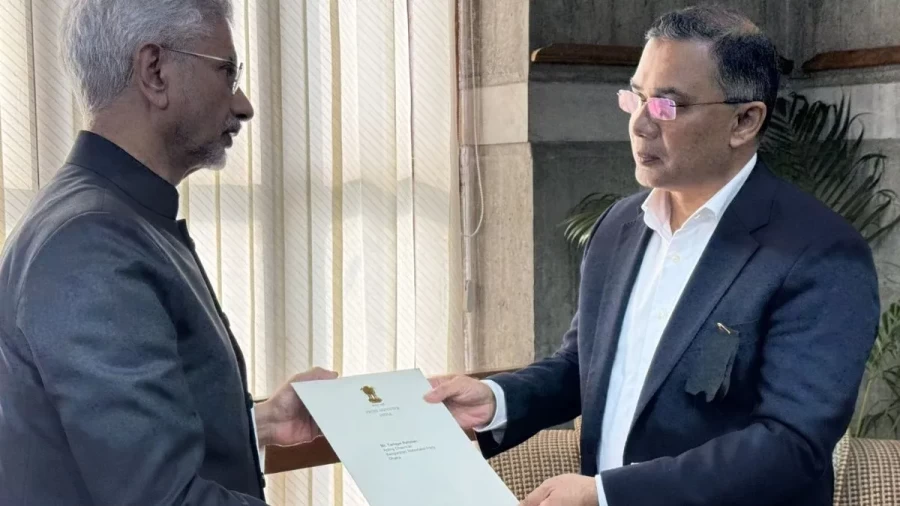
Upon his arrival, Dr. Jaishankar conveyed Prime Minister Modi's condolence message, emphasizing that India stands in solidarity with Bangladesh during this period of grief, while he extended heartfelt sympathies on behalf of the Government and people of India. The Indian High Commissioner to Bangladesh, Pranay Verma, welcomed Dr. Jaishankar at the airport. The External Affairs Minister had arrived by a special flight at 11:30 AM on Wednesday, while this diplomatic gesture highlights the mutual respect and strong bilateral ties that characterize the relationship between India and Bangladesh, reinforcing a sense of shared humanity and neighborly support.
Khaleda Zia's Illustrious Political Journey
Khaleda Zia was undeniably one of the most influential political leaders in Bangladesh. She served as the Prime Minister of the country three times and also held the presidency of the Bangladesh Nationalist Party (BNP) for an extended period. Her political career spanned over four decades, marked by both significant achievements and formidable challenges. While leading the BNP, she took the reins of national power, but her public image was also impacted by allegations of corruption. Despite these complexities, her impact on Bangladesh's political landscape remains indelible, shaping key policies and national discourse.
Contributions to Democracy
Dr. S. Jaishankar respectfully acknowledged former Prime Minister Khaleda Zia's long political life and her substantial contributions to the democratic system in Bangladesh. He highlighted her role in strengthening democratic values within the nation. Her leadership emerged at a crucial time when Bangladesh, as a young nation, was striving to establish its identity and solidify its democratic institutions. During her tenures, several pivotal decisions were made that influenced the country's political trajectory. And laid foundations for its governance structure, reflecting her commitment to the democratic process. Khaleda Zia's entry into public life was entirely coincidental rather than a pre-planned strategy. She stepped into politics at the age of just 35, following the assassination of her husband, President Ziaur Rahman, in an unsuccessful military coup on May 30, 1981, while this tragic event dramatically altered the course of her life. Approximately a decade later, she made history by becoming Bangladesh's first. Female Prime Minister, a testament to her resilience and political acumen. Her journey into politics wasn't a calculated move but a response to unforeseen circumstances, a role she embraced and performed with remarkable determination.
Demise and Enduring Legacy
Begum Khaleda Zia passed away on Tuesday in Dhaka after a prolonged illness, at the age of 80. Her demise has sent a wave of sorrow across Bangladesh's political circles. Riaz Hamidullah, Bangladesh's High Commissioner to India, confirmed on social media that Dr. S. Jaishankar had delivered Prime Minister Modi's condolence message in Dhaka. Khaleda Zia's legacy constitutes a significant chapter in Bangladesh's history, remembered for her leadership, the challenges she navigated, and her dedication to democracy. Her life mirrored Bangladesh's complex political journey, witnessing numerous ups and downs, and playing a crucial role in shaping the nation's future.
Bangladesh High Commissioner to India Riaz Hamidullah tweets, "Dr S Jaishankar, External Affairs Minister of India, in Dhaka, conveys the condolences of the people and the government of India as Bangladesh mourns the passing of former Prime Minister Begum Khaleda Zia and… pic.twitter.com/BcEzIFrB2r
— ANI (@ANI) December 31, 2025
