

- India,
- 27-Oct-2025 06:22 PM IST


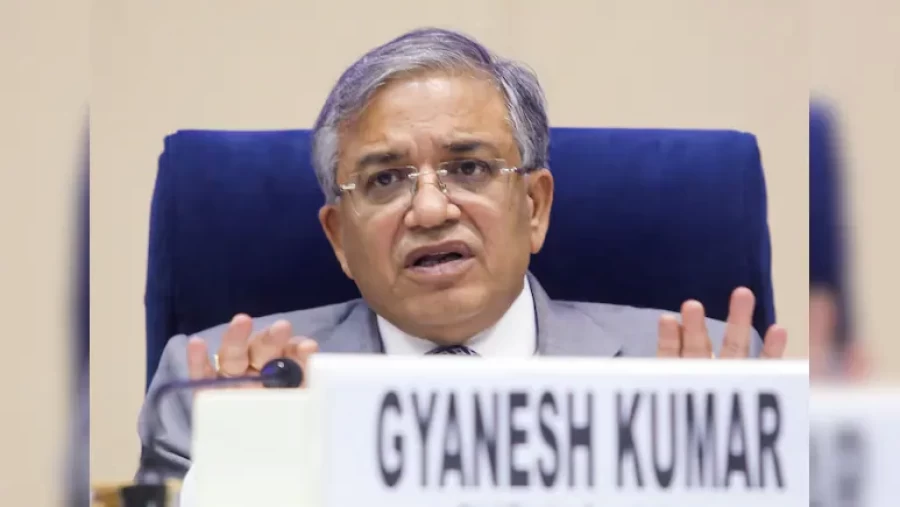
In a significant move to enhance the purity and reliability of electoral rolls, the Election Commission of India has announced the second phase of the Special Intensive Revision (SIR) of voter lists in 12 states and Union Territories. Chief Election Commissioner Gyanesh Kumar stated on Monday that this extensive exercise will encompass major states like Rajasthan, Uttar Pradesh, Madhya Pradesh, West Bengal, along with Andaman & Nicobar, Chhattisgarh, Goa, Gujarat, Kerala, Lakshadweep, Puducherry, and Tamil Nadu. The preparatory phase for this massive undertaking is set to begin tomorrow, Tuesday, with the training of Booth Level Officers (BLOs) and Assistant Electoral Registration Officers (AEROs), who form the backbone of the electoral machinery.
Freezing of Voter Lists and Training Significance
Following this announcement, the voter lists for these 12 states and UTs will be frozen tonight. This measure is crucial to prevent any unauthorized alterations during the revision process and to maintain the integrity of the electoral data. CEC Gyanesh Kumar underscored the critical importance of electoral roll revision before every election, noting that various political parties have raised concerns regarding the accuracy of voter lists in recent years, making this special intensive revision even more imperative. Collectively, these 12 regions represent a vast electorate of over 50. 99 lakh (approximately 51 crore) voters. To facilitate this revision, over 5. 33 lakh polling stations and BLOs will be involved, supported by 10,448 EROs/AEROs and 321 DEOs, highlighting the enormous scale of the operation. The last Special Intensive Revision was conducted between 2000 and 2004. After such a long interval, this current revision becomes particularly vital. The process aims to identify and remove the names of deceased electors, those who have permanently shifted to other locations, and individuals registered at two different places, thereby purifying the electoral rolls. The Commission has decided to conduct SIR in a phased manner across the country, with Bihar being the first state to undergo this exercise. The primary objective of this revision is to compile an error-free and updated voter list, which is fundamental for conducting free and fair elections and upholding democratic principles.
The Rationale Behind SIR
Voter Convenience and Procedural Details
To enhance voter convenience and manage crowds effectively on polling day, the Election Commission has stipulated that no polling station should have more than 1200 electors. As part of the SIR process, Booth Level Officers (BLOs) will conduct door-to-door verification, visiting each voter's residence at least three times. This meticulous approach ensures maximum accuracy. On top of that, an online facility for filling out forms will be available, making the process more accessible for citizens. BLOs will be responsible for identifying deceased individuals, those who have permanently relocated, and duplicate entries, ensuring the electoral roll reflects the current demographic reality accurately.
Required Documents for New Registrations/Changes
The Election Commission has clarified that existing voters whose names are already on the electoral roll won't be required to submit any new documents. When BLOs visit homes with enumeration forms, they will cross-verify existing names with the 2003 list. If the name or parent's name matches, no additional documents will be requested. For new registrations or modifications, voters are encouraged to provide a color photograph. The list of accepted documents for SIR includes any ID card/pension payment order issued by Central/State Government/Public Sector Undertakings, any ID card/certificate/document issued by government/local authorities/banks/post office/LIC/PSUs before July 01, 1987, birth certificates, passports, matriculation/educational certificates from recognized boards/universities, permanent residency certificates issued by competent state authorities, forest rights certificates, OBC/SC/ST or any caste certificates issued by competent authorities, National Register of Citizens (where applicable), family registers prepared by state/local authorities, any land/house allotment certificate by the government, and Aadhaar, for which instructions issued by the Commission vide letter number 23/2025-ERS/Vol-II dated 09. 09. 2025 will apply.
States and UTs Undergoing Revision
The second phase of SIR will cover Andaman & Nicobar Islands, Chhattisgarh, Goa, Gujarat, Kerala, Lakshadweep, Madhya Pradesh, Puducherry, Rajasthan, Tamil Nadu, Uttar Pradesh, and West Bengal. All these states and Union Territories will be part of this significant revision campaign, aimed at strengthening India's democratic framework, while this exercise will ensure that every eligible citizen is on the voter list and that no ineligible person is included, thereby enhancing the transparency and fairness of the electoral process.
