

- India,
- 22-Dec-2025 05:27 PM IST


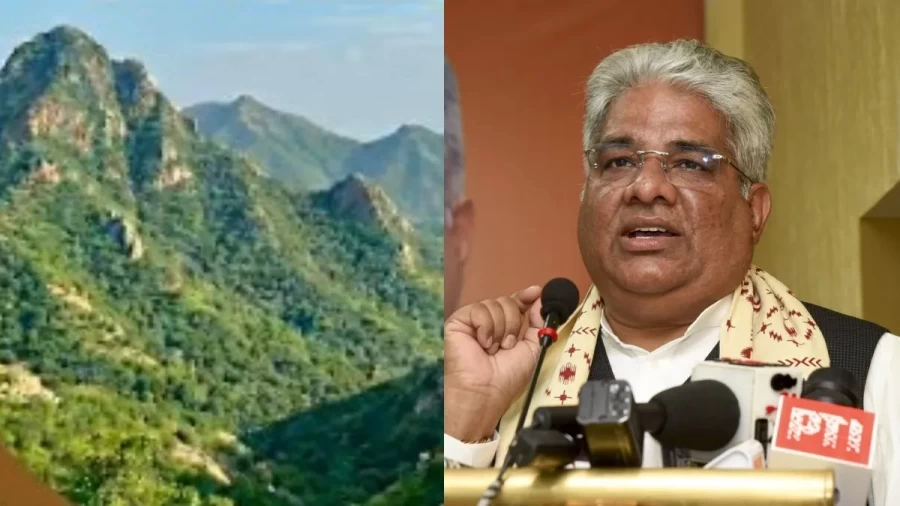
Union Environment Minister Bhupender Yadav has issued a comprehensive statement regarding the ongoing controversy surrounding the protection of the Aravalli mountain range, while during a press conference, the minister strongly refuted allegations of widespread mining permissions and accused certain elements of spreading misinformation on the issue. He emphasized the government's unwavering commitment to the conservation of the Aravallis, highlighting its ancient heritage and ecological significance. The minister's address aimed to clarify the government's stance and dispel any confusion. That has arisen from recent debates and accusations, particularly from the Congress party.
Refuting Claims of Misinformation
Minister Bhupender Yadav began his address by asserting that confusion has been deliberately spread regarding the Aravalli issue. He underscored that the Aravalli range is the oldest mountain chain in India, possessing immense historical and environmental value. Yadav stated that a recent Supreme Court judgment on the matter had been misinterpreted, leading to the current wave of misinformation, while he clarified that, upon reviewing the judgment, it became evident that the court's directive was to take steps to protect and enhance the Aravallis. The minister proudly declared that under Prime Minister Narendra Modi's leadership, the Aravalli hills have actually seen growth, particularly in regions like Haryana, Delhi, and Rajasthan, directly countering claims of degradation and exploitation.
Aravalli's Ancient Legacy and Conservation Efforts
The Aravalli mountain range stands as a testament to India's geological past, having shaped the region's environment and climate for millions of years. Spanning across states like Haryana, Delhi, and Rajasthan, it serves as a crucial green belt and a vital watershed. Minister Yadav's mention of the Aravalli hills growing in these specific regions indicates a concerted effort towards conservation and afforestation. He also highlighted the work done for Delhi's green belt, showcasing the government's proactive approach to environmental protection. These initiatives are designed not only to preserve the natural integrity of the Aravallis but also to maintain its ecological balance amidst increasing urbanization pressures, ensuring its long-term sustainability.
Clarifying the Supreme Court's Mandate
Addressing the misinterpretation of the Supreme Court's verdict, Minister Yadav reiterated that the court's judgment explicitly called for measures to protect and expand the Aravalli range. This directive, he noted, aligns perfectly with the government's conservation policies. He aimed to dispel the notion that the court had somehow sanctioned increased mining activities. Instead, the minister clarified that the court's focus was on the preservation and enhancement of the Aravallis, not on their exploitation, while he further explained that the reference to 'top meter' in the judgment pertains to the minimum stage for mining, which doesn't imply a broad allowance for extensive mining operations but rather a technical specification within a highly restricted context.
Strict Mining Regulations in NCR and Core Areas
Minister Yadav firmly reiterated the government's stringent stance on mining activities within the Aravalli region. He unequivocally stated that mining is strictly prohibited in the National Capital Region (NCR), thereby eliminating any possibility of such activities in this ecologically sensitive and densely populated area. This prohibition is critical for maintaining the air quality and overall environmental health of the NCR. Also, he emphasized that mining is also not permitted in the 'core areas' of the Aravallis. These core areas represent the most ecologically sensitive and vital parts of the range, and their protection is accorded the highest priority. This policy decision is designed to shield the most crucial. Segments of the Aravallis from any form of industrial intervention.
Limited Mining Eligibility and Future Outlook
Minister Bhupender Yadav also clarified that no new mining leases would be granted in the Aravalli region. This significant step is crucial for preventing the expansion of mining activities in the future and for regulating existing operations more effectively. He presented a key statistic regarding the total area of the. Aravalli mountain range, stating that out of a total area of 1. 44 lakh square kilometers, only a mere 0, while 19% is eligible for mining. This figure starkly illustrates that a minuscule portion of the Aravallis is theoretically open to mining, while the vast majority remains protected and secure. This information directly refutes claims that large-scale mining is being permitted across the range.
Government's Commitment to Aravalli's Future
Minister Yadav's statement clearly underscores the government's resolute commitment to the conservation and enhancement of the Aravalli mountain range. He dismissed all allegations of altering the Aravalli's definition to facilitate mining as baseless. The government views the Aravallis not merely as a geographical feature but as a critical component for the region's ecology, biodiversity, and water security. Moving forward, stringent measures will continue to be implemented to ensure the protection of this ancient mountain range, safeguarding it for future generations and preserving its invaluable environmental contributions.
