

- India,
- 20-Dec-2025 09:04 AM IST


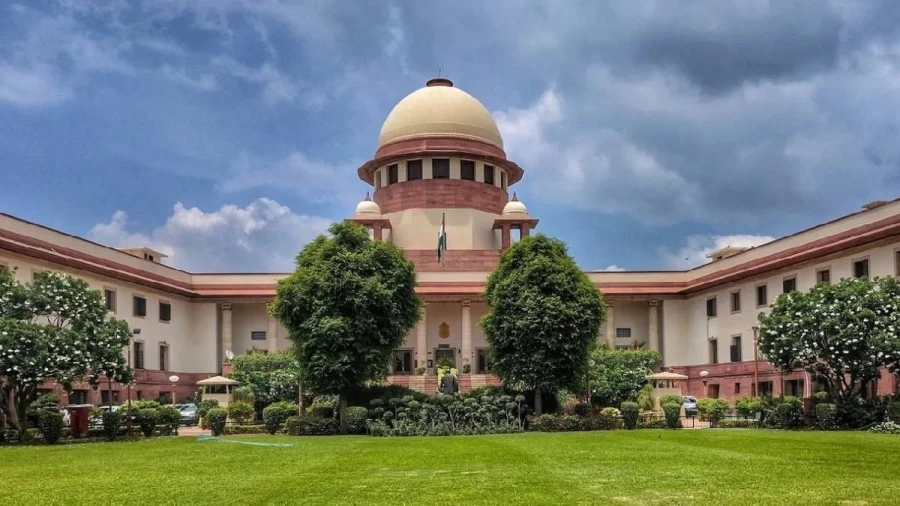
The Supreme Court of India has delivered a significant verdict concerning the urban local body and Panchayati Raj institution elections in Rajasthan. The apex court dismissed a special leave petition (SLP) filed by the state government, unequivocally stating that these elections won't be postponed beyond April 15. This decision ensures that the administrators currently appointed in these institutions will remain in their positions until the electoral process is completed. This ruling is a crucial development for local self-governance and democratic processes in Rajasthan, sending a strong message about the importance of timely elections.
Supreme Court's Decisive Ruling
A division bench comprising Justice Joymala Bagchi and Justice Vipul M. Pancholi pronounced this landmark judgment on Friday, while the Court observed that the Rajasthan High Court had already set a deadline of April 15 for the election process. Plus, the state government itself had assured the Supreme Court. That the elections would be conducted within the stipulated period. Given these circumstances, the apex court found no necessity to intervene at this stage. This ruling underscores the significance of conducting elections within a defined timeframe in a democratic system and ensures that local bodies are governed by elected representatives.
No Interference with High Court Order
The Supreme Court declined to interfere with the Rajasthan High Court's order of November 14, which had permitted the state government to conduct urban local body elections by April 15, 2026. This order was challenged by former MLA Sanyam Lodha through an SLP. Lodha's petition argued that delaying elections weakens the democratic system and that delimitation can't be used as a basis for postponing polls. The Supreme Court upheld the High Court's original deadline, ensuring that the elections are held as soon as possible, thereby reinforcing the principle of timely democratic transitions.
Delimitation Not a Ground for Postponement
Advocate Gaurav Agarwal, representing petitioner Sanyam Lodha, presented solid arguments before the Supreme Court. He emphatically stated that unnecessary delays in elections undermine democratic principles and go against the spirit of local self-governance. Agarwal emphasized that administrative tasks like delimitation can't be legitimately used as a reason to postpone elections. He argued that delimitation is an ongoing process that can be completed without disrupting the electoral schedule, while the Supreme Court took these arguments seriously, incorporating them as a critical point in its decision, which is likely to set a precedent for similar cases in the future.
State Government's Assurances and Arguments
Representing the state government, Additional Solicitor General K. M. Nataraj informed the Supreme Court that the delimitation work for municipal corporation wards was almost complete. He assured the court that the entire election process would be finalized within the stipulated timeframe. Nataraj also contended that any intervention by the court at this juncture would. Affect the delimitation process and could lead to administrative disarray in the state. However, the Supreme Court, while taking the state government's assurance on record, dismissed its petition, making it clear that the elections must proceed as scheduled.
Importance of the Democratic Process
This judgment highlights the critical importance of local bodies in India's democratic framework. Urban local bodies and Panchayati Raj institutions are the backbone of. Grassroots democracy, offering citizens a direct opportunity to participate in governance. Delays in these elections not only create an administrative vacuum in the absence of elected representatives but also impact citizens' rights and aspirations, while the Supreme Court's decision ensures that democratic processes are completed on time, and citizens are afforded their right to elect their representatives, thereby strengthening the foundational elements of democracy.
Administrators to Continue in Post
Following the Supreme Court's ruling, it has also been clarified that the administrators appointed in the urban local bodies and Panchayati Raj institutions will continue in their posts until the election process is completed. This arrangement will remain in effect until the newly elected representatives assume their duties. The continuity of administrators ensures that there is no disruption in. Local administration and that essential services and development works proceed smoothly. This is an interim arrangement necessary to maintain administrative stability until democratically elected representatives take charge.
The Path Forward
With this clear directive from the Supreme Court, the Rajasthan government is now mandated to conduct the urban local body and panchayat elections within the April 15 deadline. This may present a significant challenge, but the government itself has assured the court of its compliance. This decision will strengthen local self-governance in the state and enhance public trust in the democratic process. All eyes will now be on the State Election Commission and the government to see how they implement this order and conduct the elections on time. This ruling marks a crucial turning point in Rajasthan's political landscape, empowering democracy at the local level.
