

- India,
- 18-Dec-2025 08:52 AM IST


A recent Supreme Court decision has ignited significant concern among environmentalists and the public regarding the future of the Aravalli mountain range. The ruling, issued on November 20, 2025, permits mining activities in hilly regions with an elevation of less than 100 meters. This decision is anticipated to have a profound impact on Rajasthan, where the Aravalli range is revered as the 'lifeline' and 'shield' of the state. Social media platforms are abuzz with diverse reactions to this. Verdict, predominantly expressing apprehension over its potential devastating environmental consequences. The trend of demolishing mountains through rapid mining has been ongoing for several years in the country, and this new judgment could potentially accelerate this destructive process.
Supreme Court's Crucial Decision and Aravalli's Fate
The Supreme Court's verdict concerning the Aravalli mountain range is of paramount importance. This ruling specifically allows mining on hills up to 100 meters in height. The situation has become even more critical following a report submitted by the Ministry of Environment to the Supreme Court. This report highlighted that approximately 90% of the Aravalli mountain range now stands at an elevation of less than 100 meters, while the Supreme Court, in its earlier decision regarding the Nilgiri mountains, also acknowledged that the Aravalli region is continuously shrinking. Consequently, areas below 100 meters will no longer be considered 'hills' within the Aravalli range, effectively opening them up for mining. This decision is poised to directly impact the geographical and environmental stability of Rajasthan.
Aravalli Mountain Range: The Lifeline of Rajasthan
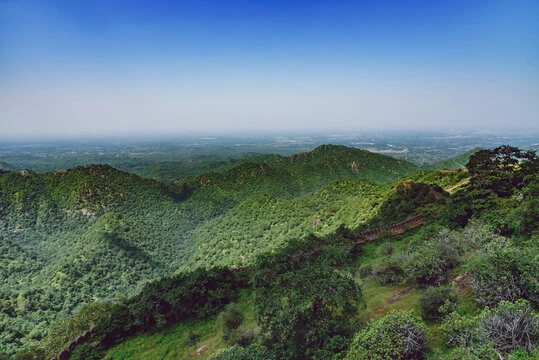
The Aravalli mountain range is synonymous with Rajasthan's identity and is often referred to as its lifeline. It's recognized as one of the world's oldest fold mountain ranges, with approximately 80% of its expanse traversing through Rajasthan. The total length of the Aravalli range is 692 kilometers, of which 550 kilometers lie within Rajasthan. Its highest peak, Guru Shikhar (1727 meters), is located in the famous tourist destination of Mount Abu in Rajasthan, while the range extends from Delhi NCR, through Rajasthan, and concludes in Palanpur, Gujarat. A significant number of rivers in Rajasthan originate from the Aravalli range, making it a crucial water source for the state. This mountain range acts as a natural barrier, preventing the expansion. Of the Thar Desert and Importantly influencing the state's monsoon system.
Threat of Desert Expansion
Should mining commence in the Aravalli regions that are less than 100 meters in height, the risk of desert expansion in Rajasthan will escalate Importantly, while the Aravalli range plays a vital role in curbing the eastward spread of the Thar Desert. A reduction in its height would allow desert sands and hot winds to advance more easily into eastern Rajasthan. On top of that, the diminished height of the Aravalli range will severely impact the state's monsoon system. This mountain range traditionally intercepts monsoon winds originating from the Bay of Bengal, causing rainfall in the eastern parts of Rajasthan. If its height is reduced, these monsoon winds will pass. Unhindered, leading to a drastic decrease in rainfall across the state. In such a scenario, a substantial portion of Rajasthan could potentially transform into a desert.
Potential Damages from Aravalli Degradation
The continuous degradation of the Aravalli mountain range could lead to several severe consequences for Rajasthan.
1. Extensive expansion of the desert within the state, leading to a reduction in arable land.
2. A widespread increase in the impact of hot winds, resulting in rising temperatures and more frequent heatwaves.
3. A significant reduction in rainfall from the Bay of Bengal monsoon, exacerbating water scarcity.
4. An increased likelihood and impact of earthquake tremors in the state, due to reduced mountain stability.
5. Many rivers originating from the Aravalli will dry up, posing a severe crisis for drinking water and irrigation.
6. The agricultural sector and crop yields in the state will be adversely affected, impacting food security.
7. The geographical conditions and climate of the state will experience adverse effects, leading to an ecological imbalance.
A Senior Professor from the Geography Department at Rajasthan University has expressed concern that the reduced height of the Aravalli mountain range is affecting Rajasthan's rainfall system. She explained that due to global warming, monsoon winds are undergoing rapid changes, while previously, these winds would collide with the Aravalli range, bringing rain to the eastern regions of Rajasthan. However, with the Aravalli's diminished height, these winds are no longer being intercepted. Consequently, these winds are now moving towards western Rajasthan, resulting in increased rainfall in the western region, while this shift is impacting the entire rainfall system, which is a matter of serious concern. The decreasing height of the Aravalli range is expected to. Bring about several adverse environmental and social impacts in Rajasthan.
Beginning of Aravalli's Erosion
The process of erosion of the Aravalli mountain range began in the 1990s and has accelerated rapidly since then. The primary cause of this degradation is attributed to the rapid development of urban areas. The insatiable demand for stones and minerals for increasing construction activities in the urban centers of Delhi and Rajasthan fueled rampant illegal mining in the Aravalli range. On top of that, indiscriminate felling of trees and deforestation also weakened the Aravalli, causing it to crumble. Recognizing these grave concerns, the Supreme Court issued orders in 2002 to ban illegal mining in the Aravalli mountain range, while however, the recent decision once again casts a shadow of doubt over the future of this ancient mountain range.
