
- India,
- 18-Jul-2026 08:02 AM IST



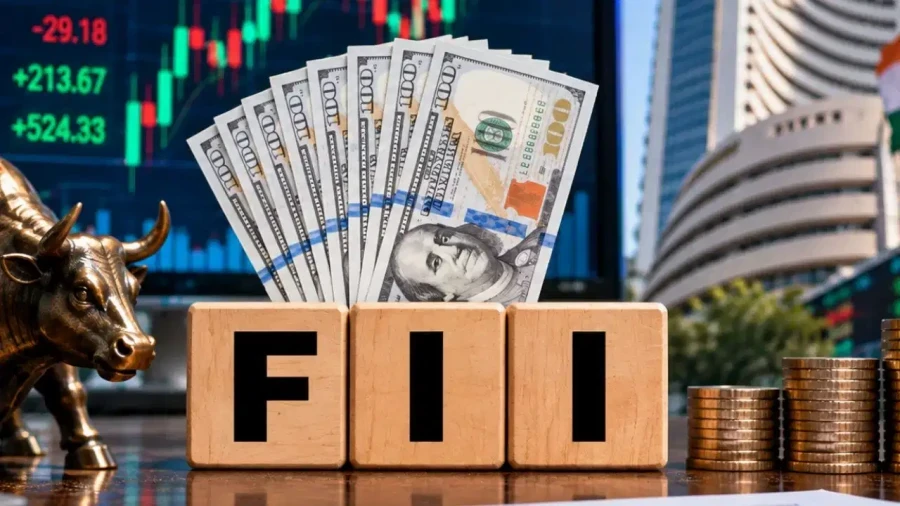
Foreign Institutional Investors (FIIs) have made a significant comeback to the Indian stock market after nearly six months of continuous selling. This shift in sentiment has caught the attention of market participants as FIIs have turned net buyers in July. According to recent data, foreign investors have purchased Indian shares worth approximately 1 billion 800 million dollars so far in July. This marks a notable departure from the previous trend where billions were being pulled out of the domestic market. The question arises as to why this sudden change in strategy has occurred among global investors and what it means for the future of Dalal Street.
The Role of Global AI Trade Slowdown
Christopher Wood, the Global Head of Equity Strategy at Jefferies, provides a compelling explanation for this trend. He suggests that the return of foreign capital isn't necessarily due to a major fundamental shift in the Indian economy itself, but rather a result of the cooling down of the global Artificial Intelligence (AI) trade. In the first half of the year, emerging market funds were busy liquidating their Indian holdings to raise cash, while this capital was then redirected towards markets like South Korea and Taiwan, which are heavily weighted with AI and technology hardware stocks. This massive reallocation led to a record sell-off in India, amounting to nearly 29 billion dollars. However, as the momentum of the AI trade begins to moderate, investors are looking for diversification, leading them back to the Indian equity markets. Wood believes that India has acted as the inverse of the AI trade; when AI stocks were surging, money flowed out of India, and now that the AI theme is slowing, money is returning.
Domestic Investors Provide a Strong Cushion
Despite the heavy selling by foreign entities over the past few months, the Indian market remained remarkably resilient. The primary reason for this stability was the strong support from domestic institutional investors and retail participants through Systematic Investment Plans (SIPs). In June alone, the investment through SIPs reached a staggering 31800 crore rupees, which accounted for nearly 87 percent of the total equity mutual fund inflows. Christopher Wood noted that this consistent domestic flow effectively neutralized the impact of foreign selling and helped maintain the high valuations of the Indian market. The steady influx of domestic capital has created a structural support system that makes the market less vulnerable to external shocks, even when global sentiment fluctuates.
Opportunities in Large Cap Stocks
Jefferies believes that large-cap stocks are currently positioned for better performance compared to their mid-cap counterparts. Over the last two years, mid-cap stocks have delivered exceptional returns, with the Nifty Midcap 100 index surging by approximately 99 percent since the beginning of 2023. In contrast, the Nifty 50 index, which represents large-cap companies, saw a more modest growth of 33 percent. This divergence has created a valuation gap, making large-caps relatively cheaper and more attractive for fresh investment. Jefferies estimates that large-cap companies could see an earnings growth of 14 to 15 percent over the next two financial years, while mid-cap companies are expected to grow at around 20 percent. As the valuation gap narrows, large-cap stocks offer a safer and potentially lucrative opportunity for institutional investors looking for stability.
Potential Risks and Future Outlook
While the return of FIIs is a positive development, several risks continue to loom over the market. Geopolitical tensions in the Middle East, particularly around the Strait of Hormuz, pose a threat to global supply chains and could lead to a spike in crude oil prices. Since India is heavily dependent on oil imports to meet its energy needs, any significant rise in prices could impact the fiscal deficit and inflation. Also, the weakness of the Indian Rupee remains a concern for foreign investors as it can erode their overall returns. Other factors such as increased equity issuances and promoter exits are also adding to the supply of shares in the market, which could put pressure on prices. So, the strategy of FIIs in the coming months will largely depend on the trajectory of the global AI trade and the movement of crude oil prices. If the AI theme continues to slow down and oil remains stable, the return of foreign investors to India could become even more pronounced.