
- India,
- 12-Aug-2026 05:41 PM IST



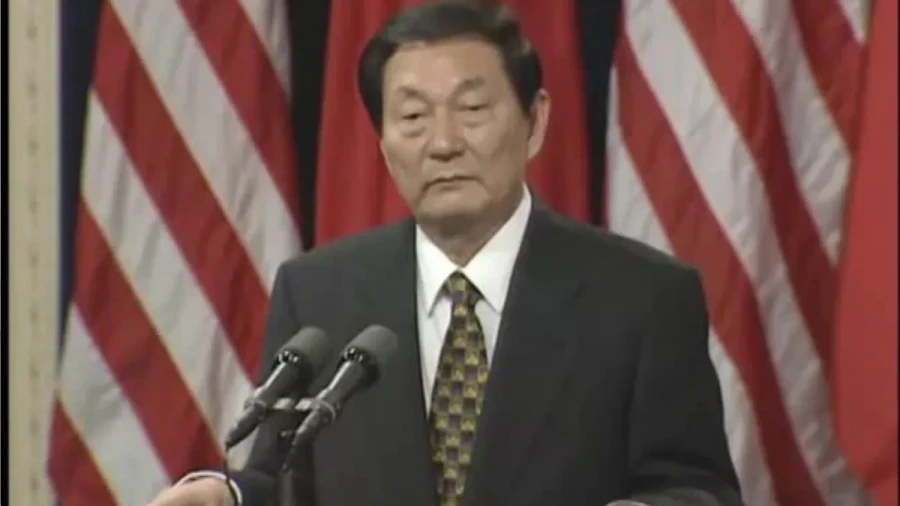
Former Chinese Prime Minister Zhu Rongji, a towering figure in the nation's modern history and the primary architect of its rapid economic transformation, has passed away at the age of 98. His death marks the end of an era for a leader who is widely celebrated for steering China into the World Trade Organization (WTO) and laying the strong foundation for its emergence as a global economic superpower. According to official reports from Chinese state media, Zhu Rongji breathed his last on Wednesday morning at approximately 11 AM in Beijing, following a period of illness. His passing has prompted reflections on a career that saw China transition from a closed economy to the world's leading exporter.
A Legacy of Economic Transformation and WTO Entry
Zhu Rongji's tenure as the Prime Minister of China, which spanned from 1998 to 2003, was defined by bold, decisive, and often difficult structural reforms. During the 1990s, he spearheaded significant and challenging changes within state-owned industries, navigating through complex economic hurdles to modernize the country's industrial base. One of his most enduring and impactful achievements was successfully securing China's membership in the World Trade Organization. This strategic move was a turning point that opened up international markets for Chinese goods and catalyzed a period of unprecedented economic acceleration. By integrating China into the global trading system, Zhu Rongji helped transform the nation into the world's largest exporter, a status that redefined global trade dynamics.
From Political Exile to the Premiership
The journey of Zhu Rongji to the pinnacle of Chinese political power was marked by immense resilience and personal struggle. Earlier in his career, he faced severe political repercussions for his ideological views. He was once forced into exile in rural areas where he was compelled to perform manual labor as a punishment for praising reform movements in other communist nations. Despite these significant hardships and the period of political isolation, he rose through the ranks of the Communist Party to eventually become the Prime Minister at the age of 69 in 1998. His background of struggle and his eventual rise to power added a unique dimension to his leadership style, which was characterized by a deep understanding of both grassroots reality and the complexities of high-level economic governance.
Driving Unprecedented Economic Growth Rates
Building upon the foundation of economic reforms initiated by Deng Xiaoping in 1979, Zhu Rongji implemented aggressive policies that sustained high growth rates for over a decade. Between the years 2000 and 2010, China maintained an annual economic growth rate that consistently stayed above 8 percent. 2 percent. These figures underscore the effectiveness of the structural changes he introduced, which shifted the entire trajectory of the Chinese economy and Importantly improved the nation's global standing.
The 'Mad Zhu' and His Uncompromising Fight Against Corruption
Zhu Rongji was well-known for his stern, no-nonsense, and uncompromising demeanor, which earned him various nicknames such as The Boss and Zhu Fengzi, which translates to Mad Zhu. He was a vocal and fierce critic of government inefficiencies and systemic corruption. Unlike many leaders, he was known for taking personal responsibility for the failures of the government, a trait that made him a highly popular figure among the general public. He was perceived as a leader who wasn't afraid to tackle the most difficult problems head-on, even if it meant making unpopular decisions within the political establishment to ensure the long-term health of the economy.
Context of the Current Economic Climate in China
The news of Zhu Rongji's passing comes at a time when the Chinese economy is navigating a new set of complex challenges, while recent reports indicate that China's economic growth has slowed down to a 3-year low. While there has been a recorded increase in exports, the overall pace of development has decelerated Importantly compared to the high-growth era overseen by Zhu. His death serves as a moment of reflection on the transformative period he led and the enduring impact of his economic vision on China's position in the world today. 2 percent peak that remains a benchmark for the nation's economic potential.