
- India,
- 13-May-2026 02:40 PM IST



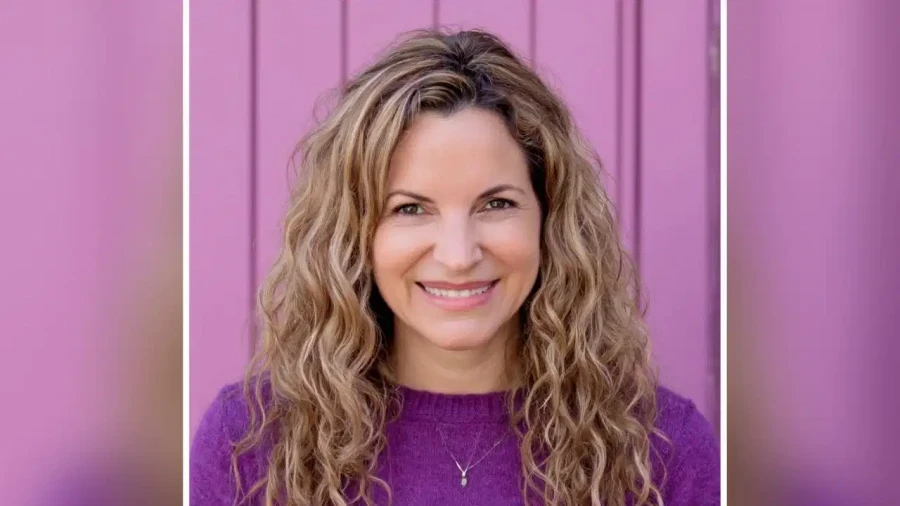
Former NASA scientist Ingrid Honkala has brought a compelling and provocative perspective to the long-standing debate regarding life after death. Honkala, who hails from Bogota, Colombia, claims to have crossed the threshold of death not once, but three times during her life. Her detailed accounts of these Near-Death Experiences (NDEs) offer a rare glimpse into a realm that she describes as profoundly peaceful, interconnected, and beyond the constraints of human time. Having served in prestigious roles within the global scientific community, her claims bridge the gap between empirical science and spiritual inquiry, suggesting that death is far from being a definitive end to existence.
The First Encounter: A Freezing Water Tank at Age Two
Honkala’s journey into the unknown began at the tender age of two. While playing near her home, she accidentally fell into a tank filled with freezing water. As she struggled to breathe in the icy depths, she describes a sudden and dramatic transition from panic to an overwhelming sense of tranquility. She claims to have experienced an out-of-body state, where she could observe her physical surroundings from a different vantage point. From this elevated state, she witnessed her mother walking toward her office, far from the house. Honkala asserts that she made a mental connection with her mother, who immediately sensed something was wrong. Her mother rushed back home and pulled her from the freezing tank, effectively saving her life from certain death.
Visions of the Afterlife and Divine Figures
Now 55 years old, Honkala reflects on these experiences with a sense of clarity that has removed any lingering fear of mortality. She describes the "other side" as a place where the conventional concept of time doesn't exist. In this realm, she didn't perceive herself as a human child but rather as a manifestation of pure light rays, while this experience gave her a profound realization that every element in the universe is intrinsically linked. During her NDEs, she claims to have communicated with divine figures and felt a deep sense of belonging to a cosmic whole, while for her, the afterlife isn't a dark or frightening void but a vibrant and enlightened extension of existence that transcends physical boundaries.
Subsequent Near-Death Experiences at 25 and 52
The scientist’s encounters with death continued into her adult life, reinforcing her initial observations. At the age of 25, she was involved in a severe motorcycle accident that brought her back to the brink of death. Later, at the age of 52, during a surgical procedure, her blood pressure plummeted to critical levels, leading to her third NDE. Honkala notes that during each of these instances, she returned to the same state of profound peace and light that she first encountered as a child. These recurring events have solidified her belief that the transition from life to death is a consistent and non-threatening process, characterized by a return to a fundamental state of being rather than a cessation of consciousness.
Bridging the Gap Between Science and Spirituality
Ingrid Honkala’s background as a scientist adds a unique layer of credibility and intrigue to her narrative. With a PhD in Marine Science and a career that includes working for NASA and the US Navy, she's well-versed in the rigors of scientific methodology. While skeptics often attribute NDEs to hallucinations caused by cerebral hypoxia or a lack of oxygen to the brain, Honkala views science and spirituality as complementary rather than contradictory. She argues that her professional background has helped her analyze these experiences more deeply. She maintains that consciousness isn't merely a byproduct of brain activity but a fundamental component of the universe itself, existing independently of the physical body.
In her upcoming book, titled ‘Dying to See the Light,’ Honkala explores the idea that death is simply a transformation of consciousness from one form to another. She posits that our awareness is a permanent fixture of the cosmos, and the physical body is merely a temporary vessel, while by sharing her story, she aims to provide comfort to those who fear death and to encourage a broader scientific investigation into the nature of human consciousness. Her experiences suggest that the end of physical life marks the beginning of a different journey, where the individual merges back into the universal light from which they originated, proving that life is an eternal cycle.