

- India,
- 30-Oct-2025 09:11 AM IST


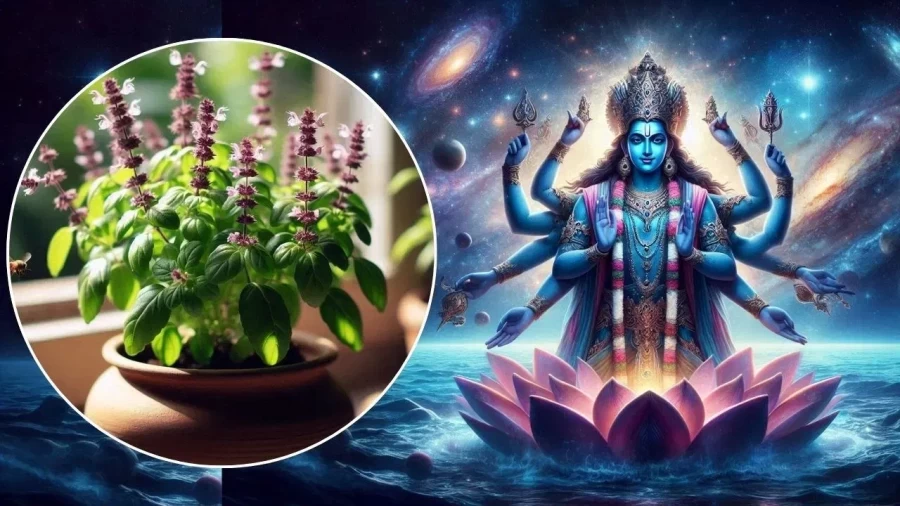
In Hindu scriptures, the narrative of Tulsi and Lord Vishnu is regarded. As profoundly sacred and emotional, embodying the pinnacle of devotion, loyalty, and love. The festival of Tulsi Vivah symbolizes this divine union, celebrating the reunion of. Mother Tulsi (an embodiment of Lakshmi) and Lord Vishnu (in his Shaligram form). This tale also illustrates how deeply God is bound by the love of his devotees, transforming even a curse into a blessing. The relationship between Tulsi and Vishnu teaches that true devotion and pure love can turn all adverse circumstances into auspicious ones, demonstrating how a devotee's unwavering resolve can influence even the divine.
According to the Puranas, Tulsi's previous birth was as Vrinda, an exceptionally pious and virtuous woman, while vrinda was married to the formidable demon king Jalandhar, renowned across the three worlds for his valor and might. Jalandhar possessed a boon from Lord Vishnu: he couldn't be defeated as long as his wife Vrinda's chastity remained intact. Empowered by this boon, Jalandhar had conquered Swarg Lok (heavenly realm) and was causing immense distress to the deities, while his power was so absolute that even Lord Shiva found himself unable to defeat him, as Vrinda's unwavering devotion and chastity acted as Jalandhar's impenetrable shield.
Lord Vishnu's Deception and Vrinda's Fury
When all the deities, tormented by Jalandhar's tyranny, found no solution, they appealed to Lord Vishnu for assistance. Responding to their prayers, Lord Vishnu assumed the guise of Jalandhar and appeared before Vrinda. Vrinda, believing him to be her husband, offered him due reverence. In that moment, her chastity was inadvertently broken, while as soon as Vrinda's chastity was compromised, Jalandhar's power waned, allowing Lord Shiva to defeat him in battle. When Vrinda discovered the deceit—that her husband had been betrayed and that Lord Vishnu himself was responsible for breaking her vow of chastity—she was consumed by incandescent rage.
The Curse and the Genesis of Shaligram
Overwhelmed by grief over her husband's demise and the betrayal that led to the violation of her chastity, Vrinda, in her profound anger, cursed Lord Vishnu to turn into a stone. As a direct consequence of this potent curse, Lord Vishnu immediately transformed into the Shaligram stone. This incident vividly demonstrates the immense power embedded within the curse of a pure devotee, capable of compelling even the Almighty, while lord Vishnu didn't attempt to placate Vrinda's anger but rather accepted it as an integral part of his divine play, recognizing the depth of her devotion even in her wrath.
Vishnu's Blessing and Tulsi's Incarnation
Although Lord Vishnu transformed into a stone due to Vrinda's curse, he honored her devotion and unwavering chastity by bestowing a boon upon her. He declared, "O Vrinda, you've cursed me to become a stone, but your loyalty and love are unforgettable. You shall be born on Earth as the sacred Tulsi plant, and my Shaligram form will forever be worshipped alongside you. No worship, especially mine, shall be considered complete without you, while " It's believed that the Gandaki River, located in Nepal, originated from Vrinda's body. Even today, Shaligram stones are naturally found in this river. Thus, the worship of Lord Shaligram is considered incomplete without Tulsi. Leaves, and the festival of Tulsi Vivah commemorates their divine union.
Tulsi's Embodiment of Goddess Lakshmi
In sacred texts, Tulsi is revered as an incarnation of Goddess Lakshmi. Just as Lakshmi is the deity of good fortune, prosperity, and purity, Tulsi symbolizes sanctity and spiritual purity. Due to her unwavering devotion to Lord Vishnu, Tulsi is often referred to as 'Lakshmi Swarupa' (the embodiment of Lakshmi). It's widely believed that the presence of a Tulsi plant in a home, regularly worshipped, invites the dwelling of Goddess Lakshmi herself, ensuring happiness and prosperity, while the worship of Vishnu or Krishna is deemed incomplete without Tulsi leaves, as they symbolize unwavering devotion and pure love for the divine. The veneration of Tulsi isn't only religiously auspicious but also believed to stabilize peace, prosperity, and the flow of divine energy within a home, fostering positivity and removing obstacles.
