
- India,
- 26-Jun-2026 02:21 PM IST



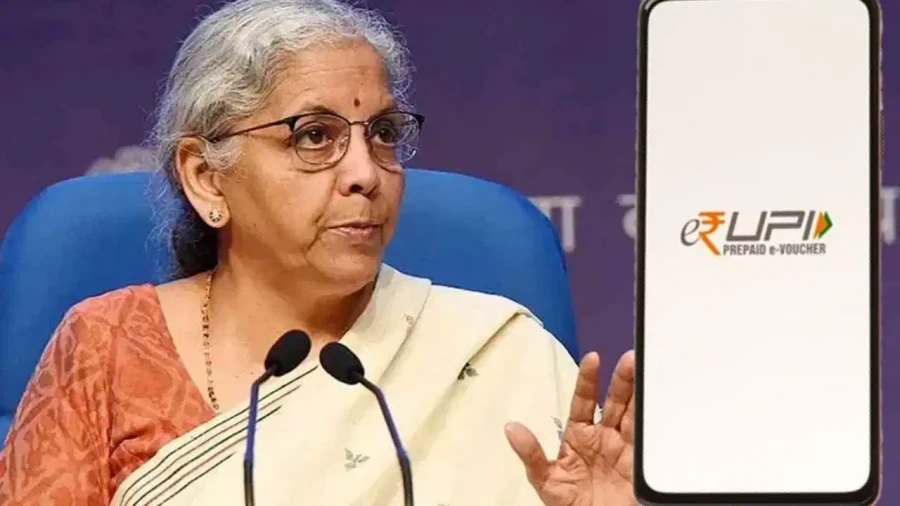
The Indian financial landscape is witnessing a unique phenomenon often referred to by economists as the cash paradox. While the Unified Payments Interface (UPI) has revolutionized the way Indians handle daily transactions, the physical demand for currency has not waned. In May 2026, UPI set a staggering new record by facilitating 2320 crore transactions. However, simultaneously, the Reserve Bank of India (RBI) reported that the currency in circulation in the country has surged to nearly 42 lakh crore rupees. This suggests that the digital and cash economies aren't just co-existing but are growing in tandem, serving different psychological and functional needs of the Indian populace. One side of the coin shows people scanning QR codes for the smallest of purchases, while the other side reveals a massive accumulation of physical cash in lockers and homes.
The Unstoppable Momentum of UPI
UPI has completed a decade of operations, establishing itself as the world's largest real-time payment platform. According to data from the National Payments Corporation of India (NPCI), the month of May 2026 saw over 2320 crore transactions with a total value of approximately 29 trillion 900 billion rupees. On average, the platform handled 73 crore 70 lakh transactions every single day. From small street vendors and grocery stores to large luxury showrooms, the QR code has become an omnipresent symbol of India's digital leap. In contrast, the Immediate Payment Service (IMPS) recorded only 35 crore 80 lakh transactions during the same period, highlighting UPI's absolute dominance in the digital sphere. The ease of use and zero transaction fees for consumers have made UPI the primary choice for daily commerce.
The 42 Lakh Crore Cash Reality
Despite the digital surge, RBI data presents a different perspective on the economy's liquidity. In November 2016, during the period of demonetization, the currency in circulation was 17 lakh 77 thousand crore rupees. By May and June 2026, this figure has more than doubled to reach the record level of 42 lakh crore rupees. According to SBI Research, a staggering 97 point 6 percent of this total cash is held directly by the public rather than being kept in banks. This indicates that Indian households still view physical cash as a primary and secure form of savings. While daily micro-expenses are moving to UPI, cash remains the preferred choice for emergencies, long-term savings, and high-value transactions in the informal sector.
Factors Driving the Demand for Cash
Experts point to several key reasons for this persistent demand for physical currency. The continuous rise in gold prices has led many individuals to sell or mortgage old jewelry, resulting in an influx of cash into their hands. On top of that, some small-scale merchants in various states have reportedly reverted to cash transactions after receiving GST notices based on their UPI transaction volumes. These business owners believe that cash transactions attract fewer tax-related inquiries, while Also, lower interest rates on bank deposits have prompted some people to keep cash at home instead of in bank accounts. These factors combined have ensured that the volume of cash in the market remains at an all-time high.
Digital for Small Deals and Cash for Big Ones
The payment behavior in India is evolving based on the nature of the transaction. Data shows that approximately 86 percent of merchant transactions below 500 rupees have now turned digital. This means UPI has Importantly reduced the need for 10, 20, and 100 rupee notes for small payments. However, in sectors like real estate, agriculture, and the unorganized business sector, cash remains the dominant medium for large-scale deals. Even in rural areas, many small shopkeepers and customers find cash payments more straightforward and reliable. This dual-track system ensures that both digital and cash infrastructures operate simultaneously within the Indian economy.
The Future of the Cash Paradox
Economists observe that while the absolute volume of cash is increasing, the cash-to-GDP ratio has actually seen a decline, while it dropped from 14 percent in 2021 to 11 percent in 2026. This suggests that relative to the overall size of the economy, the reliance on cash is gradually diminishing. Experts believe that India won't become a completely cashless society in the near future, while instead, digital payments and physical cash will continue to complement each other, fulfilling different roles in the financial ecosystem. UPI provides speed and convenience for high-frequency transactions, while cash provides a sense of security and anonymity for larger or more traditional dealings.
5 Essential Rules for Holding Cash in India
Understanding the legal framework for cash is crucial for every citizen. First, there is no legal limit on how much cash you can keep at home, while however, in the event of an investigation or raid by the Income Tax Department, you must be able to prove the legitimate source of that money, such as salary, business income, or agricultural earnings. Failure to provide a valid source can lead to a penalty of up to 137 percent including taxes. Second, under Section 269ST of the Income Tax Act, you can't accept 2 lakh rupees or more in cash from a single person in a day, for a single transaction, or for a single event like a wedding. Violating this rule can result in a penalty equal to 100 percent of the amount received.
Third, Section 269SS stipulates that loans or deposits of 20000 rupees or more can't be accepted in cash. Such transactions must be conducted through account payee checks, bank transfers, UPI, or other electronic modes to prevent large-scale unaccounted cash movements. Fourth, banks are required to report high-value cash transactions to the Income Tax Department via the Statement of Financial Transactions (SFT). This applies if an individual deposits or withdraws 10 lakh rupees or more in a savings account or 50 lakh rupees or more in a current account during a financial year. Finally, under FEMA rules by the RBI, an Indian citizen can carry a maximum of 25000 rupees in Indian currency when traveling abroad or returning from overseas. Carrying cash beyond this limit is a violation of regulations.