
- India,
- 23-Jun-2026 06:22 PM IST



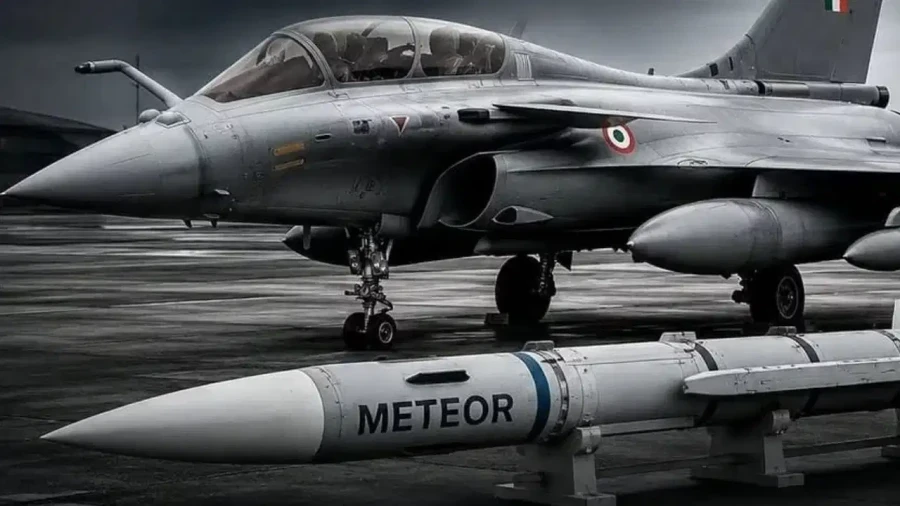
The Indian Air Force is making significant strides in its pursuit of the Multi-Role Fighter Aircraft (MRFA) deal, which involves the procurement of 114 new Rafale fighter jets. 25 lakh crore rupees, is being hailed as one of the most critical defense projects in Asia. A central focus of this massive acquisition is the strengthening of Beyond Visual Range (BVR) combat capabilities. To achieve this, India is emphasizing the inclusion of an advanced version of the Meteor missile, which is already considered one of the most lethal air-to-air weapons in the world.
The Lethal Power of the Meteor Missile
The Meteor missile, a cornerstone of the Rafale's weaponry, is renowned for its advanced BVR capabilities. Unlike traditional missiles that use conventional rocket engines, the Meteor utilizes a throttleable ramjet engine. This allows the missile to achieve speeds exceeding Mach 4. One of its most impressive features is its ability to cover a distance of 100 kilometers in just 90 seconds. Throughout its flight, the missile maintains high speed and energy levels, making it nearly impossible for enemy aircraft to escape its path. This sustained energy ensures that the missile remains lethal even at the outer limits of its range.
Advanced Datalink Technology for Precision
The Indian Air Force is keen on integrating a state-of-the-art datalink system currently being developed for the newer versions of the Meteor. This technology is a collaborative effort between the Spanish defense firm Indra and the missile manufacturer MBDA. The datalink system ensures constant communication between the missile and the fighter aircraft, while even after the missile has been launched, the pilot can transmit updated target information, change the missile's direction, or provide other tactical instructions. This real-time connectivity Notably enhances the probability of a successful strike.
Strategic Features and Electronic Warfare
The integration of the Meteor with the Rafale's powerful RBE2 AESA radar allows for continuous trajectory adjustments based on real-time data. This capability ensures high precision even at distances exceeding 100 kilometers. Also, the new system will feature advanced Electronic Counter-Counter Measures (ECCM) technology. This ensures that the missile can continue to track its target despite enemy jamming or electronic attacks. Another critical feature is the two-way communication system, which allows the pilot to redirect the missile to a different target mid-flight if necessary, a vital capability in modern network-centric warfare.
India-Specific Enhancements (ISE)
The 114 Rafale aircraft intended for the MRFA deal will incorporate the 13 India-Specific Enhancements (ISE) already present in India's current fleet of 36 Rafale jets.
Gaining a Strategic Edge in the Region
If India successfully secures the advanced version of the Meteor missile and its associated technologies under the MRFA deal, the Indian Air Force will gain a substantial advantage in long-range aerial combat. This technological leap is expected to provide a significant edge over the air forces of China and Pakistan, reinforcing India's air superiority in the region. The combination of the Rafale's agility and the Meteor's unmatched range and speed makes for a formidable deterrent in any future conflict scenario.