

- India,
- 11-Jan-2026 05:59 PM IST


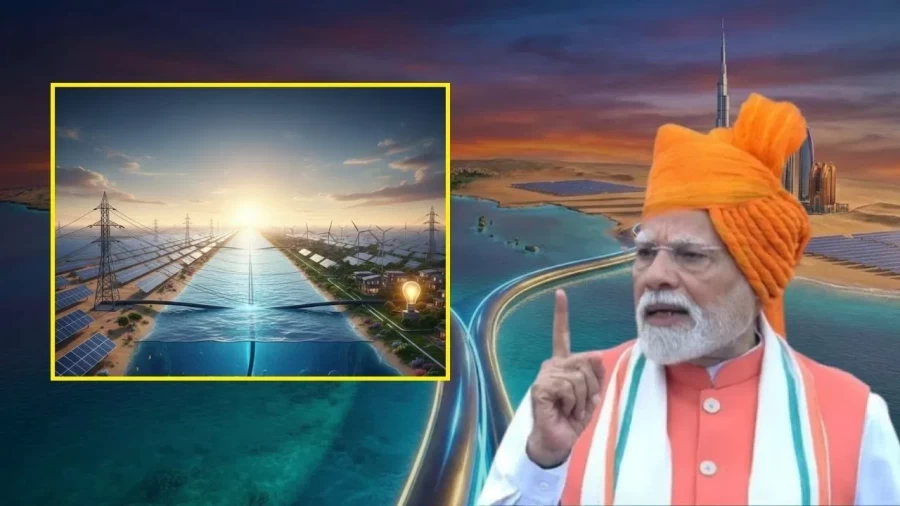
Imagine your home lights powered by electricity generated thousands of kilometers away in the deserts of Saudi Arabia or Dubai, while this vision is now on the verge of becoming a reality. The Indian government, in collaboration with Saudi Arabia and the United Arab Emirates (UAE), is preparing to lay an undersea power cable. This ambitious project is poised to not only bolster India's energy. Security but also potentially become the world's largest cross-border energy exchange system. This initiative promises a significant revolution in the fields of energy. Security and green energy, fundamentally altering how nations share and consume power.
A Vision for Transcontinental Energy Exchange
This proposed project between India, Saudi Arabia, and the UAE represents a monumental step, setting new benchmarks for regional cooperation and energy exchange, while it transcends mere technological achievement, embodying a strategic partnership that will guide all three nations towards a shared, greener energy future. Under this ambitious scheme, a vast network of High-Voltage Direct Current (HVDC) cables will be laid beneath the Arabian Sea. This advanced technology is capable of transmitting electricity over long distances with minimal loss, thereby enabling the efficient utilization of energy sources located thousands of kilometers apart. The government is expected to issue tenders for this project soon, marking the. First concrete step towards its implementation and signaling a new era of energy collaboration.
The Undersea Power Highway: A Technical Marvel
According to media reports, the government will soon issue tenders for this ambitious project. The plan involves laying High-Voltage Direct Current (HVDC) cables across the Arabian Sea. This technology is highly efficient for transmitting electricity over long distances. With minimal power loss, making it ideal for such a transcontinental connection. HVDC cables are superior to traditional AC cables for long-haul transmission due to their reduced energy dissipation and enhanced reliability. This 'power highway' won't only physically connect energy sources but also serve as a solid economic and strategic bridge between the three nations, while crucially, this project isn't designed for one-way traffic; it will operate as a 'two-way' system, allowing for both import and export of electricity, maximizing benefits for all parties involved and creating a resilient, interconnected grid.
Leveraging Time Zone Differences for Optimal Energy Flow
The most distinctive feature of this project is its 'two-way traffic' mechanism. India will import power from these Gulf nations when needed, and conversely, export surplus electricity to them, while this grid interconnection will serve as a crucial support system for both sides during times of energy demand fluctuations. The primary advantage of sourcing electricity from such a distance lies in the 'time' difference. There is approximately a three-hour time difference between India and Saudi Arabia. When it's evening in India and solar power generation ceases, the sun is still shining brightly in Saudi Arabia. Under this new agreement, India will be able to import real-time solar energy from Saudi Arabia to meet its evening peak demand. Conversely, when it's daytime in India and our solar power generation is at. Its peak, we can export our surplus electricity to Saudi Arabia and the UAE. This synergy is expected to not only reduce electricity costs but also stabilize the grid, ensuring a more reliable and efficient power supply for all.
A New Era of Green Energy Partnership
For years, India has relied on Saudi Arabia and the UAE for its energy needs, particularly crude oil. However, this relationship is evolving. These oil-rich nations now recognize that the future lies not in fossil fuels but in clean energy. Saudi Arabia, with its 'Vision 2030', and the UAE, with its 'Net Zero 2050' targets, aim to establish themselves as responsible 'green energy' producers, while india, rapidly advancing in solar and wind energy technology, will become a key partner in this endeavor. India won't only supply electricity but also contribute its technology and manpower to help build their green energy infrastructure. This partnership extends beyond mere energy exchange; it will foster a platform for sharing knowledge, technology, and human resources, bringing long-term economic benefits to all three nations and solidifying a collaborative future.
Enhancing Energy Security and Environmental Benefits
This project will Importantly enhance India's energy security. Currently, India heavily relies on fossil fuels for its energy requirements, making its economy vulnerable to fluctuations in international crude oil prices. The undersea cable will provide India with access to a stable source of clean and renewable energy, thereby reducing its dependence on fossil fuels. Plus, this initiative holds immense environmental significance. The utilization of solar energy will contribute to reducing carbon emissions, bolstering India's and its partners' contributions to the global fight against climate change. This project has the potential to not only lower electricity tariffs but also stabilize the grid, providing consumers with more reliable and affordable power. It's a masterplan poised to transform the world of energy forever, laying the groundwork for a greener and more sustainable future for generations to come.
