

- India,
- 17-Mar-2026 09:04 AM IST


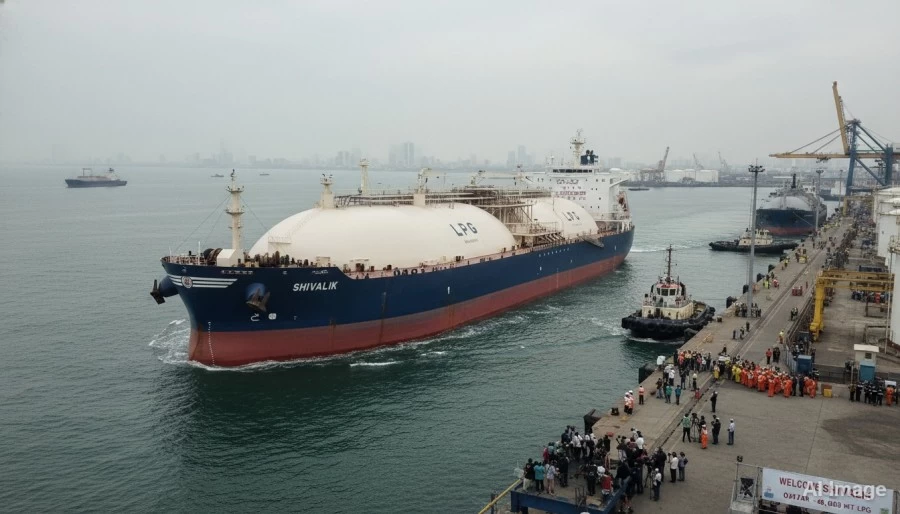
Amidst global energy supply concerns and heightened geopolitical tensions in the Middle East, the Indian vessel 'Shivalik' successfully docked at Mundra Port in Gujarat on Monday. The vessel, operated by the Shipping Corporation of India, arrived from Qatar carrying a substantial cargo of 46,000 metric tonnes of Liquefied Petroleum Gas (LPG). This arrival is being viewed as a major logistical achievement, as the ship navigated through the volatile Strait of Hormuz, a critical maritime chokepoint for global energy transit, while according to officials, this shipment is designated to stabilize the domestic cooking gas supply chain across the country.
Volume Analysis: Filling 3.23 Million Domestic Cylinders
The arrival of 46,000 metric tonnes of LPG translates into a massive volume when converted for domestic distribution. In technical terms, one metric tonne equals 1000 kilograms, making the total shipment weight 46,000,000 kilograms. 2 kilograms of gas. Based on these figures, the shipment brought by Shivalik is capable of filling approximately 3,239,436 cylinders. This volume is expected to provide immediate relief to distribution networks that have been facing pressure due to recent logistical delays in international waters.
Strategic Navigation and Port Priorities
The journey of the Shivalik vessel was closely monitored due to the increased risks associated with oil and gas routes in the Middle East. Navigating the Strait of Hormuz during periods of regional friction requires high operational precision. Upon its arrival at Mundra Port, the government issued specific directives to port authorities regarding the offloading process. According to official guidelines, the discharge of cargo for domestic households is to be prioritized. This will be followed by supplies for essential services such as hospitals and schools, while commercial enterprises will be catered to on a case-by-case basis thereafter.
India's Position as a Global LPG Consumer
Statistical data highlights India's growing prominence in the global energy market, as it currently stands as the world's third-largest consumer of LPG, while over the last decade, consumption has surged by approximately 60%. 3 MMT in the 2024-25 period. 6 crore in 2015-16. This doubling of the consumer base has necessitated a more strong and consistent import strategy.
The Gap Between Domestic Production and Imports
Despite the rapid increase in consumption, India's domestic production of LPG has not kept pace with the demand. Currently, domestic refineries and gas fields contribute only about 40% of the total national requirement. Consequently, India relies on imports for nearly 60% of its LPG needs. Major suppliers include Qatar, the United Arab Emirates (UAE), and other Middle Eastern nations. This high level of import dependency makes the Indian market sensitive to international geopolitical developments and maritime security issues, underscoring the importance of successful shipments like that of the Shivalik.
Regulatory Measures to Manage Demand
To address the ongoing supply challenges, the government is implementing various regulatory shifts. According to officials, there is a concerted effort to transition urban consumers from LPG to Piped Natural Gas (PNG) where infrastructure is available, while consumers using PNG are being encouraged to surrender their LPG connections to ensure that the available liquefied gas can be diverted to rural and underserved areas. On top of that, the government is exploring options to enhance LPG storage infrastructure to create a strategic buffer against future supply chain disruptions in international maritime routes.
