

- India,
- 16-Mar-2026 12:52 PM IST


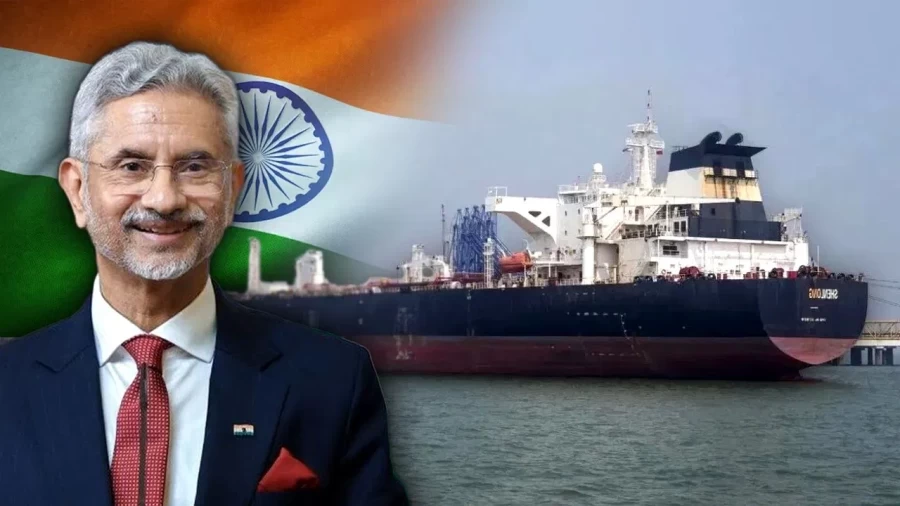
External Affairs Minister S. Jaishankar has clarified that there is no comprehensive or 'blanket agreement' with Iran regarding the movement of Indian vessels through the Strait of Hormuz, while in a recent interview, he stated that diplomatic discussions are conducted on a case-by-case basis for each ship to ensure safe passage through the critical waterway. This clarification comes amid reports suggesting a special arrangement between India and Iran following the clearance of several Indian-flagged vessels.
The Strait of Hormuz is a vital maritime route for global energy supplies. Iran's recent blockade in the region has triggered concerns over oil and gas security for several nations, including India, while while some reports claimed a formal deal was in place, the Indian government has maintained that its success in securing passage for its tankers is the result of targeted diplomatic engagement rather than a singular overarching treaty.
Individual Negotiations for Vessel Clearance
Minister Jaishankar noted that the government is actively engaged in discussions with Iranian authorities to ensure the safety of Indian ships. He highlighted that these efforts are yielding results, citing the successful transit of two Indian-flagged gas tankers through the strait on Saturday. According to the minister, the process is ongoing, and the government remains focused on managing the movement of each vessel as an individual diplomatic event.
Denial of a Comprehensive Blanket Agreement
The External Affairs Minister explicitly refuted claims of a one-time 'blanket' arrangement for all Indian vessels, while he emphasized that there is no standing agreement that covers all maritime traffic under the Indian flag. Instead, each ship's transit is handled as a separate instance requiring specific coordination. He further denied that any 'quid pro quo' or exchange was involved in securing these clearances, attributing the success to long-standing bilateral ties.
Response to US Energy Secretary's Claims
The clarification follows comments from the US Energy Secretary, who suggested in an interview with NBC that India and Iran had reached an agreement to allow two Indian oil tankers to pass through the Strait of Hormuz. Jaishankar responded by stating that the basis of his conversations with Iranian officials is rooted in historical relations and mutual respect. He described the current regional conflict as unfortunate and reiterated that India's priority is the safety of its maritime assets through continuous dialogue.
Current Status of Indian Tankers in Transit
Recent operational data confirms that the Indian-flagged crude oil tanker 'Jag Ladki' departed from Fujairah for India on Sunday. This follows the successful transit of two LPG carriers, 'Shivalik' and 'Nanda Devi', which crossed the Strait of Hormuz on Saturday. The 'Shivalik' has reportedly reached the Gulf of Kutch and is prepared to anchor at the LPG terminal of Mundra port. These movements indicate the practical outcomes of the ongoing diplomatic efforts mentioned by the minister.
Diplomatic Basis of India-Iran Maritime Cooperation
The minister underscored that the relationship between India and Iran provides the necessary framework for resolving such maritime challenges. He pointed out that since many more Indian vessels are present in the region, the diplomatic process must remain active and continuous. Jaishankar characterized the recent clearances as a welcome development but stressed that the work is far from over, as the government continues to monitor and facilitate the passage of other ships currently in the vicinity.
