

- India,
- 19-Apr-2026 07:08 AM IST


India has taken a strong diplomatic stance following an incident where the Iranian Revolutionary Guards opened fire on two Indian-flagged vessels in the Strait of Hormuz. On Saturday, India summoned the Iranian Ambassador, Dr. Mohammad Fathali, to the Ministry of External Affairs (MEA). According to news agency PTI, this move was prompted by serious concerns regarding the safety and security of Indian vessels and their crew members, while the Iranian Ambassador visited the ministry and returned to the embassy after the meeting, during which India lodged a formal protest against the incident.
MEA Statement and Diplomatic Protest
The Ministry of External Affairs issued a statement detailing that the Iranian Ambassador in New Delhi was called for a meeting with the Foreign Secretary this evening. During the discussion, the Foreign Secretary expressed deep concern over the firing incident in the Strait of Hormuz involving two Indian-flagged ships, while he emphasized that the safety of merchant vessels and seafarers is of paramount importance to India. Also, he reminded the envoy that Iran had previously assisted in providing safe passage to several ships bound for India.
Demand for Safe Passage and Communication
Reiterating the gravity of the situation, the Foreign Secretary urged Ambassador Dr. Mohammad Fathali to convey India's concerns to his government, while india has called for the immediate restoration of the process for the safe movement of vessels heading towards Indian ports. The Iranian Ambassador assured that he would communicate India's apprehensions to the relevant authorities in his country, while this development occurs against the backdrop of heightened Iran-US tensions, making this maritime route extremely sensitive for global oil supplies.
Details of the Firing Incident in the Strait
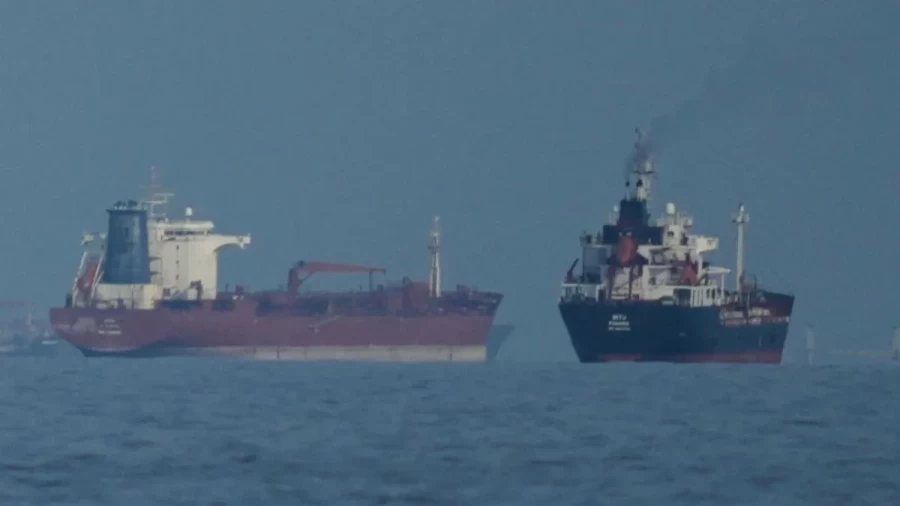
The attack on the Indian-flagged vessels occurred while several commercial ships were attempting to transit through the Strait of Hormuz. Although Iran had earlier announced the reopening of this maritime route, it later stated that the passage was being closed again due to alleged violations of agreements by the United States, while reports indicate that gunboats belonging to the Iranian Revolutionary Guards fired upon a tanker, while a container ship was hit by projectiles, resulting in damage to some of the containers on board.
Forced Retreat of Vessels and Iranian Military Control
Amidst the gunfire, two Indian-flagged vessels, including a supertanker carrying Iraqi oil, were forced to change course and retreat. Iran's joint military command has declared that the Strait of Hormuz is now under the 'strict control' of its armed forces. A warning was also issued stating that as long as the US-imposed blockade on Iranian ports continues, the movement of vessels through this strategic route will remain limited.
Impact on Global Energy Supply and Economy
The escalating tension between Iran and the United States has severely impacted movement in the Strait of Hormuz. As one of the world's most critical maritime corridors, approximately one-fifth of the global oil supply passes through this strait. Any disruption here poses a significant threat to global energy security and the international economy. Iran had briefly opened the route following a 10-day ceasefire, but the situation deteriorated again after the US announced the continuation of the blockade on Iranian ports.
