

- India,
- 07-Jan-2026 09:39 PM IST


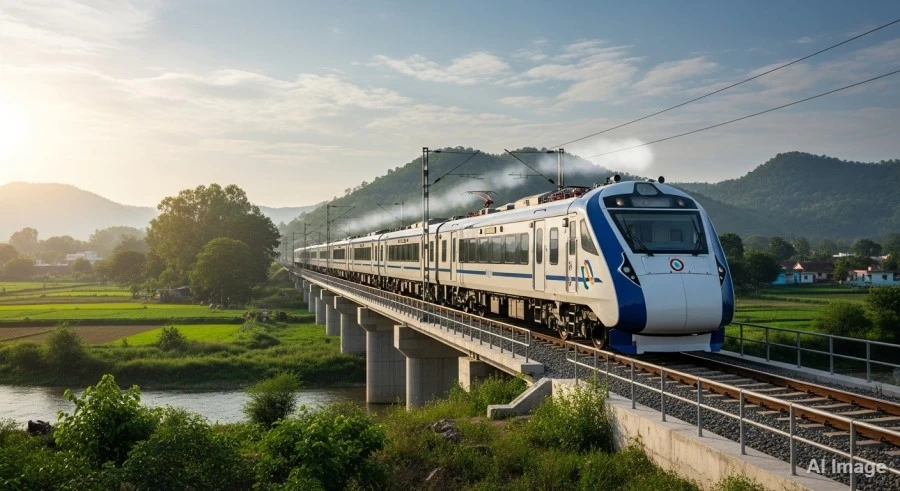
India is on the cusp of a major breakthrough in green mobility as its first hydrogen train is now fully prepared for trial runs. This ambitious railway project has reached its final stage, and the train is expected to hit the tracks very soon. This initiative will place India among a select group of nations utilizing hydrogen-fueled rail technology, with its design and capabilities considered in some aspects more advanced than existing trains in countries like China and Germany.
Indigenous Innovation and Broad Gauge Record
This pilot project by Indian Railways, now in its concluding phase, represents a remarkable feat of indigenous innovation. The train is poised to become one of the world's longest broad-gauge (5 feet 6 inches) hydrogen trains. It comprises a total of 10 coaches, including 2 driving power cars and 8 passenger coaches, while all these coaches have been entirely designed and manufactured domestically at the Integral Coach Factory (ICF) in Chennai, reinforcing the 'Make in India' initiative. While hydrogen trains are already operational in Germany and China, India's version stands out as the longest built on the broad gauge. On top of that, with a combined power output of 2,400 kW from its two power cars, it. Is being hailed as one of the most powerful hydrogen trains globally, showcasing its technological superiority.
Green Hydrogen Fueling the Future
The hydrogen required to power this state-of-the-art train will be sourced from a modern hydrogen plant established in Jind, Haryana. This plant boasts a storage capacity of 3,000 kg and produces hydrogen through the electrolysis of water, a process that yields 'Green Hydrogen, while ' Officials have confirmed that a stable 11 kV power supply has been ensured to enable uninterrupted operation of the plant. Haryana Chief Secretary Anurag Rastogi, during his review of the project, emphasized the importance of a solid backup system and a quick response mechanism to ensure smooth and efficient operations. This commitment to green hydrogen marks a significant stride towards promoting environmentally friendly transportation.
The Jind-Sonipat Corridor: Trials and Operations
The hydrogen train will operate between Jind and Sonipat in Haryana, passing through Gohana. Its trial runs have been successfully completed, and all necessary technical checks have been performed. According to officials, the train's operational speed has been set at 110 km/h, making it an efficient and swift mode of transport. However, detailed information regarding commercial operations, ticket booking, and the precise timetable will be released at a later date. While there has been no official announcement regarding ticket prices, media reports suggest that fares. Could range between ₹5 and ₹25, aiming to make it accessible to the general public.
Unveiling Advanced Passenger Experience and Safety Features
This hydrogen train is designed to offer passengers a metro-like experience. Each coach will feature two doors on both sides, facilitating easy boarding and deboarding. The train is engineered for silent operation, promising a quiet and comfortable journey for passengers. All modern amenities, including fans, lights, and air conditioning, will be available, while for enhanced safety, the doors of the 8 passenger coaches will fully close before the train commences movement, ensuring passenger security. With 360 kg of hydrogen, the train can cover approximately 180 km, a range described as many times greater than traditional electric trains. Power engines at both ends of the train enable rapid acceleration and smooth speed, further enhancing the travel experience.
A Key Component of Indian Railways' Green Mobility Mission
Last month, Union Rail Minister Ashwini Vaishnaw informed the Lok Sabha that Indian Railways had initiated the hydrogen train as a pilot project. This project is being executed in accordance with the standards set by the Research, Designs and Standards Organisation (RDSO). The Minister confirmed in a written response to Parliament that the manufacturing of the hydrogen train-set is complete. A dedicated hydrogen plant has been constructed in Jind to supply. Hydrogen for this train, producing green hydrogen through the electrolysis process. Officials have yet to provide details on passenger capacity, ticket prices, and the exact commercial launch date, which will be clarified following the successful completion of trial runs and commissioning.
Anticipated Launch and India's Global Standing
According to media reports and government statements, the trial run for. This hydrogen train is anticipated to commence on January 26, 2026. However, an official announcement from the highest levels is still pending, while with this pilot project, India will join the ranks of select countries actively engaged in hydrogen-powered rail technology. Unlike many hydrogen trains globally, this project involves the conversion of a Diesel Electric Multiple Unit. (DEMU) to hydrogen technology, which is a brilliant demonstration of India's unique and indigenous engineering capabilities. This will firmly establish India as a significant player on the global map of green transportation.
