

- India,
- 07-Feb-2026 10:19 AM IST
- (Updated 07-Feb-2026 10:20 AM IST)


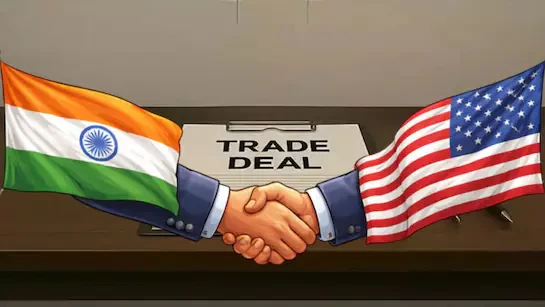
India and the United States on Friday released the framework for an Interim Trade Agreement (ITA), marking a significant shift in bilateral economic relations, while under this new arrangement, US tariffs on a wide range of Indian goods have been slashed from 50% to 18%. Plus, the 25% additional tariff previously imposed on India due to its procurement of Russian crude oil has been rescinded. This strategic move is expected to provide Indian exporters with enhanced access to the American market, fostering a more strong trade environment between the two nations.
Strategic Market Access and Economic Commitments
The joint statement issued by both governments indicates that this framework will accelerate negotiations for a Comprehensive Bilateral Trade Agreement (BTA), which commenced on February 13, 2025.18 lakh crore. 30 lakh crore) over the next five years. These imports will primarily focus on energy products, aircraft and components, precious metals, technology products, and coking coal, aimed at supporting India's growing industrial needs.
Addressing Non-Tariff Barriers and Regulatory Alignment
A critical component of the ITA is the resolution of long-standing non-tariff barriers that have historically hindered trade. India has committed to streamlining pricing regulations and registration delays for American medical device companies, potentially providing Indian healthcare providers with better access to advanced technology. Also, licensing procedures for US Information and Communication Technology (ICT) products will be simplified. Within six months of the agreement's implementation, India will evaluate the feasibility of recognizing US standards and testing results in specific sectors to eliminate redundant testing processes and reduce operational costs for businesses.
Sectoral Impact and Export Opportunities
The agreement stipulates the complete removal of tariffs on several key Indian exports, including generic pharmaceuticals, gems and diamonds, and aircraft parts. According to analysts, this will Notably benefit India's MSME sector, farmers, and the fishing community. Labor-intensive industries such as textiles, leather, footwear, handicrafts, and organic chemicals are poised for growth. The US has also granted exemptions under Section 232 for aircraft parts and established tariff-rate quotas for certain Indian auto components, providing a competitive edge to the Indian manufacturing sector in the North American market.
Safeguarding Domestic Agriculture and Dairy Interests
While expanding trade, India has maintained strict protections for its sensitive agricultural and dairy sectors. Minister Goyal emphasized that no tariff concessions have been granted for products such as maize, wheat, rice, soy, poultry, milk, and meat to protect rural livelihoods and food security, while however, India has agreed to reduce or eliminate duties on specific US agricultural exports, including dried distiller grains, red sorghum for animal feed, dried fruits, soybean oil, and certain spirits. This balanced approach aims to satisfy trade partners while ensuring domestic economic stability.
Analysis of Future Trade Dynamics
According to trade experts, the ITA serves as a foundational step toward a more integrated digital trade ecosystem. Both nations have agreed to collaborate on reducing discriminatory regulations in e-commerce, data flows, and cloud services. This cooperation is expected to bolster India's AI and digital infrastructure through the import of high-end GPUs and data center equipment. The agreement also includes a 'reciprocity clause,' allowing either nation to adjust its commitments if the other party modifies agreed-upon tariffs in the future. This framework is viewed by analysts as a strategic alignment to secure global supply chains and deepen the Indo-Pacific economic partnership.
