
- India,
- 25-May-2026 12:07 PM IST



A startling investigative report by the Financial Times has revealed a complex procurement network where Iran's Islamic Revolutionary Guard Corps (IRGC) utilized a company based in the United Arab Emirates (UAE) to acquire sophisticated military satellite equipment from China. This revelation is particularly sensitive because the very technology procured through this channel was integrated into Iran's drone and missile programs, which were subsequently used to launch more than 2800 drone and missile strikes against the UAE itself. The report highlights the intricate web of international trade and the challenges of monitoring dual-use technology transfers in the Middle East.
The Procurement Chain and Logistics
According to the findings, the IRGC Aerospace Force orchestrated the purchase of military-grade satellite communication equipment from China towards the end of 2025. To facilitate this transaction, they employed a company named Teleson, which is situated in the Ras Al Khaimah emirate of the UAE. 8 tons of Chinese satellite antennas and related components. The journey of these sensitive materials began in the Chinese city of Shanghai and moved through international waters before reaching Iranian soil.
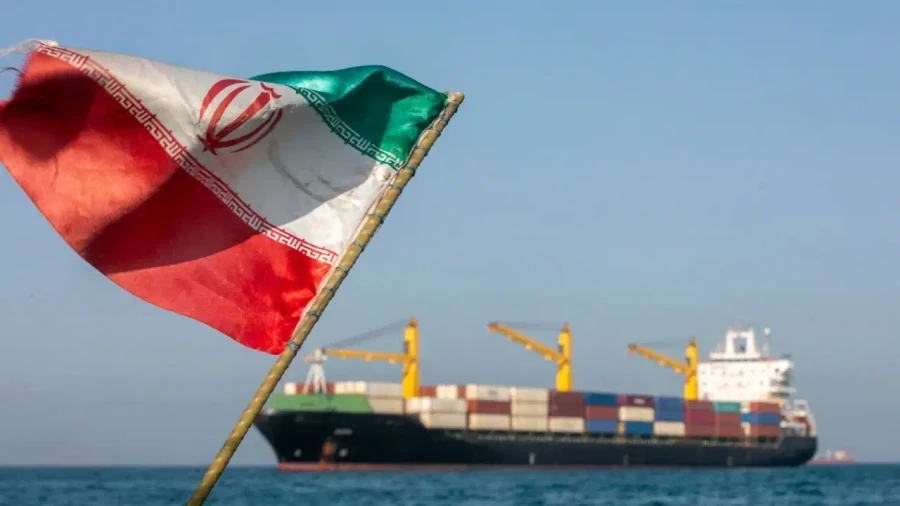
The shipment was first loaded onto a container vessel named Zhong Gu Yin Chuan in Shanghai, which then transported the cargo to the Jebel Ali Port in Dubai. From there, the Iranian-flagged vessel Rama III took over the transport, moving the equipment to the Bandar Abbas port in Iran. The investigation by the Financial Times uncovered that the Rama III attempted to obscure its actual location by transmitting false GPS signals. This tactic was intended to deceive other vessels and maritime monitoring systems into believing the ship was elsewhere. However, satellite imagery confirmed the vessel's true trajectory toward Iran, and a ship matching its description was spotted at Iran's Shahid Rajaei port on November 29, which was the designated delivery point.
Technical Details and Corporate Entities
The shipment consisted of 6 boxes, which were officially declared in customs records as antennas and accessories. 8 tons. The intended recipient of this equipment was an Iranian firm known as Ertebatat Faragostar Kish (EFK). The report clarifies that the UAE-based Teleson purchased these Chinese devices on behalf of EFK. While EFK is an Iranian telecommunications company, it operates for the Saman Industrial Group, an entity that has been under United States sanctions since 2023.
The United States government has accused the Saman Group of providing critical support to the IRGC Aerospace Force's missile, drone, and electronic warfare programs. Although EFK itself isn't currently under Western sanctions, its role as a front for the Saman Group is a point of significant concern for international regulators. The Saman Group has reportedly used various companies across different countries to procure essential UAV components, including antennas, servomotors, and other specialized equipment required for unmanned aerial vehicles.
Broader Implications and US Sanctions
The involvement of Chinese firms in Iran's military expansion has also drawn heavy scrutiny. A previous report published in the Financial Times last month noted that the IRGC had acquired a satellite from a Chinese company called The Earth Eye. This satellite was allegedly used to monitor American military bases and critical infrastructure across the Gulf region. In response to these activities, the United States imposed sanctions on The Earth Eye, reinforcing its stance that any Chinese companies assisting Iran's military capabilities will face severe consequences. The use of UAE-based intermediaries like Teleson to bypass oversight underscores the persistent efforts by the IRGC to modernize its arsenal despite international pressure.