

- India,
- 06-Apr-2026 09:11 AM IST


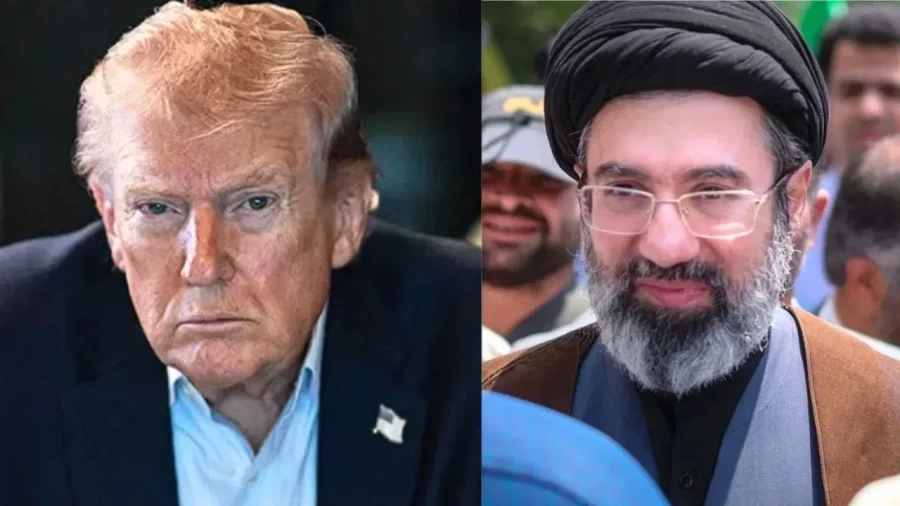
In a significant development amid escalating tensions in the Middle East, a final round of negotiations is underway between Iran and the United States regarding a potential 45-day ceasefire. According to official reports and international sources, these talks are viewed as the last opportunity to prevent the current friction from expanding into a large-scale regional conflict, while uS President Donald Trump has established a 48-hour deadline for this agreement, which is set to expire on Tuesday. Meanwhile, Iran's central military command has explicitly stated that it will deliver a devastating response if its civilian infrastructure is targeted. A group of regional mediators is currently working to bridge the diplomatic gap between Tehran and Washington to avert a potentially catastrophic war.
Details of the Proposed 45-Day Ceasefire Agreement
According to reports, a group comprising the United States, Iran, and regional mediators is currently deliberating the terms of a proposed 45-day ceasefire. The primary objective of this agreement is to achieve an immediate cessation of military activities and create space for diplomatic engagement. Mediators believe that this 45-day window would allow both parties to address their concerns and move toward a more permanent resolution. Sources indicate that Iranian mediators are making a final push to implement the ceasefire, as it's seen as an essential step toward a lasting settlement of the conflict, while uS and Israeli sources involved in the talks have confirmed the critical nature of these efforts, although uncertainty remains regarding the possibility of a partial agreement within the next 48 hours.
President Trump’s Ultimatum and the Tuesday Deadline
US President Donald Trump has maintained a firm stance throughout this diplomatic standoff. Through a series of posts on the social media platform 'Truth Social', Trump warned Iran that consequences would be severe if his demands weren't met and the Strait of Hormuz wasn't reopened. The President has set a deadline for Tuesday at 8:00 PM Eastern Time. In his messages, Trump explicitly stated his readiness to inflict significant damage on Iran's infrastructure if an agreement isn't reached. Using rhetoric such as 'blowing everything up' and warning of 'hell', the President has sought to increase pressure on Tehran. In a recent interview, he also indicated that while a deal is possible, the military option remains on the table in the event of failure.
Iran’s Military Response and Civilian Infrastructure Warnings
Iran's central military command issued an official statement on Monday, April 6, clarifying its defensive position. Iranian officials stated that they're fully prepared to counter any aggression. The statement placed particular emphasis on the protection of civilian infrastructure, while iran warned that if its rival nations target civilian facilities or populated areas, its retaliatory actions would be far more destructive than previous encounters. The Iranian military leadership also indicated that their defensive strategies have been activated to respond to any external threats. This statement comes at a time when military mobilization in the region is at its peak, raising fears that even a minor incident could escalate into a major confrontation.
Strategic Importance of the Strait of Hormuz
The status of the Strait of Hormuz remains at the center of this geopolitical dispute. This waterway is vital for global energy supplies, and its reopening is one of the primary conditions set by President Trump. According to reports, a failure in negotiations could have a direct impact on energy and water facilities across the Gulf nations. Experts and sources suggest that in the event of a conflict, there is a high probability of attacks on Iran's civilian infrastructure followed by retaliatory strikes on critical facilities in the Gulf region. Such a scenario wouldn't only lead to regional instability but also pose a significant threat to global energy security. Regional mediators are emphasizing the implementation of the 45-day ceasefire specifically to mitigate these risks.
The Role of International Mediators and Current Status
The ongoing negotiations are widely regarded as the 'last chance' to avoid a broader conflict. US, Israeli, and regional sources have agreed that the next 48 hours will be decisive for the future of the region. While the likelihood of a partial agreement is reported to be low, maintaining diplomatic channels remains the only viable alternative to military escalation. Mediators are striving to bring both parties to a common understanding to prevent a direct military clash. If this 45-day ceasefire is successfully implemented, it could represent a historic step toward de-escalating long-standing tensions in the Middle East. For now, the international community remains focused on the Tuesday deadline and the subsequent developments.
