
- India,
- 09-Sep-2026 09:32 PM IST



The diplomatic relations between Israel and the United Kingdom have faced a significant setback as tensions escalate over the West Bank issue. In a major move, the Israeli Foreign Minister has announced the decision to close the United Kingdom's consulate, also known as the commercial consulate, located in Jerusalem. This announcement comes as a direct response to the recent diplomatic actions taken by the British government regarding trade and settlements in the West Bank region.
The Root of the Dispute
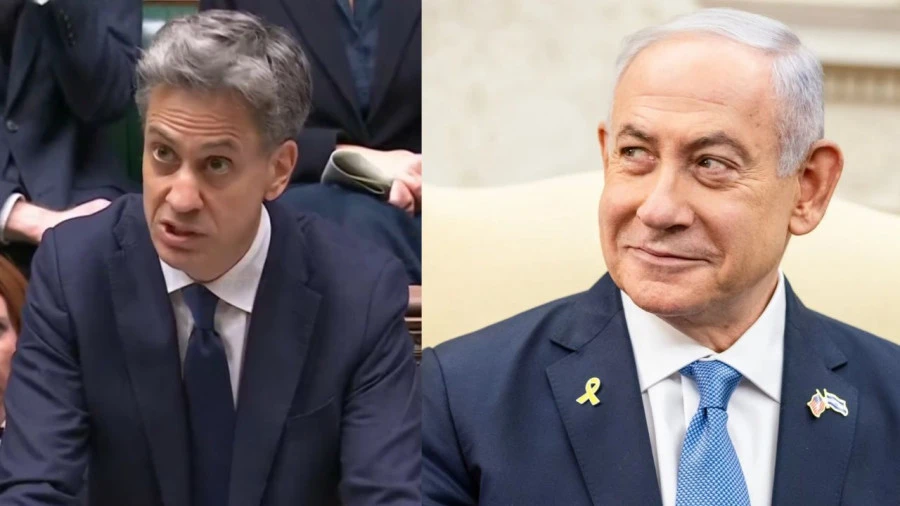
The conflict intensified following a statement made by the United Kingdom on Tuesday, while the British government announced a ban on the import of goods originating from Israeli settlements in the occupied West Bank. This decision was formally declared in Parliament by the UK Foreign Secretary, Edward Miliband. During his address, Miliband also indicated that other nations, specifically France and Canada, are expected to make similar announcements in the near future, signaling a coordinated international stance on the matter, while in retaliation to this trade restriction, the Israeli Foreign Ministry decided to take the drastic step of shutting down the UK's consular operations in Jerusalem.
Understanding the Embassy
While the terms embassy and consulate are often used interchangeably by the general public, they represent distinct entities with different roles and hierarchies. An embassy, known as Dutavas in Hindi, is derived from the word Ambactia, which signifies service or a delegation. It's the highest and most official diplomatic mission of a sovereign country established in the capital city of another sovereign nation. For instance, India maintains its embassy in Washington DC because it's the capital of the United States. The head of an embassy is the Ambassador, who serves as the direct personal representative of their country's head of state, such as the President or Prime Minister. Under international law, ambassadors enjoy special diplomatic immunity, meaning they can't be arrested or prosecuted under the laws of the host country.
The Role of a Consulate
A consulate, or Vanijya Dutavas, serves as a branch office of the diplomatic mission. Unlike an embassy, which is restricted to the capital, consulates are typically established in other major cities. These locations are chosen based on the presence of a large number of citizens from the home country or significant commercial and cultural activities, while using the same example, while India's embassy is in Washington DC, it operates consulates in cities like New York, Chicago, Houston, and San Francisco. A consulate is headed by a Consul or a Consul General, and this office operates under the jurisdiction and authority of the embassy. The diplomatic immunity granted to a Consul is generally more limited compared to that of an Ambassador.
Key Differences Between Embassy and Consulate
The primary differences between these two diplomatic offices can be categorized by their status, location, and functions. Firstly, in terms of status and location, there is only one embassy in a country, and it's always located in the capital city as the supreme diplomatic mission. In contrast, multiple consulates can be opened across various cities within the same country. Secondly, their methods of operation differ Importantly. An embassy primarily manages diplomatic, political, and strategic relations between two governments. This includes government-to-government dialogues, the signing of treaties, and the formulation of bilateral policies. On the other hand, a consulate deals directly with the needs of citizens. Its responsibilities include issuing visas, providing passport-related services, promoting trade, and assisting citizens of its home country who may be stranded or facing difficulties abroad. Lastly, if a consulate isn't present in a particular city, its duties are managed directly by the embassy or the High Commission.