

- India,
- 05-Nov-2025 09:53 AM IST


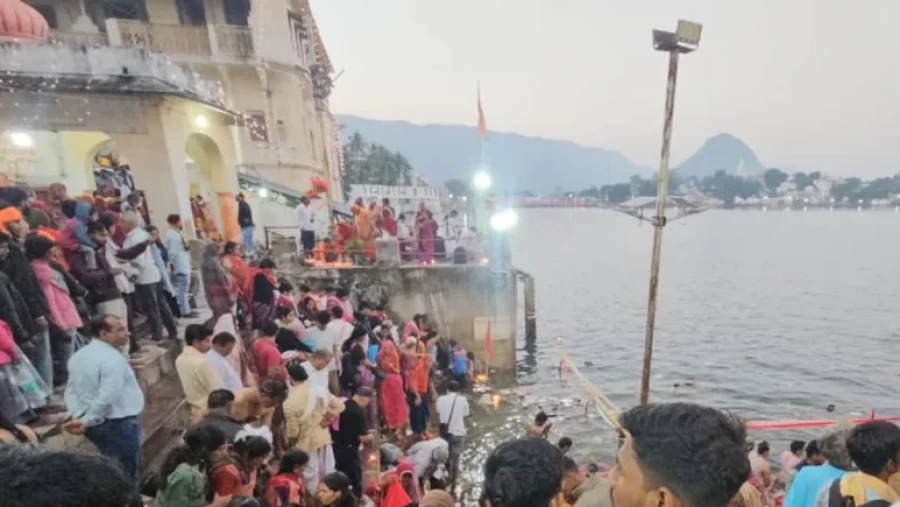
On the auspicious occasion of Kartik Purnima, Tirtharaj Pushkar witnessed an incredible spectacle of faith, while this Wednesday, despite the biting cold, millions of devotees, including sadhus, saints, men, and women, began arriving at the 52 ghats of the sacred Pushkar Sarovar from the Brahma Muhurta (pre-dawn hours). The enthusiasm of the pilgrims was palpable, undeterred by the chilly winds as they immersed themselves in the holy waters, while the entire atmosphere around the lake resonated with the fervent chants of 'Har-Har Mahadev' and 'Jai Brahma Dev,' creating a profoundly divine and spiritual ambiance. This annual festival draws devotees from across the nation, all seeking to take a holy dip in Pushkar Sarovar on this sacred day. The sight of millions gathered simultaneously at the 52 ghats, accompanied by chanting and a devotional atmosphere, presents a truly unique spectacle. Even in the Brahma Muhurta, before the first rays of the sun touch the earth, pilgrims don't hesitate to enter the cold water, a testament to their unwavering faith and belief. The ghats were so crowded that there was barely any space to move, yet everyone maintained peace and order, patiently awaiting their turn, while a serene and devotional expression was visible on every face, further enhancing the sanctity of this auspicious occasion.
Mythological Significance and the Origin of Pushkar
According to Shashi Kant Sharma, a resident of Pushkar, taking a bath in Pushkar Sarovar on Kartik Purnima is believed to cleanse all sins and lead to the attainment of salvation (moksha), while this ancient belief has drawn millions to the sacred lake for centuries. Religious tradition holds that on this very day, Lord Brahma performed a puja at Pushkar Tirth Sarovar, which further elevates the sanctity of this place. As per a mythological tale, Lord Vishnu presented a lotus flower to Lord Brahma, who then dropped it on Earth, leading to the birth of Pushkar Tirth at that spot. Because of this, bathing on this day is considered extremely auspicious and fruitful, a tradition. That devotees have followed for generations, considering their lives blessed by this act.
Rituals of Worship and Deepdan After the Holy Dip
Devotees from all over the country, after taking their holy dip before sunrise, proceed to offer prayers at the Brahma Temple. Following their purifying bath, they make their way to the revered Brahma Temple, where they worship Lord Brahma, the principal deity of this pilgrimage site. Concurrently, they also perform Deepdan, offering lamps into the sarovar, praying for the prosperity and well-being of their families. The sight of the sarovar illuminated by countless flickering lamps is enchanting and deeply spiritual, filling the hearts of devotees with peace and contentment, while thousands of lamps, both small and large, light up the entire lake, symbolizing the victory of light over darkness and embodying hope. This visual spectacle isn't only spiritually significant but also grand and inspiring to behold.
Special Presence of Sadhus and Saints
On the occasion of the holy dip and Deepdan festival, sadhus and saints also took their sacred bath in Pushkar Sarovar and performed special pujas. Their revered presence further enhanced the solemnity of the festival. The ghats witnessed a magnificent confluence of Vedic chants, Aarti, and Deepdan, filling the entire atmosphere with divine energy. The sounds of mantras emanating from the sadhus resonated far and wide, transporting devotees to a different spiritual realm. Pilgrims experienced devotion and peace as they bathed in the waters of the sarovar. The shimmering lamps and the sounds of bhajans and kirtans enveloped the surroundings in spiritual hues, making this Kartik Purnima bath a remarkable fusion of Pushkar's spiritual identity and Hindu faith.
Pushkar's Spiritual Heritage and Cultural Importance
This Kartik Purnima event isn't merely a religious bath but a vibrant demonstration of Pushkar's rich spiritual heritage and Indian culture. It brings millions together, connecting them through their shared faith and devotion. This festival annually reminds us of our ancient traditions and beliefs, which. Have been passed down through generations and remain just as relevant today. Pushkar's annual fair and holy dip hold not only religious significance but also serve as a major hub for cultural exchange and community harmony. People from all corners of the country come together to celebrate this. Sacred festival, embodying the spirit of unity in diversity that defines India.
