
- India,
- 18-Oct-2026 09:18 PM IST



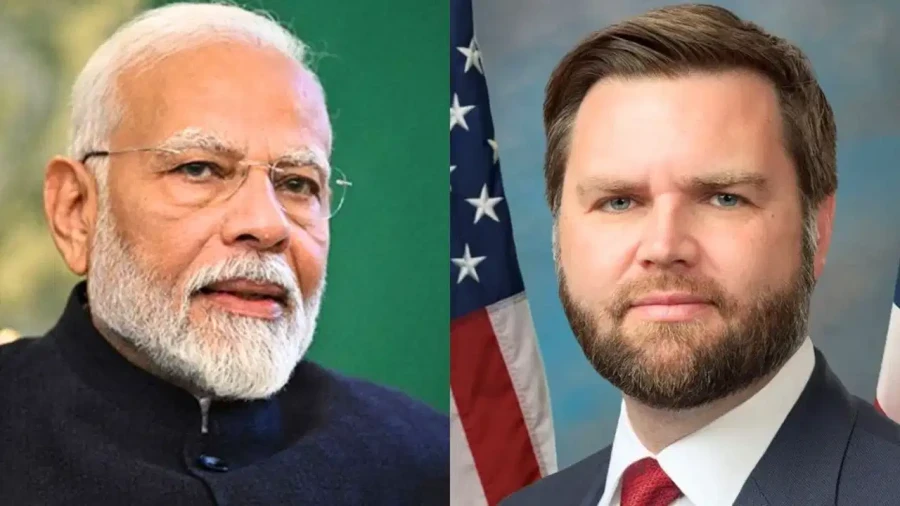
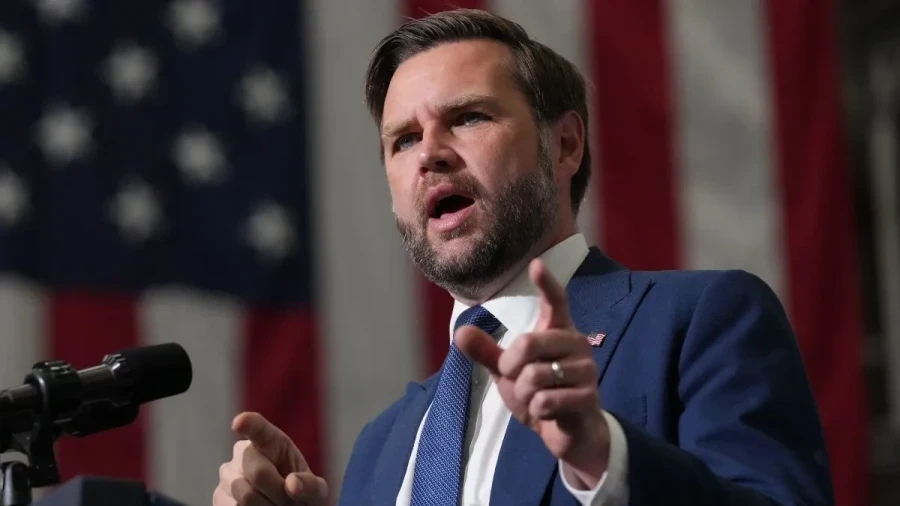
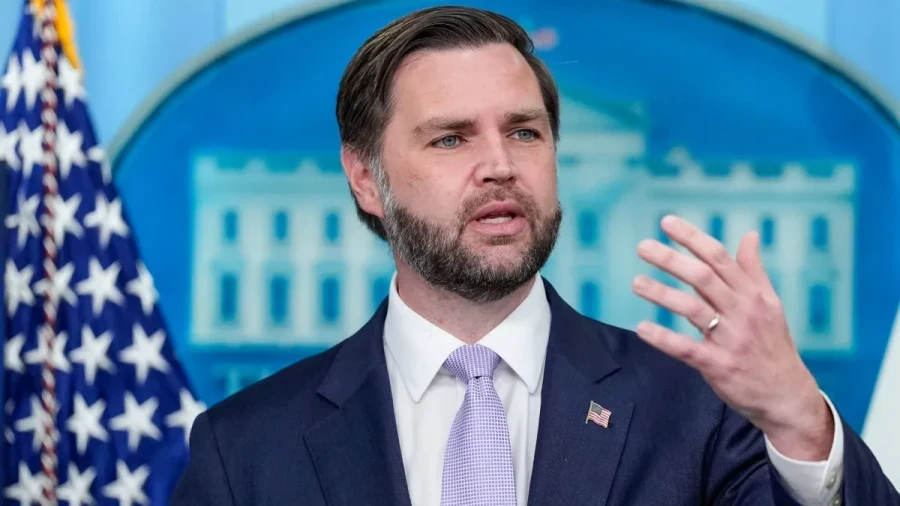
United States Vice President JD Vance has finally addressed and clarified his controversial remarks where he referred to foreign workers as indentured servants amid the ongoing H-1B visa debate. He acknowledged that his previous rhetoric might not have been entirely appropriate. However, while defending his stringent immigration stance, Vance asserted that the United States must warmly welcome foreign workers while simultaneously safeguarding the employment interests of its own citizens and domestic workers. This clarification from Vance comes at a highly sensitive time when a heated debate is unfolding across American corridors regarding immigration policies directed at foreign professionals, particularly Indian IT employees. This entire controversy has sparked a major global discussion, placing Indian technical talent and American labor policies right at the center of international scrutiny.
Affection for Indian-Origin In-Laws
During the course of his clarification, JD Vance made a specific reference to his personal life and his Indian-origin in-laws. He stated in unequivocal terms that he holds deep affection for his spouse's family. Vance remarked that he loves his mother-in-law and father-in-law, who immigrated to the United States from South India, while this detail carries profound significance as his wife, Usha Vance, is of Indian origin, and their daughter was born on American soil, currently holding the prestigious position of the Second Lady of the United States. Expressing immense pride, Vance stated that he's very proud of them and loves them dearly. He brought up this personal narrative to convey to his critics that his statements were never intended to harbor malice or prejudice against any specific race or geographical origin, but rather to focus entirely on the economic realities and structural policies of the American labor market. Despite this, the terminology he previously employed triggered widespread international resentment, making this clarification necessary to bridge the diplomatic and public relations gap.
The Rationale Behind Protecting American Workers
Continuing his argument, JD Vance attempted to elucidate his policy stance through a concrete example. He stated that the American immigration system ought to be structured in a manner that welcomes every individual genuinely desiring to contribute positively to the nation, while strictly ensuring that these policies don't create adverse or negative repercussions on the employment prospects of local American workers. Providing a specific illustration, Vance noted that if a large multinational corporation hires a foreign accountant under the false pretext of failing to find a suitable and qualified employee locally, while simultaneously forcing an already dedicated American accountant employed within the same company out of their job, such an action can't be considered fair or justifiable. In Vance's firm words, when companies execute such unfair moves and displace local accountants already earning their livelihoods, it doesn't fall under the category of fairness in any scenario, while he emphasized that such a policy proves beneficial neither for the immigrant worker nor for the American citizen employee. Reiterating his core objective, he stated that his intention has never been to outrightly reject immigrants, but rather to ensure that the nation's broader immigration system operates entirely in alignment with American national interests.
The Term 'Indentured Servant' and Its Deep Historical Context
The intense global controversy triggered by JD Vance's use of the term 'indentured servant' is rooted in a profound historical and socio-economic context. Earlier this month, JD Vance made a fervent appeal to American corporations, urging them to prioritize domestic and local employees above all else. He demanded of the American corporate sector that companies must put an end to replacing American workers with foreign laborers whom he characterized as indentured servants. The historical context associated with this specific term is precisely what fueled the controversy to such an unprecedented scale. Down the pages of history, indentured servants referred to laborers and workers who were strictly bound by legal contracts to perform labor for a fixed and predetermined duration. History bears witness that in numerous instances, these workers were subjected to extremely limited personal freedom and cruel, exploitative living and working conditions. From the perspective of Indian history, this terminology holds a deeply painful and significant resonance, while during the nineteenth century and the early twentieth century, vast numbers of Indian citizens were forcibly or contractually sent to distant countries and British colonies to endure harsh labor. Prominent among these historically significant locations were Mauritius, Fiji, the Caribbean region, and South Africa. Consequently, when an American political leader applied this exact historical term to modern, highly skilled IT professionals, it was widely perceived as deeply insulting and culturally insensitive.
Green Card Processing and PERM Restrictions
This entire controversy escalated further during a period when reports emerged regarding the Trump administration imposing halts and restrictions on certain filings and procedures tied to employment-based green card processing. According to media reports and industry-related data, several global corporate giants have fallen within the purview of this dispute, prominently including Microsoft, Cognizant, Infosys, Tata Consultancy Services (TCS), Wipro, HCL, and Capgemini. PERM, which stands for Permanent Labor Certification, is widely regarded as the foundational and most critical preliminary step in the entire employment-based green card procedure. Through this legal channel, employers or corporations can officially sponsor eligible foreign employees to secure permanent residency within the United States. Following the emergence of this recent operational development, a massive debate has been reignited concerning the indispensable role of Indian professionals in the United States and the operational policies of major corporations heavily reliant on foreign talent for their survival and growth.
Social Cohesion and Demographic Shifts Argument
Arguing in strong defense of his immigration philosophy, JD Vance placed special emphasis on the proposition that preserving social cohesion and a sense of community within America's internal framework is just as vital as fostering economic expansion. Presenting his rationale, he argued that if massive numbers of people migrate and settle within a country over an extremely brief span of time, it can induce massive and unpredictable transformations in the demographics and cultural fabric of local communities. Citing personal observations, he mentioned that several of his neighbors and acquaintances frequently voice grievances regarding their inability to find even a single person speaking their native or familiar language within their own residential neighborhoods. Vance clarified that this commentary was neither an open nor covert critique of any specific community; rather, he maintains that the straightforward desire of American citizens shouldn't be deemed unreasonable when they wish to reside within their own homeland communities alongside individuals who share certain basic cultural or social affinities. Restating his viewpoint, he affirmed that the nation's immigration system should always keep its doors open to individuals capable of making meaningful contributions to national development, yet the pace of incoming immigration must remain sufficiently regulated to thoughtfully address emerging concerns regarding cultural shifts within local American communities.
Strong Objections and Concerns Raised by the Government of India
The government of India, through its Ministry of External Affairs, registered a strong, sharp, and unequivocal response against JD Vance's controversial statements. In its official statement, the Indian Ministry of External Affairs asserted unequivocally that characterizing professionals in such a manner is entirely unwarranted and completely disregards the historic and invaluable contributions made by Indian professionals toward the national economy and vast innovation sector of the United States. According to official data and perspectives put forth by the ministry, all Indian professionals operating within the United States are exceptionally well-educated, highly skilled, and technologically proficient, acting as the backbone that strengthens the local economy and modern innovation ecosystem. Plus, India expressed profound concern regarding the various restrictions being imposed on employment-based green card procedures tied to Indian IT companies on American soil. New Delhi explicitly maintained that such unilateral restrictions run directly counter to the shared ambitions and enduring spirit of bilateral cooperation binding India and the United States together. This ongoing diplomatic and economic friction between the two nations has once again proven that migration and labor policies remain exceptionally sensitive and critical subjects in bilateral relations, requiring uninterrupted and sustained dialogue well into the future.