

- India,
- 07-Mar-2026 09:13 AM IST


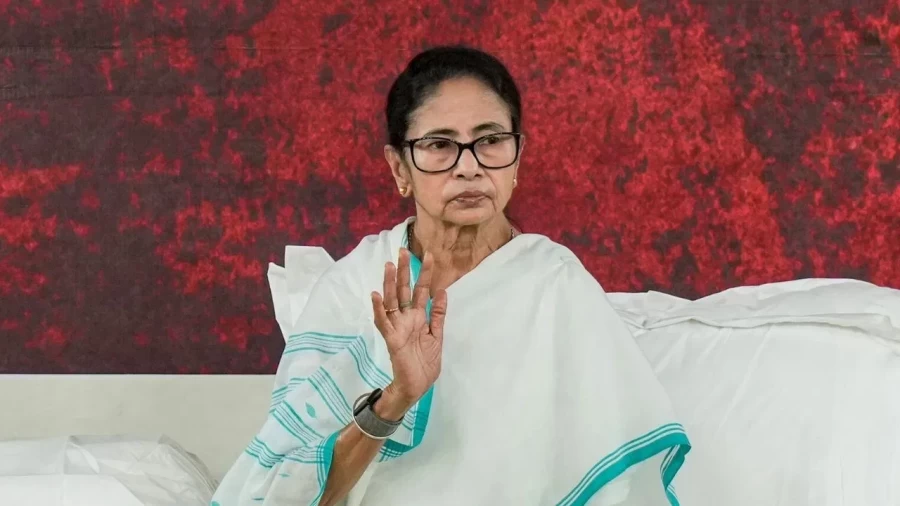
West Bengal Chief Minister Mamata Banerjee has commenced an indefinite sit-in protest, or dharna, at the Esplanade Metro Channel in Kolkata, raising serious allegations regarding discrepancies in the electoral rolls, while the Chief Minister's move comes in response to the reported removal of millions of names from the voter list following the Special Intensive Revision (SIR) process conducted by the Election Commission of India. Banerjee has accused the commission of acting arbitrarily, claiming that the deletion of names has disenfranchised a significant portion of the state's population. This high-profile protest is strategically timed just days before the scheduled visit of the Chief Election Commissioner (CEC) to West Bengal to oversee election preparedness. Accompanied by senior leaders of the Trinamool Congress, the Chief Minister emphasized that the integrity of the democratic process is at stake.
The controversy stems from the final voter list published on 28 February. According to the state government and the ruling party, the revision process has led to the exclusion of legitimate voters under the guise of administrative cleanup, while mamata Banerjee has labeled this process a 'conspiracy' designed to influence electoral outcomes by reducing the voter base in specific regions. The protest aims to highlight what the party describes as a systematic failure of the Election Commission to ensure a fair and inclusive electoral roll.
Presentation of 22 Living Individuals Declared Dead by Commission
In a startling claim, Chief Minister Mamata Banerjee stated that the Election Commission has removed the names of several individuals by declaring them deceased in official records, despite them being alive. To substantiate these allegations, the Chief Minister announced that she would present 22 such individuals before the media and the public during the dharna. These individuals, according to Banerjee, serve as living proof of the gross negligence or intentional manipulation involved in the voter list revision. On top of that, she mentioned that 8 families who have suffered due to the SIR process would also be brought to the protest site to share their grievances. By bringing these cases to the forefront, the Chief Minister intends to challenge the methodology adopted by the commission and demand a thorough re-verification of the deleted entries.
Allegations of Systematic Exclusion from Electoral Rolls
The Trinamool Congress has alleged that the post-SIR process lacked transparency and failed to follow established protocols for name deletion. The Chief Minister pointed out that numerous complaints have surfaced from across the state where citizens were removed from the list without prior notice or physical verification. The party contends that this isn't merely a series of technical errors but a deliberate attempt to target specific demographics and constituencies. Speaking from the protest site, Banerjee asserted that while updating the electoral roll is a constitutional necessity, it must not be weaponized for political ends. She has demanded that the commission provide a detailed justification for the mass deletions and restore the voting rights of all eligible citizens immediately.
Statistical Discrepancies Highlighted by Trinamool Congress
Providing a statistical perspective to the protest, TMC General Secretary Abhishek Banerjee raised concerns over the scale of the deletions. He claimed that while the initial draft voter list saw the removal of approximately 58 lakh names, this figure escalated to nearly 63 lakh by the time the final list was released. On top of that, he stated that over 60 lakh voters have been placed under the 'under investigation' category, leaving their ability to vote in the upcoming elections in a state of limbo. Abhishek Banerjee argued that such a massive reduction in the number of voters can't be dismissed as a routine administrative exercise, while the party has formally requested the Election Commission to release the criteria used for these deletions and to address the discrepancies in a time-bound manner.
Political Significance of Protest Ahead of CEC Visit
The timing of Mamata Banerjee's dharna is seen as a significant political move to exert pressure on the Election Commission ahead of the Chief Election Commissioner's visit. By taking to the streets, the Chief Minister is signaling that her government won't accept the current voter list without a fight. Political observers note that this protest serves to mobilize the party's base and frame the narrative around the protection of democratic rights, while the Chief Minister has made it clear that the protest will continue until a satisfactory resolution is reached regarding the excluded voters. This development underscores the deepening friction between the West Bengal state administration and the central election body, setting a contentious tone for the upcoming electoral cycle.
Concerns Regarding Democratic Rights and Fair Elections
During the protest, Mamata Banerjee invoked Article 326 of the Indian Constitution, which guarantees the right to vote to every adult citizen. She argued that any administrative process that results in the mass disenfranchisement of people is a direct violation of constitutional mandates. The Chief Minister emphasized that fair elections are the bedrock of democracy and a flawed voter list undermines the legitimacy of the entire process. She further alleged that the Election Commission's actions appear to be influenced by external political pressures aimed at weakening the opposition's stronghold. Banerjee has urged the citizens of West Bengal to verify their names in the electoral rolls and report any unauthorized deletions to the authorities, promising that her party will provide legal and administrative support to those affected.
