
- India,
- 24-Sep-2026 06:43 AM IST



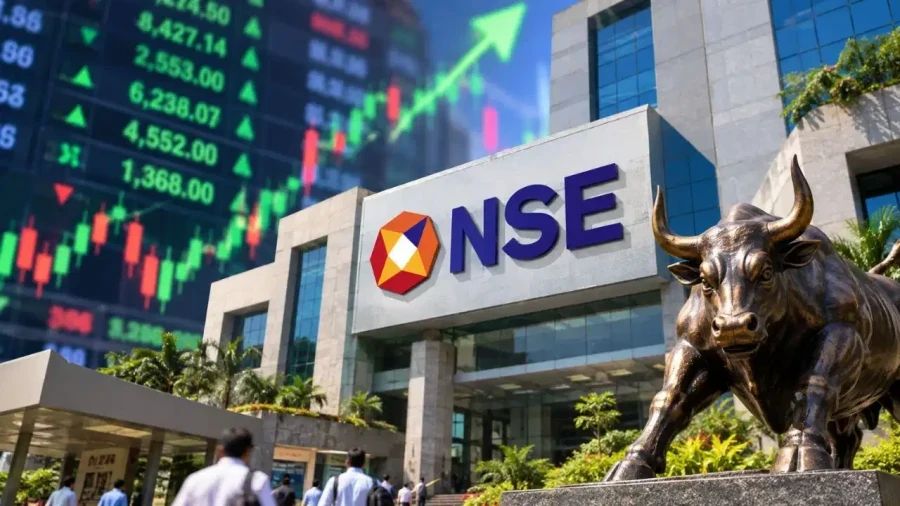
The Indian capital market is on the verge of a historic milestone as the National Stock Exchange (NSE) prepares for its highly anticipated listing. On Thursday, the shares of the National Stock Exchange won't only be listed on the Bombay Stock Exchange (BSE) but will also make their debut on the Metropolitan Stock Exchange of India (MSEI). This dual listing marks a significant chapter in the history of Indian financial markets, as the country's largest stock exchange becomes a publicly traded entity on competing platforms.
MSEI Circular and Trading Details
The Metropolitan Stock Exchange of India (MSEI) issued a formal circular on Wednesday, confirming that the equity shares of NSE would be admitted to trading in the Capital Market segment of the exchange starting from September 24. MSEI is a SEBI-recognized national-level stock exchange that provides a strong electronic trading platform across various segments, including Capital Markets, Equity Derivatives, Currency Derivatives, and Debt. Currently, the MSEI platform hosts over 250 listings and offers more than 3100 companies for trading, making it a comprehensive venue for investors.
Regulatory Context and Self-Listing Rules
The decision to list on external exchanges follows a recent clarification by Ashish Chauhan, the Managing Director and CEO of NSE. He stated that the exchange wouldn't seek approval from the Securities and Exchange Board of India (SEBI) to trade its own shares on its own platform. This is because current market regulator norms don't permit a recognized stock exchange to list its own securities on its own trading platform. Consequently, NSE shares will begin trading on both BSE and MSEI simultaneously, while the market is keeping a very close watch on grey market trends for what is considered one of the most awaited listings of the year.
IPO Financials and Grey Market Premium
Ahead of the listing, the unlisted shares of NSE were trading at a modest premium of just 2 percent over the IPO price in the grey market, suggesting a potentially quiet debut. This listing concludes a long process for NSE to become India's second listed stock exchange after the BSE, while the company's Initial Public Offering (IPO) was launched earlier this month with the objective of raising 22562 crore rupees. 64 crore shares by existing shareholders. As it's an OFS, the proceeds from the IPO will go directly to the selling shareholders rather than to the NSE itself.
Anchor Investor Participation
The price band for the NSE shares was set between 1700 rupees and 1785 rupees per share. With a lot size of 8 shares, the minimum application amount for retail investors stood at 14280 rupees. A day before the public bidding opened, the exchange successfully raised 6746 crore rupees from more than 150 anchor investors. Foreign Portfolio Investors (FPIs) accounted for 2883 crore rupees or 43 percent of the anchor book. More than 20 foreign long-only funds participated, including prominent names like Singapore's sovereign wealth fund GIC, the Abu Dhabi Investment Authority, and Norges Bank.
Domestic Institutional Interest
Domestic institutional investors also showed immense interest in the offering. Approximately 53 percent of the anchor book, amounting to 3588 crore rupees, was invested by over 25 mutual funds and 11 insurance and pension companies. 72 percent stake, invested over 500 crore rupees during the anchor round through LIC, LIC Mutual Fund, and LIC Pension Fund. This investment is notable as LIC's existing holding was already higher than the stake being offered in the IPO. Similarly, the SBI Group, which is selling a 1 percent stake through State Bank of India and SBI Capital Markets, also reinvested in the exchange. Through SBI Mutual Fund, SBI General, SBI Life, and SBI Pension Fund, the group's total investment exceeded 400 crore rupees.
Subscription Figures
The public issue saw overwhelming demand during the three-day bidding period from September 17 to September 21. The IPO was subscribed approximately 6 times the total offer size. Qualified Institutional Buyers (QIBs) led the demand, booking their reserved portion nearly 13 times. 6 times, respectively.