
- India,
- 22-Sep-2026 05:29 PM IST



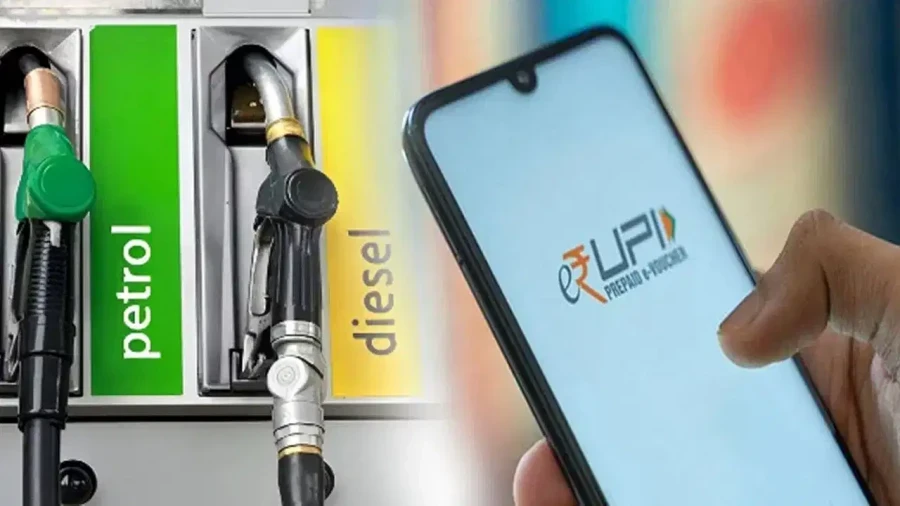
The recent announcement regarding the imposition of a flat Merchant Discount Rate (MDR) on Unified Payments Interface (UPI) transactions exceeding 2000 rupees at petrol pumps has triggered a significant wave of opposition across India. Petrol pump dealers in several major states, including Punjab, Madhya Pradesh, and Maharashtra, have expressed their strong disapproval of this move. The core of the issue lies in a 5 rupee flat charge that will now be levied on every UPI transaction that goes above the 2000 rupee threshold. This development has led many petrol pump associations to announce that they will stop accepting UPI payments for amounts exceeding this limit, creating a potential challenge for consumers who rely on digital payments for fuel purchases.
The Mathematical Impact on Dealers
To understand why petrol pump owners are concerned about a seemingly small 5 rupee charge, it's essential to look at the mathematics of their business. Unlike many other retail businesses that work on a percentage-based profit margin, petrol pump dealers operate on a fixed commission per litre, while this commission is determined by Oil Marketing Companies (OMCs) under the supervision of the Ministry of Petroleum and Natural Gas. 41 rupees per litre. 37 litres of fuel. 55 rupees.
However, if the customer pays this 3000 rupees via UPI, the dealer is now required to pay a flat MDR of 5 rupees. 55 rupees. While this might still seem like a profit, the dealers argue that when multiplied by dozens or hundreds of transactions daily, the cumulative impact is substantial. If a pump handles 40 such transactions of 3000 rupees in a single day, they would have to pay 200 rupees in MDR charges. Although they would still retain 4982 rupees in commission from those specific sales, the dealers view this as an unnecessary drain on their already stagnant margins.
Demands of the All India Petroleum Dealers Association
The All India Petroleum Dealers Association has taken a formal stand against these charges. Ajay Bansal, the President of the association, recently addressed a letter to the Finance Minister seeking intervention in the matter of payment processing costs. The association highlighted that their margins have remained unchanged since October 2017. During this period, the costs of operating a petrol pump, including electricity bills, staff wages, and the expenses required to meet various regulatory compliance standards, have increased Importantly. The association argues that because their income doesn't increase when the value of the transaction increases, they can't afford to absorb additional transaction fees.
The NPCI Mandate and Dealer Concerns
According to the orders issued by the National Payments Corporation of India (NPCI), no charge will be levied on UPI transactions up to 2000 rupees at any petrol pump in the country. However, for any transaction exceeding 2000 rupees, the dealer is liable to pay a fixed charge of up to 5 rupees per transaction. Crucially, the NPCI has clarified that this charge can't be passed on to the customer; it must be borne entirely by the dealer. This specific clause is what has caused the most friction, as dealers feel they're being forced to pay for a service that benefits the banking ecosystem without any corresponding increase in their own revenue. The association has requested the central government to provide a complete exemption from MDR and related transaction charges for all UPI payments at retail petrol pumps, regardless of the amount. They pointed out that digital payments have improved operational efficiency and transparency, and Because of this, dealers shouldn't be penalized with extra financial burdens for providing this convenience.
Historical Context and Future Outlook
The dealers also reminded the government of previous instances where the unique nature of fuel transactions was recognized. In the past, the government had provided relief on card payments, acknowledging that fuel retail operates on thin, fixed margins. The association is now demanding that the same logic be applied to UPI payments. They've warned that if these charges aren't waived, dealers may be forced to discourage or limit UPI payments above a certain amount to protect their margins. This could lead to a situation where the progress made in digital fuel transactions is reversed, as dealers in states like Punjab, MP, and Maharashtra have already begun to show resistance.