
- India,
- 22-Sep-2026 02:16 PM IST



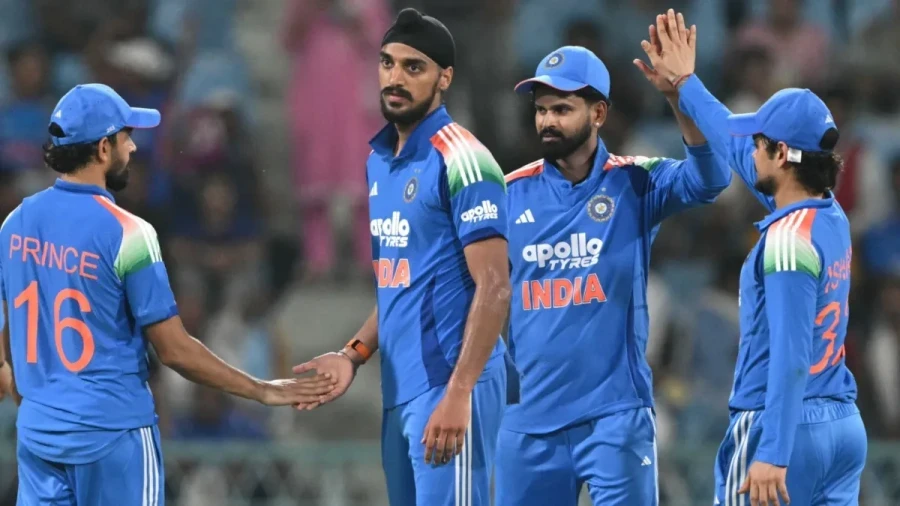
In a surprising turn of events at the Sano Stadium, the Indian cricket team managed to secure a victory against Japan in a solitary T20 match despite posting a very low total on the scoreboard. In a match that was reduced to 5 overs per side due to weather conditions, the Indian team could only muster 32 runs. However, the Indian bowlers displayed exceptional skill to defend this meager total, restricting the Japanese team to just 30 runs in their allotted 5 overs. This resulted in a narrow 2 run victory for India, highlighting a game where the bowlers had to compensate for a significant batting failure.
The Final Over Drama and Axar Patel Heroics
The match went down to the wire, with Japan needing 8 runs to win in the final over. The responsibility of defending those runs fell on the shoulders of Axar Patel. Patel proved to be the hero of the match for Team India as he maintained his composure under pressure, while japan could only manage to score 5 runs in that crucial final over, falling short of the target by 2 runs. Axar Patel overall contribution was pivotal, as he conceded only 6 runs in his 2 overs of bowling. His disciplined line and length made it extremely difficult for the Japanese batsmen to find the boundaries when they needed them the most.
Bowling Performance Breakdown
Apart from Axar Patel, other Indian bowlers also played their part in this low scoring thriller. Washington Sundar was particularly effective, taking 2 wickets while giving away 13 runs in his 2 overs. His ability to pick up wickets at crucial junctures prevented Japan from building any significant momentum. Ravi Bishnoi also contributed by bowling one over, in which he conceded 10 runs. Although he was slightly more expensive than Patel and Sundar, the collective effort of the bowling unit was enough to keep Japan under the 32 run mark.
Indian Batting Collapse
Earlier in the day, India won the toss and elected to bat first. However, the decision didn't seem to pay off as the star studded batting lineup struggled against the Japanese bowlers, while abhishek Sharma was dismissed on the very first ball of the innings, setting a negative tone for the team. Sanju Samson could only manage 9 runs, while Ishan Kishan contributed a mere 3 runs. Shreyas Iyer was the top scorer for the Indian side, but even he could only manage 16 runs. The pitch conditions, influenced by rain, were heavily in favor of the bowlers, making it extremely difficult for the batsmen to play their shots freely.
Questions Over Batting Consistency
This performance has raised several questions regarding the Indian batting unit ability to perform on difficult tracks. It's worth noting that these same batsmen had performed exceptionally well in the previous T20 series against Afghanistan. In the final T20 match played in Delhi, Team India had scored 100 runs in the powerplay of 6 overs alone. However, against Japan, they struggled to even make contact with the ball. This stark contrast has led to debates about whether Indian batsmen can only perform on flat and easy pitches. The struggle in difficult conditions was also evident in recent series where Ireland defeated India 2-0 in a T20 series, and England also handed India a heavy defeat. The management will need to address these concerns as the team prepares for future challenges.