

- India,
- 13-Mar-2026 09:21 PM IST


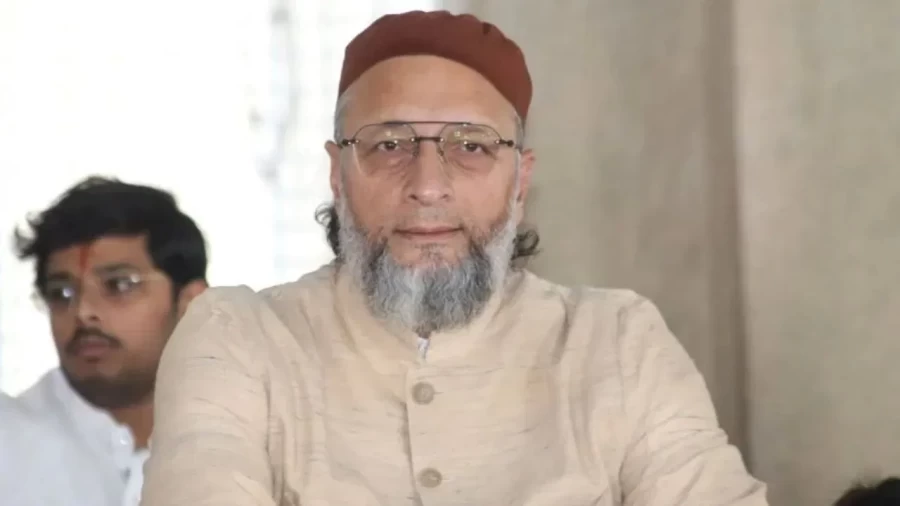
Asaduddin Owaisi, President of the All India Majlis-e-Ittehadul Muslimeen (AIMIM) and Member of Parliament from Hyderabad, has expressed serious concerns regarding the reported rise in incidents of hatred and violence against Muslims across various parts of India. Addressing the 'Jalsa Yaum-ul-Quran' at the historic Mecca Masjid in Hyderabad, Owaisi stated that such developments are deeply troubling and threaten the principles of equality, justice, and brotherhood guaranteed under the Constitution of India. He attributed the current atmosphere to the policies of the ruling Bharatiya Janata Party (BJP).
Allegations Regarding Meghalaya and Sambhal Incidents
During his address, Owaisi highlighted specific recent events, including the situation in Meghalaya, while he alleged that two Muslim individuals contesting elections were killed based on suspicions regarding their linguistic identity. According to Owaisi, political rhetoric is being used to spread suspicion against the community. On top of that, he referred to developments in Sambhal, Uttar Pradesh, where he alleged that police officials issued warnings to citizens against protesting over international issues, such as the Iran conflict, while owaisi emphasized that the right to peaceful protest within the framework of the law is a fundamental democratic right that must be protected by the state.
Condemnation of Attacks on Political Leaders and Youth
The AIMIM chief also condemned the recent incidents involving former Jammu and Kashmir Chief Minister Farooq Abdullah, while he asserted that threats or attacks against political leaders are unacceptable in a democratic society and must be met with strict legal action. On top of that, Owaisi expressed grief over the tragic death of 13-year-old Unaj Khan, who was reportedly shot by a friend. He noted that such incidents reflect a broader need for social awareness and responsibility. He called upon the authorities to ensure that law and order are maintained and that justice is served in cases of communal or individual violence.
Opposition to Uniform Civil Code and Personal Laws
On the issue of the Uniform Civil Code (UCC), Owaisi reiterated his firm opposition, stating that marriage in Islam is a contract and an essential part of the faith. He argued that Nikah isn't merely a social ritual but a religious obligation governed by personal laws. Owaisi pointed out that India is home to diverse religious communities, each with its own distinct traditions and legal frameworks. He maintained that the government can't impose a single set of laws that override the personal laws of minority communities. He stressed that in a pluralistic society, the preservation of religious freedom and personal laws is vital for maintaining social harmony.
Views on International Diplomacy and Middle East Conflict
Addressing international developments, Owaisi spoke about the ongoing conflicts in the Middle East, while he stated that no nation should violate the sovereignty of another and urged the Indian government and the Prime Minister to advocate for dialogue and diplomacy. Owaisi criticized the actions of international leaders, including Benjamin Netanyahu and Donald Trump, alleging that military escalations could destabilize the entire region. He called for a clear stance from India in favor of peaceful resolutions to global conflicts, emphasizing that military aggression only leads to further instability and humanitarian crises.
