

- India,
- 01-Dec-2025 08:17 AM IST


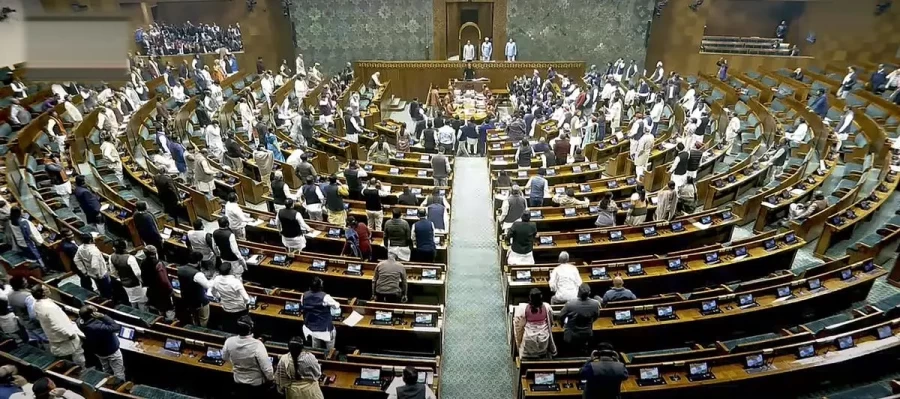
The much-anticipated Winter Session of Parliament is set to begin today, December 1st, with expectations of a tumultuous start, while opposition parties have strategized to corner the government on the issue of Special Intensive Revision (SIR), signaling potential stalemates in the House. Despite this, the government has urged all parties to cooperate for the smooth functioning of parliamentary proceedings.
Opposition's Strategy and the SIR Issue
During the all-party meeting held prior to the session, the Congress, Samajwadi Party, Trinamool Congress, and several other opposition parties collectively demanded a discussion on SIR. The opposition also highlighted other critical issues for debate during the session, including national security in the wake of the Delhi blast, air pollution, foreign policy, the plight of farmers, inflation, and unemployment. While some opposition leaders indicated they might disrupt proceedings if SIR isn't discussed, Parliamentary. Affairs Minister Kiren Rijiju emphasized that not all opposition parties had made such a collective statement.
Government's Stance and Appeal for Cooperation
Parliamentary Affairs Minister Kiren Rijiju described the all-party meeting as positive, affirming that the. Government would continue discussions with opposition parties to ensure the smooth conduct of Parliament. In a light-hearted remark, he suggested that since it's the winter session, everyone should approach matters with a cool head. Rijiju acknowledged that impasses and disagreements are inherent in a democracy, especially a parliamentary one. However, he appealed to all members to avoid creating deadlocks and instead register their protests through debate, allowing the House to function effectively. He specifically requested cooperation from opposition leaders to run Parliament smoothly.
Details of the All-Party Meeting
The all-party meeting, convened a day before the session, saw the participation of 50 leaders representing 36 political parties. Government representatives included Defence Minister Rajnath Singh, Health Minister JP Nadda, Parliamentary Affairs Minister Kiren Rijiju, and Minister of State for Parliamentary Affairs Arjun Ram Meghwal, while prominent opposition leaders such as Pramod Tiwari and Kodikunnil Suresh from Congress, Derek O'Brien from Trinamool Congress, Ram Gopal Yadav from Samajwadi Party, and Tiruchi Siva from DMK also attended the meeting, presenting their respective concerns.
Crucial Economic Legislation
Buoyed by the National Democratic Alliance's (NDA) decisive victory in the Bihar Assembly. Elections, the central government is poised to introduce several significant bills during this session. A total of nine economic bills have been listed for presentation in the Winter Session, which are expected to have a profound impact on the nation's economy and various sectors. These legislative initiatives aim to advance financial reforms and stimulate investment across diverse segments of the economy.
Boosting FDI in Insurance Sector
Under its new generation financial reforms agenda, the government plans to introduce the Insurance Laws (Amendment) Bill, 2025. This bill seeks to increase the foreign direct investment (FDI) limit in the insurance sector from the current 74 percent to 100 percent, while this move is designed to attract greater foreign investment into the insurance sector. To date, the insurance sector has already drawn 82,000 crore rupees through FDI, and the passage of this bill is anticipated to further boost this figure, enhancing capital inflow and competition within the sector.
New Levies on Tobacco and Pan Masala
The Central Excise (Amendment) Bill, 2025, and the 'Health Security to National Security Cess Bill, 2025' have been listed for introduction in the Lok Sabha by Finance Minister Nirmala Sitharaman. The Central Excise (Amendment) Bill, 2025, proposes to levy excise duty on tobacco products such as cigarettes, replacing the existing GST compensation cess, while similarly, the 'Health Security to National Security Cess Bill, 2025' will replace the compensation cess currently imposed on pan masala. The primary objective of these bills is to augment resources for national security and public health expenditures, while they also include provisions for levying cess on machinery or processes used in the manufacture or production of specified goods. Currently, tobacco and pan masala are subject to a 28 percent GST, along with compensation cess at varying rates.
Other Significant Bills
Also, the Securities Market Code Bill, 2025, has been listed for introduction. This bill aims to ensure a unified securities market code for ease of doing business, simplifying processes for investors and market participants. The Jan Vishwas (Amendment of Provisions) Bill, 2025, will be brought up for discussion during the Winter Session, while this bill was introduced in the Lok Sabha in August and subsequently referred to a select committee, which is mandated to submit its report by the first day of the Winter Session. Other economic bills slated for the session include the Insolvency and Bankruptcy Code (Amendment) Bill, 2025, the Manipur Goods and Services Tax (Second Amendment) Bill, 2025, the National Highways (Amendment) Bill, 2025, and the Corporate Law (Amendment) Bill, 2025. These legislative measures are intended to strengthen regulatory frameworks across various sectors and accelerate economic growth.
Supplementary Demands for Grants
The government will also present the first batch of Supplementary Demands for. Grants for the financial year 2025-26 during the Winter Session (December 1-19). This will allow the government to seek parliamentary approval for additional expenditures not covered in the annual budget. Overall, this session is poised to be crucial for both legislative work and political debate, with potential for sharp exchanges between the government and the opposition on a multitude of issues.
