
- India,
- 03-Sep-2026 12:35 PM IST



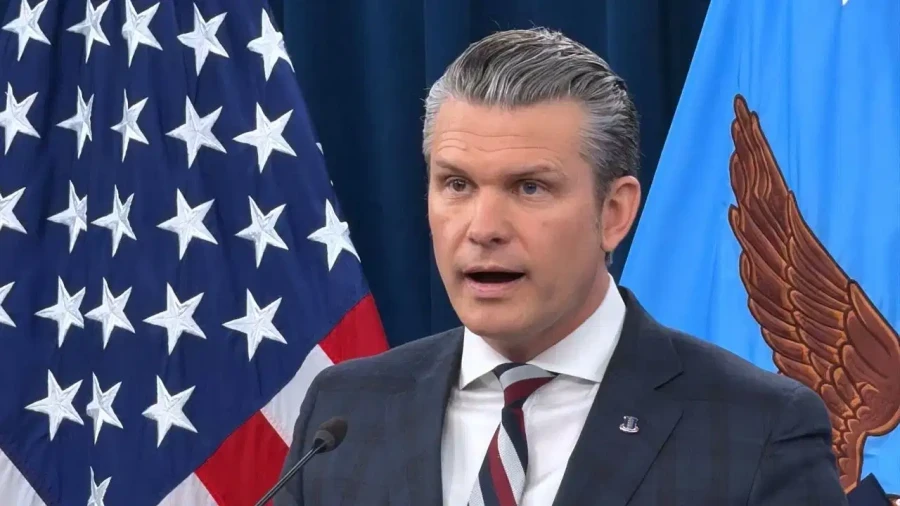
The United States Department of Defense, commonly known as the Pentagon, is currently grappling with a deepening leadership crisis that threatens to undermine military stability. Under the tenure of Defense Secretary Pete Hegseth, more than 25 senior military officers have been removed from their positions, and the promotions of at least 45 other officers have been abruptly halted. This internal upheaval comes at a critical juncture, as the United States has been engaged in a conflict with Iran for six months, placing unprecedented pressure on the nation's armed forces and their strategic capabilities.
The Resignation of Dan Driscoll and Its Impact
A significant blow to the Pentagon's leadership occurred on Monday with the resignation of Army Secretary Dan Driscoll. Driscoll, a close friend and Yale Law School classmate of Vice President JD Vance, was once considered a potential successor to Hegseth himself. His departure highlights a profound rift within the military's top brass. Driscoll and Hegseth reportedly had long-standing disagreements regarding army leadership and modernization strategies. Plus, President Donald Trump had entrusted Driscoll with sensitive diplomatic responsibilities related to Ukraine, making his exit even more impactful. The loss of such a high-profile official has left the US Army without a Senate-confirmed permanent civilian and military leadership during an active war.
Systemic Overhaul of the Joint Chiefs of Staff
The leadership vacuum extends beyond the Army. Under Hegseth's direction, almost every top official across the various military services has either been removed or has chosen to step down. This includes the Chairman of the Joint Chiefs of Staff, the Navy's top admiral, and the Army Chief of Staff. Reports from the Washington Post indicate that more than two dozen senior officers have been ousted during Hegseth's tenure, while currently, the only members of the Joint Chiefs who remain from the beginning of Hegseth's term are the heads of the Marine Corps and the Space Force. This level of turnover in the highest echelons of military command is rare and has raised concerns about institutional continuity.
Controversial Promotion Freezes
In addition to the removals, the New York Times has reported that Hegseth blocked the promotions of at least 45 officers this year. This move is particularly controversial because the promotion process for senior military personnel is traditionally insulated from political interference. According to NBC News, the freeze has affected a diverse group of leaders, including more than a dozen Black, Hispanic, and female officers. This has led to accusations of bias and has further fueled discontent within the ranks of the Pentagon, as many see these actions as a departure from merit-based advancement.
Strained Military Readiness and the Iran War
The internal friction at the Pentagon is occurring while the Iran war tests the limits of American military power. Military commanders across Europe, the Pacific, and Latin America have expressed concerns over the increasing deployment of troops to the Middle East for the Iran conflict. They argue that prolonged deployments in one region are weakening the military's ability to respond to threats in other parts of the world. The Washington Post reports that only about 25 percent of the Navy's destroyers are currently ready for deployment. Also, the only dedicated aircraft carrier in the Pacific has been redirected to the Middle East, leaving a strategic gap. The war has also severely depleted weapon stockpiles; the Associated Press reports that 65 percent of America's Patriot interceptors have already been utilized. This depletion is putting immense pressure on the US's ability to supply NATO allies and prepare for potential conflicts elsewhere, such as with China.
Pentagon's Defense and Transparency Concerns
Despite the mounting criticism, Pentagon spokesperson Sean Parnell has dismissed reports of chaos within the department. Parnell stated that disagreements among generals are a normal part of the process and characterized the leaking of confidential military assessments as a betrayal of trust. He also refuted claims of weapon shortages, asserting that the United States maintains a sufficient stockpile. However, transparency remains a concern, as there has been no formal press briefing since May 5, meaning the public has received little official communication during four months of active warfare. Despite the controversies, President Donald Trump continues to support Hegseth and has called on Congress to approve a record 1 trillion 500 billion dollar defense budget, signaling that Hegseth's influence over the Pentagon remains strong.