

- India,
- 01-Nov-2025 09:43 PM IST


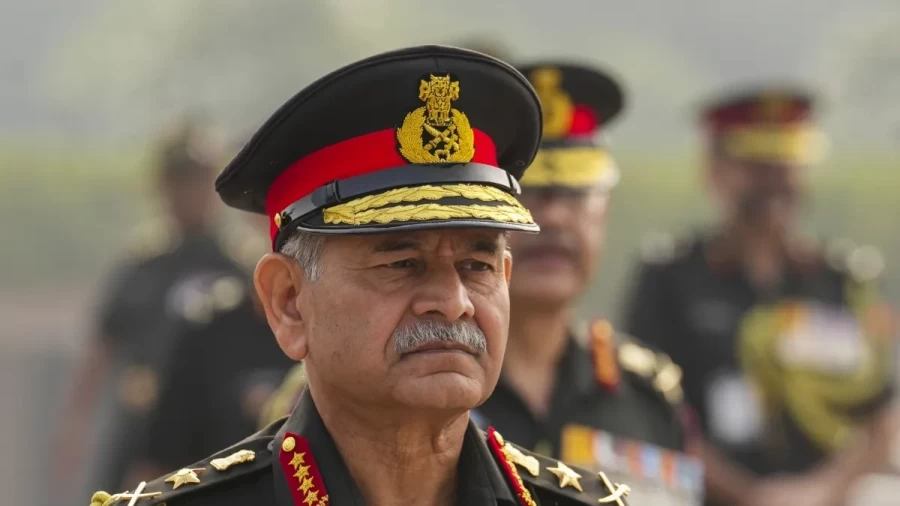
Indian Army Chief General Upendra Dwivedi recently made a significant revelation, detailing the military action undertaken during 'Operation Sindoor'. Addressing an event in Rewa, Madhya Pradesh, General Dwivedi stated that Prime Minister Narendra Modi had given the Indian Army a complete 'free hand' during this operation. This unprecedented autonomy allowed the Indian forces to penetrate 100 kilometers inside Pakistani territory, where they successfully targeted and destroyed terrorist hideouts. This statement underscores the deep trust between the military leadership and the political establishment in India's security strategy.
Purpose and Naming of Operation Sindoor
General Dwivedi clarified that the primary objective of Operation Sindoor wasn't merely to achieve victory over the enemy, but also to re-establish the nation's sovereignty, integrity, and peace. He further revealed that the operation was named 'Operation Sindoor' by the Prime Minister himself. This name carries a profound symbolic meaning. General Dwivedi explained that whenever a daughter, mother, or sister applies sindoor (vermilion) on their forehead, their prayers are for the safety of the soldiers standing guard at the border. This naming convention imbues the operation with emotional and cultural significance, linking the sacrifices of soldiers with the unwavering faith of the nation's women. During his address at TRS College in Rewa, General Dwivedi emphasized the critical importance of confidence and peace. He asserted that trust in others and in oneself is essential when confronting any challenge, while he commended the coordination and cooperation among the chiefs of the three armed forces, who worked in unison. General Dwivedi noted that the chiefs consistently appeared calm and composed, always smiling, which instilled confidence in the people of the country that they were in safe hands. This calm and steady leadership provides reassurance of stability and security to the nation during times of crisis.
Importance of Confidence and Peace
Impact of the 'Free Hand' from the PM
Highlighting the significance of courage, the Army Chief stated that such wars involve very high risks. To mitigate these risks, the Indian Army countered every attack and even ventured 100 kilometers across the border, while he particularly stressed that this was a direct result of the clear thinking of India's political leaders, who granted the armed forces a 'free hand'. General Dwivedi remarked that never before in history had a. Prime Minister given such extensive freedom to the armed forces. This 'free hand' empowered the military to work with its full potential and. Take decisive action against the enemy, thereby ensuring the success of the operation.
Future Challenges and Preparedness
General Dwivedi also addressed future challenges, which he characterized as volatility, uncertainty, complexity, and ambiguity (VUCA). He stated that we're completely unaware of what the future holds, and challenges are emerging so rapidly that by the time one tries to comprehend an old challenge, a new one appears. These security challenges could manifest as border terrorism, natural disasters, or cyber warfare, while he emphasized that the army must always be prepared to face these rapidly evolving and unpredictable challenges, adapting its strategies and capabilities accordingly to safeguard national interests.
Generation Z: India's Future
The Army Chief paid special attention to the role of 'Generation Z', which he noted has become a topic of widespread discussion. He highlighted that India boasts the largest Generation Z population globally, and even within the Indian Army, they constitute a significant portion, making India second only to its own Gen Z population. This generation, he explained, is digitally proficient, technologically advanced, and socially aware, while most importantly, they're globally connected with the latest developments worldwide. General Dwivedi expressed confidence that with proper discipline and guidance, this generation has the potential to propel India forward by many generations and eras in an instant, while he concluded by stating that in the future, Generation Z will be the driving force behind India's progress and will lead it to new heights, underscoring the importance of his presence there to inspire this young demographic.
