

- India,
- 13-Feb-2026 08:00 PM IST


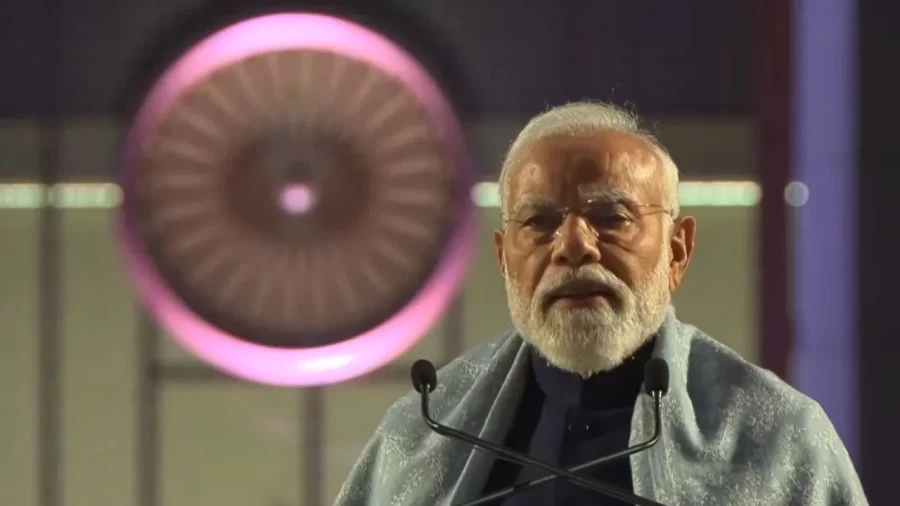
Prime Minister Narendra Modi inaugurated the newly constructed 'Seva Teerth' and 'Kartavya Bhavan 1 and 2' in New Delhi on February 13. These structures will serve as the new administrative hub for the Prime Minister’s Office (PMO), the National Security Council Secretariat, and several key Union Ministries. During the ceremony, the Prime Minister described the event as the beginning of a new history, marking a definitive departure from colonial-era symbols toward a self-reliant and modern India. According to the Prime Minister, these buildings represent the transition from a mindset of slavery to a spirit of national service.
Departure from Colonial Legacy and Historical Significance
In his address, the Prime Minister highlighted that the existing administrative hubs, such as North Block and South Block, were remnants of the British Raj. He stated that those buildings were originally designed to strengthen British rule and maintain authority over the Indian population for generations. The Prime Minister emphasized that the inauguration of Seva Teerth and Kartavya Bhavan is part of a broader campaign to eliminate the colonial mindset. He cited previous initiatives, such as renaming Race Course Road to Lok Kalyan Marg and the construction of the National War Memorial and Police Memorial, as steps toward this goal. According to officials, these changes are intended to transform the nature of governance from 'ruling' to 'serving' the public.
Integration of Modern Technology and Operational Efficiency
Addressing the limitations of the older structures, the Prime Minister noted that the nearly 100-year-old buildings were becoming dilapidated and lacked the infrastructure required for modern governance. According to officials, integrating new-age technology into the old North and South Blocks was a significant challenge, alongside acute space constraints. The new complexes have been designed to be more efficient and cost-effective. The Prime Minister stated that the vision of a 'Viksit Bharat' (Developed India) must be reflected not only in policies and schemes but also in the physical workspaces and infrastructure of the government. The new buildings are expected to reduce operational costs and provide a more conducive environment for administrative tasks.
Strategic Allocation of Key Ministries and Departments
According to official details, Seva Teerth will house the Prime Minister’s Office, the National Security Council Secretariat, and the Cabinet Secretariat. Kartavya Bhavan 1 and 2 will accommodate several high-profile ministries, ensuring better coordination and proximity. These include the Ministries of Finance, Defense, Health and Family Welfare, Corporate Affairs, Education, and Culture. Also, the Ministries of Law and Justice, Information and Broadcasting, Agriculture and Farmers Welfare, Chemicals and Fertilizers, and Tribal Affairs will also operate from these new premises. The Prime Minister remarked that the decisions made within these walls would reflect the aspirations of 140 crore citizens rather than the dictates of a colonial power.
Vision for a Developed India and Inspiring Workspaces
The Prime Minister also noted the significance of the inauguration date, coinciding with Vijaya Ekadashi. He mentioned that according to tradition, resolutions made on this day are destined for success. He stated that the nation is entering these new buildings with the firm resolve of achieving the goal of a Developed India. According to the Prime Minister, the workspace where the country’s future is shaped must be both effective and inspiring. He dedicated Seva Teerth and Kartavya Bhavan to the people of India, describing them as the foundation for a governance model that prioritizes the expectations and welfare of the common citizen in the 21st century.
