
- India,
- 30-Aug-2026 08:36 AM IST



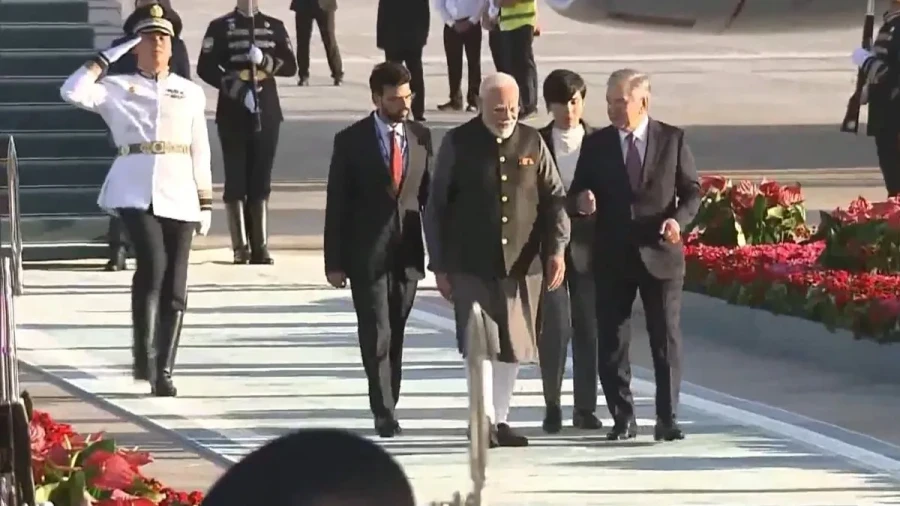
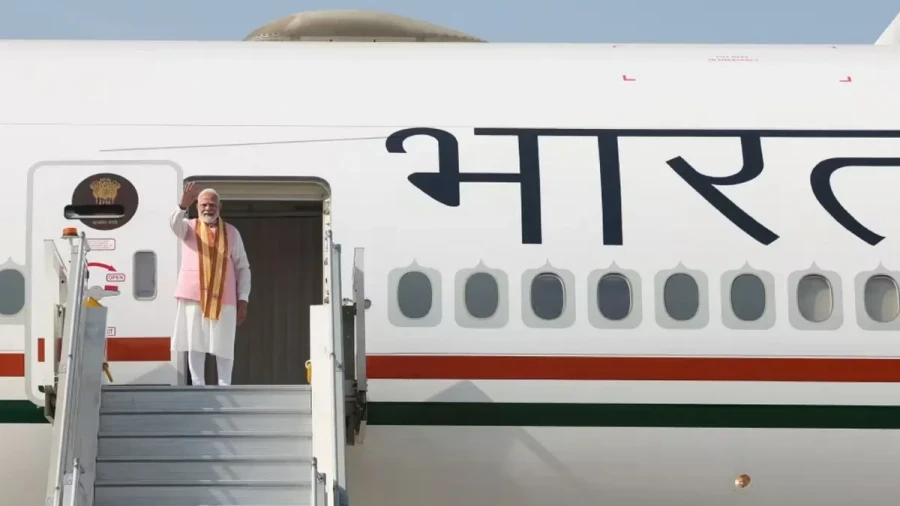
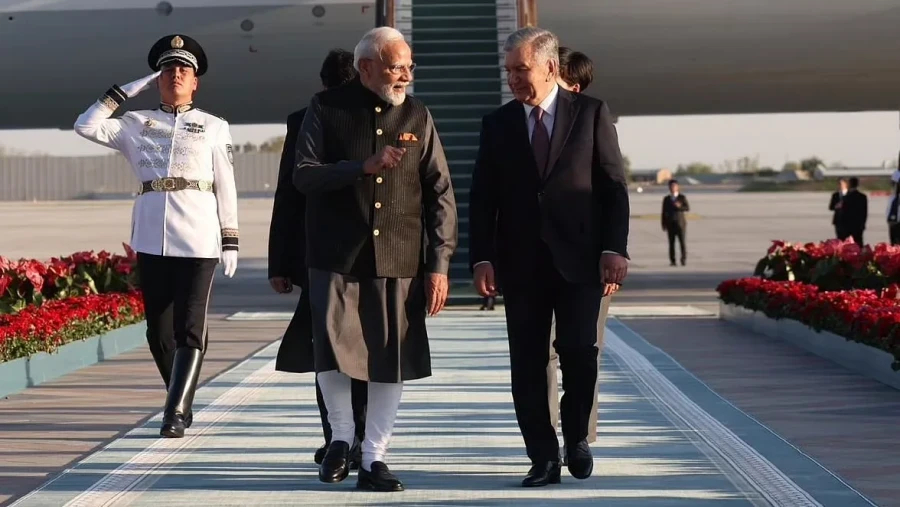
Prime Minister Narendra Modi has embarked on a significant four-day visit to Uzbekistan and Kyrgyzstan, marking a crucial step in India's strategic engagement with Central Asia. During the first leg of this high-profile tour, the Prime Minister will arrive in Tashkent to hold comprehensive discussions with Uzbekistan's President Shavkat Mirziyoyev. This visit is expected to be a cornerstone for bilateral relations, focusing on a wide array of sectors including trade, investment, defense, energy, digital connectivity, and education. A primary focus of the dialogue will be the cooperation in critical minerals, which are essential for modern industrial and energy needs.
The Strategic Geography of Uzbekistan
Uzbekistan holds a unique and vital position in Central Asia. Although it's a landlocked country, its geographical location is of immense strategic importance as it's surrounded by Afghanistan, Kazakhstan, Kyrgyzstan, Tajikistan, and Turkmenistan, while this positioning makes Uzbekistan a vital link connecting various nations within the Central Asian region. Beyond its geography, the true strength of Uzbekistan lies beneath its surface, where vast reserves of energy and minerals are located, making it a key player in the global resource market.
Uranium: The Powerhouse of Uzbekistan
Uzbekistan is recognized as one of the world's leading producers of uranium, a resource that's increasingly in demand as nations shift towards nuclear energy for power security. According to the World Nuclear Association, Uzbekistan is the 5th largest supplier of uranium globally. The country's uranium mining operations are primarily concentrated in the Navoi region and the Central Kyzylkum area. Uzbekistan has ambitious plans for its uranium sector, with reports indicating that production is expected to reach 7000 tons by the year 2025. The country is also planning to further increase production in the coming years to meet rising global demand.
Advanced Mining Techniques: In-Situ Recovery
To extract uranium, Uzbekistan employs the In-Situ Recovery (ISR) technique, also known as in-situ leaching. This method is considered more efficient and less environmentally disruptive than traditional open-pit mining. Instead of large-scale excavation, wells are drilled into the ground to reach the uranium ore. A specialized solution is then pumped through these wells to dissolve the uranium. The resulting uranium-bearing solution is brought back to the surface and processed in a plant. This technique minimizes the impact on the land surface. Also, commercial production has reportedly begun at the Kyzylkok mine, which has an estimated annual production capacity of 1200 tons of uranium and an expected operational life of approximately 15 years.
Natural Gas and the Energy Economy
While Uzbekistan possesses oil reserves, natural gas plays a far more dominant role in its energy economy. As a major gas producer in Central Asia, Uzbekistan utilizes this resource for electricity generation, industrial processes, and domestic consumption. A significant portion of the country's power is generated through gas-based power plants. However, the government's strategy is shifting from merely exporting raw gas to utilizing it domestically to create high-value petrochemical products. This move towards value-added exports is designed to generate more foreign exchange and strengthen the national economy.
Gold and Mineral Diversity
Uzbekistan is also a global leader in gold production. The Muruntau mine, located in the Navoi region, is one of the largest gold mines in the world and serves as a critical pillar of the Uzbek economy, providing substantial export income. In addition to gold and uranium, the country is rich in other minerals such as copper, silver, zinc, and lead. These minerals are vital for construction, electronics, and various industrial applications. This diversity of resources ensures that Uzbekistan isn't just an energy producer but a comprehensive mineral powerhouse.
Trade, Connectivity, and Strategic Cooperation
3 billion dollars. However, connectivity remains a significant challenge due to the landlocked nature of the region. India is looking to address this through the Chabahar port and other new transit routes to Central Asia, while strategically, Uzbekistan is the most populous country in Central Asia, making its market and economy highly significant. The visit also touches upon regional security, especially in the context of Afghanistan, and the potential for cooperation in peaceful nuclear energy, where India's long-standing experience could be beneficial for Uzbekistan's plans to develop nuclear power capacity.