

- India,
- 02-Nov-2025 08:44 AM IST


The sacred festival of Tulsi Vivah is being celebrated today, November 2nd, with full rituals and devotion, while this day symbolizes the holy marriage of Tulsi Mata and Lord Shaligram, considered an auspicious harbinger of renewed prosperity and well-being in the universe. Observing this divine union initiates auspicious events in homes and ushers in happiness and peace in marital life. This festival isn't only religiously significant but also holds deep spiritual. Meaning, as it represents the eternal love and devotion of Lakshmi and Narayana.
Auspicious Muhurat for Tulsi Vivah
The important festival of Tulsi Vivah is observed on the Dwadashi Tithi, the day following Devuthani Ekadashi, while this year, the Dwadashi Tithi commences on November 2nd at 07:31 AM and concludes on November 3rd at 05:07 AM. During this propitious period, devotees can perform the marriage of Tulsi Mata and Lord Shaligram to receive their blessings. This muhurat is considered highly fruitful for prayers and religious ceremonies, with special benefits attributed to pujas performed within this timeframe, while the precise timing allows devotees to plan their rituals to maximize the spiritual gains from this sacred event, ensuring that their offerings and prayers are made during the most potent astrological window.
Religious and Spiritual Significance
The religious and spiritual significance of Tulsi Vivah is profoundly deep, as described in the Skanda and Padma Puranas. According to these holy scriptures, Tulsi Mata is most beloved by. Lord Vishnu, and no worship is considered complete without her presence. Tulsi Vivah is regarded as the symbolic divine union of Lakshmi-Narayana, which is believed to re-establish auspiciousness and prosperity in the creation. Observing this fast brings love, harmony, and stability to married life,. Strengthening the bond between spouses and ensuring peace within the home. For unmarried individuals, it bestows blessings for finding a suitable life partner, removing obstacles in their path to matrimony, while this sacred marriage symbolizes the re-establishment of dharma, devotion, and good fortune in the world, guiding devotees towards spiritual advancement and a life filled with divine grace.
Preparation and Essential Materials for Tulsi Puja
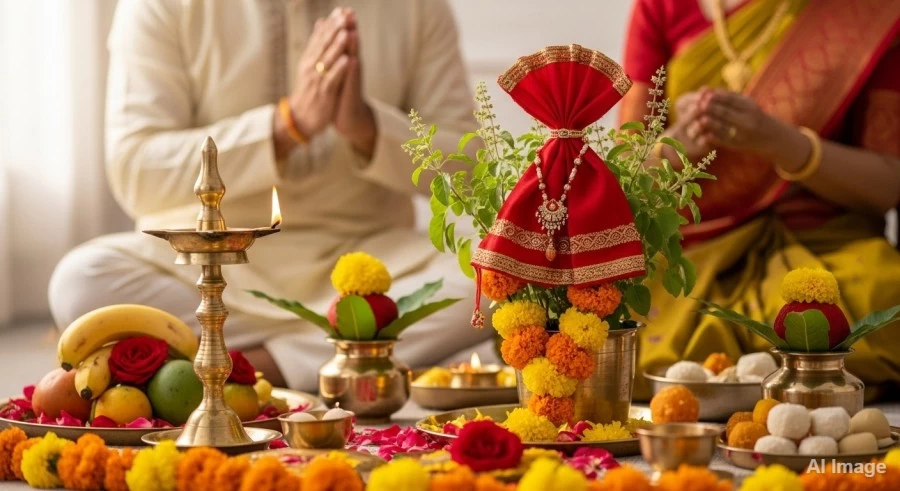
The Tulsi Vivah puja begins with a morning bath and purification. Devotees wear clean clothes and sanctify the puja area, while following this, the Tulsi plant is placed on a chowki (small table) or mandap (canopy), which is then adorned with flowers and rangoli. Several essential items are required for this sacred ritual, including an image of Lord Vishnu or a Shaligram shila, the Tulsi plant itself, yellow and red garments (for Lord Shaligram and Tulsi Mata respectively), sugarcane, coconut, various types of flowers, and items of marital adornment (suhag samagri) such as sindoor, bangles, bindi, and toe rings. On top of that, incense, a lamp, betel leaves and nuts, Panchamrit (a mixture of milk, curd, ghee, honey, and Gangajal), akshat (unbroken rice), haldi-kumkum (turmeric and vermilion), a kalash (pot), and a silk thread are crucial components of the puja materials, while gathering all these items beforehand ensures that the puja can be conducted smoothly and without interruption, honoring the divine couple with complete devotion.
Main Puja Rituals of Tulsi Vivah
The puja ritual for Tulsi Vivah is simple yet deeply devotional. First, Tulsi Mata is bathed with water and adorned in red garments, symbolizing her as a bride, while she's then decorated with marital adornments such as sindoor, bangles, bindi, and toe rings, making her appear fully like a newlywed. On the other side, Lord Shaligram is purified with Gangajal and dressed in yellow garments (Pitambar), which are dear to Lord Vishnu. Subsequently, Tulsi Mata and Lord Shaligram are seated facing each other, creating a visual representation of their divine union. Wedding mantras, specifically 'Om Tulsyai Namah' and 'Om Shaligramay Namah', are chanted, filling the atmosphere with purity and positive energy. A symbolic union is performed using a silk thread, signifying their sacred bond. Coconut and betel leaves and nuts are offered to Tulsi Mata, performing the ritual of Kanyadaan, a significant step in this divine marriage, while finally, Aarti is performed to seek blessings from the Lord and Tulsi Mata, and Prasad is distributed, which all devotees partake in.
This complete ritual brings happiness, peace, and prosperity into the lives of devotees. Performing the Tulsi Vivah ritual brings numerous benefits. This festival infuses positive energy into the home, dispelling negativity. It enhances sweetness and harmony in marital life, deepening the love between spouses. Those who are deprived of the joy of parenthood may receive blessings for progeny through this puja. On top of that, this puja attracts wealth and prosperity, ensuring that the home never lacks anything. As Tulsi Mata is considered an embodiment of Lakshmi and Lord Shaligram an embodiment of Vishnu, their marriage brings the combined blessings of both deities. This festival inspires devotees to follow the path of righteousness and understand the importance of devotion, thereby elevating their spiritual lives, while thus, Tulsi Vivah isn't merely a religious ceremony but a significant festival that brings happiness, peace, and prosperity into one's life.
