
- India,
- 18-Sep-2026 11:11 AM IST



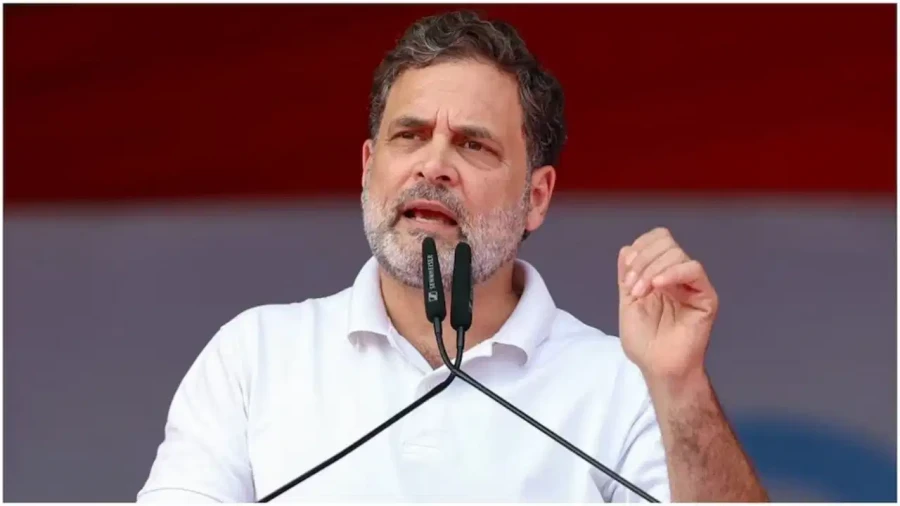
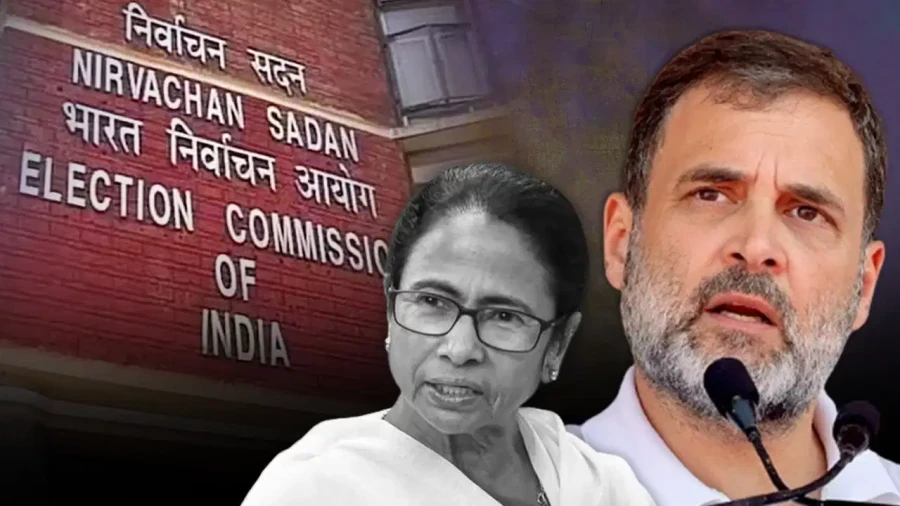
Rahul Gandhi, the former Congress President and current Leader of the Opposition in the Lok Sabha, has launched a scathing attack on the Bharatiya Janata Party (BJP) and the Election Commission of India (EC) following the recent developments regarding the Trinamool Congress (TMC) party symbol. In a statement issued on Friday via social media, Gandhi expressed his solidarity with West Bengal Chief Minister Mamata Banerjee and raised serious concerns about the functioning of democratic institutions in the country. He alleged that a specific pattern is emerging in Indian politics, which he claims was first seen with the Shiv Sena, then with the Nationalist Congress Party (NCP), and is now being repeated with the Trinamool Congress.
Allegations of Systematic Party Theft
Rahul Gandhi accused the BJP and the Election Commission of working in tandem to destabilize opposition parties. According to his allegations, the strategy involves first engineering a split within a political party and subsequently seizing its official election symbol through the commission's intervention, while gandhi remarked that if an entire political party can be stolen in broad daylight, then the potential theft of votes from millions of Indian citizens isn't a far-fetched possibility. He described the current political climate as one defined by the theft of votes, the theft of governments, and now the theft of political parties, calling these developments symbols of a significant democratic decline.
Questions on the Election Commission's Role
The Leader of the Opposition didn't mince words when questioning the constitutional responsibility of the Election Commission. He stated that the primary duty of the commission is to protect the mandate of the people. However, he alleged that instead of fulfilling this role, the commission is assisting forces that aim to overturn the public's decision, while gandhi emphasized that this struggle isn't limited to Mamata Banerjee or the Trinamool Congress alone. He framed it as a larger battle for every political organization and every individual voter who believes in the necessity of free and fair elections in a healthy democracy.
The Internal Split within TMC
The controversy stems from the internal turmoil within the Trinamool Congress following the West Bengal Assembly elections. Despite the party's performance under Mamata Banerjee's leadership, a significant rift occurred among the elected representatives. A large group of TMC MLAs broke away from the main fold to form a separate faction. This rebel group is currently being led by Arup Roy. The internal division led to a legal and administrative battle over the rights to the party's name and its iconic symbol, eventually reaching the doors of the Election Commission.
The Election Commission's Interim Order
In response to the dispute between the two factions, the Election Commission has issued an interim order to manage the situation before the upcoming electoral contests. The commission has barred both the Mamata Banerjee-led group and the Arup Roy-led faction from using the official name 'All India Trinamool Congress' for the time being. Plus, the reserved election symbol, which features the 'flower and grass,' has also been frozen. The EC stated that a detailed proceeding under Paragraph 15 is essential to reach a final decision on the dispute, but an immediate arrangement was necessary for the upcoming by-elections.
Arrangements for Upcoming By-Elections
This interim arrangement has been specifically implemented in view of the assembly by-elections scheduled for October 6 in the Rejinagar and Nandigram constituencies. Under this order, neither faction can claim exclusive rights to the original party name or symbol for these polls, while however, the commission has provided an alternative where both groups can choose new names and symbols. They're permitted to mention their connection to the original 'All India Trinamool Congress' within their new group names, while the commission has directed both sides to submit their preferences by 11 AM today. Each faction is required to provide three potential names and three free election symbols in order of priority. The commission will then approve one name and allot one symbol from the available list for their respective candidates.