

- India,
- 06-Nov-2025 07:02 PM IST


Former Bharatiya Janata Party (BJP) Rajya Sabha MP Rakesh Kumar Sinha has found himself at the center of a significant political controversy. He stands accused of casting his vote in two different states—Delhi and Bihar—within a span of just ten months. This revelation has provided opposition parties, including the Rashtriya Janata Dal (RJD) and Congress, with fresh ammunition to target. Both the BJP and the Election Commission, raising serious questions about the integrity of the electoral process in India. The timing of this controversy is particularly sensitive, as it emerges amidst broader allegations from the opposition that the Election Commission and the ruling party are involved in 'fraudulent vote theft.
The Allegations and Rakesh Sinha's Voting Instances
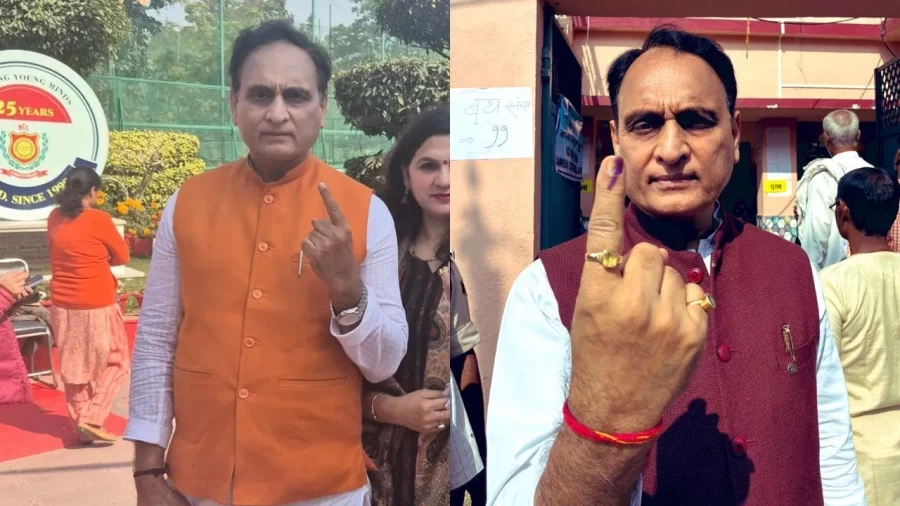
On November 6, 2025, Rakesh Kumar Sinha, who hails from Begusarai district in Bihar, cast his vote in his ancestral village of Manserpur, located within the Sahebpur Kamal assembly constituency, while he subsequently shared a post on social media confirming his participation in the Bihar elections, stating, 'Cast my vote in my ancestral village Manserpur (Begusarai). This village falls under the Sahebpur Kamal assembly, while ' In this constituency, the RJD has fielded Satanand Sambuddha, while the NDA, through Chirag Paswan's Lok Janshakti Party (Ram Vilas), has nominated Surendra Kumar. However, soon after Sinha's post, several social media users brought to light his previous posts, revealing that he had also voted in the Delhi Assembly elections earlier this year, in February 2025, while this resurfacing of old posts quickly escalated the controversy.
Voting in Delhi Assembly Elections
Earlier in 2025, during the Delhi Assembly elections held in February, Rakesh. Kumar Sinha had exercised his franchise in the Dwarka constituency of Delhi. His social media posts and images from that period confirm his participation in the Delhi polls. The act of a single individual voting in two different states within such a short timeframe strongly suggests a potential violation of the Representation of the People Act, 1951, while this dual voting has provided the opposition with a potent issue to highlight, casting a shadow over the transparency of the electoral process and the management of voter rolls. The situation raises profound questions about the mechanisms in place to prevent such occurrences.
Opposition's Swift and Sharp Reaction
Upon the revelation of Rakesh Sinha's alleged dual voting, the opposition swiftly seized upon the issue. Supriya Shrinate, Chairperson of the Congress Social Media Department, reacted sharply, questioning, 'BJP leader Rakesh Sinha voted in the Delhi Assembly elections in February 2025. In November 2025, he voted in the Bihar Assembly elections. Under what scheme is this happening, brother? ' Saurabh Bhardwaj, convenor of the Aam Aadmi Party (AAP) in Delhi, also weighed in on the matter. Bhardwaj posted, 'BJP's Rajya Sabha MP and RSS ideologue Rakesh Sinha ji, who teaches everyone values, voted in the Delhi Assembly elections and today also voted in the Bihar elections. ' He further added that since Sinha teaches at Motilal Nehru College, Delhi University, he can't possibly show a Bihar address. Bhardwaj accused the BJP government of 'open theft,' further fueling the political fire. Both the RJD and Congress have directly criticized the Election Commission, alleging its failure to prevent such irregularities.
Electoral Laws and the Role of the Election Commission
The rules governing voting in India are comprehensively detailed in the Representation of the People Act, 1951. Specifically, Article 17 of this Act clearly states that no citizen can be simultaneously registered on the electoral rolls of two states, while this unequivocally means that an individual can't cast their vote in two different states concurrently. This provision is designed to ensure that every citizen exercises their right to. Vote from a single location, thereby preserving the integrity of the electoral process. It's the primary duty of the Election Commission to remove duplicate entries from voter lists and to ensure that no individual is registered in more than one place, upholding the principle of 'one person, one vote.
Election Commission's Responsibility and Potential Action
Under the Representation of the People Act, there are provisions for action against any individual who intentionally registers in multiple locations or votes in two places, while the Election Commission is empowered to take action against such voters under the category of 'duplicate entry. ' However, neither Rakesh Sinha nor the Election Commission has issued. Any official statement or reaction regarding this entire matter so far. The silence from the Election Commission is only serving to strengthen the opposition's allegations, increasing public skepticism about the fairness of the electoral process. This incident raises serious questions about the functioning of the Election Commission and the process of. Updating voter lists, especially at a time when there is already a heated debate surrounding electoral transparency.
Political Fallout and Future Implications
This case involving Rakesh Sinha has rapidly become a major political issue amidst the Bihar elections of 2025, while the opposition is leveraging it as a tool to attack the BJP and to question the credibility of the Election Commission. This controversy isn't only likely to impact Rakesh Sinha's public image but also poses a significant challenge for both the BJP and the Election Commission. In the coming days, it will be crucial to observe how the Election Commission responds to this matter and whether any action is initiated against Rakesh Sinha, while this incident underscores the urgent need for reforms in the Indian electoral system and for more stringent management of voter lists to prevent such controversies in the future and to maintain the sanctity of the electoral process.
