
- India,
- 21-Sep-2026 07:17 PM IST



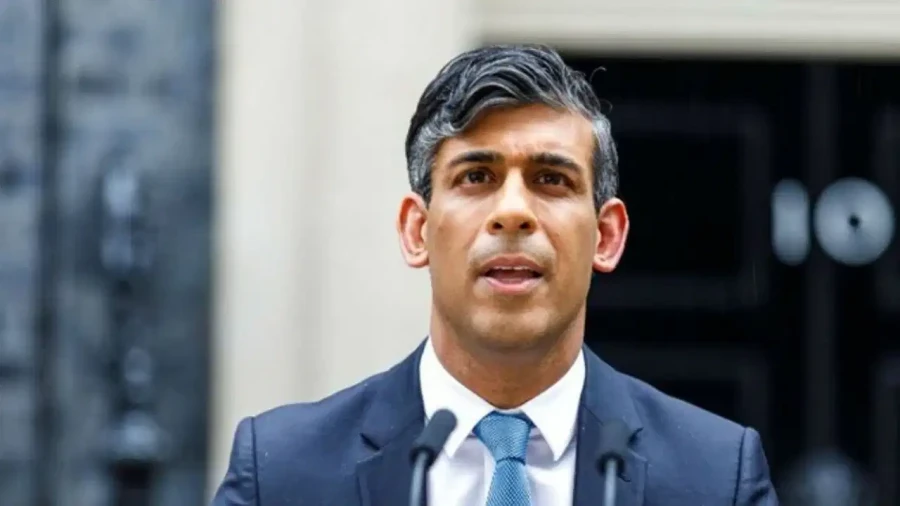
Former British Prime Minister Rishi Sunak has ignited a significant national conversation regarding race, identity, and belonging in modern Britain. In a detailed reflection, Sunak asserted that the color of a person's skin isn't a determinant of their nationality. He shared profound insights into his own dual identity, stating clearly that he considers himself to be both English and Hindu. This statement comes from the man who made history as the first individual of Indian heritage to serve as the Prime Minister of the United Kingdom and reside at the iconic 10 Downing Street.
The Sunday Times Column and Identity
Writing in a column for the Sunday Times newspaper, Rishi Sunak elaborated on his views following a recent speech he delivered at the prestigious Lords Cricket Ground, while during that address, he emphasized the power of sports, particularly cricket, in bridging gaps between diverse communities and bringing people together. However, despite these unifying forces, Sunak expressed a deep-seated concern regarding the state of British democracy. He noted that the nation's great democratic achievements are currently facing significant pressure and challenges that need to be addressed urgently.
Challenges Facing the Nation
Sunak pointed out specific challenges that he believes are contributing to this pressure. Among these are the challenges associated with Islamism. On top of that, he highlighted the difficulties arising from the government's failure in recent years to properly control and manage immigration. These factors, according to the former Prime Minister, have created a complex environment for the country's social fabric. He expressed worry that these failures are putting the democratic success of Britain at risk.
The Threat of Categorization
A major point of concern for Sunak is the emerging threat of linking skin color directly to nationality, while he warned against the tendency to create different classes of British citizens. He argued that there is a risk where people who have arrived in the country recently are never considered as fully British as those whose families have been in the country since 1707. Sunak emphasized that this perception persists regardless of how well these individuals have integrated into society or how patriotic they may be towards the nation.
Critique of the Tebbit Test
In his discussion, Sunak revisited the famous 'Tebbit Test,' which was introduced in April 1990 by the Tory Member of Parliament Norman Tebbit. The original logic behind this test was that if immigrants supported their country of origin's cricket team instead of the England team, it was a sign of a lack of integration and a failure to adopt British society. Sunak analyzed this historical context to explain the current dynamics of identity in the UK.
The Concept of the Reverse Tebbit Test
Sunak noted that while the original Tebbit Test was something anyone could theoretically pass by supporting England as their home, a new and more exclusionary phenomenon has emerged. ' In this scenario, if a person isn't white, it doesn't matter which cricket team they support; they're told they can never truly be English. Sunak stated that it's impossible for any non-white person to pass this 'reverse Tebbit test,' as it fundamentally ties English identity to being white, regardless of one's loyalty or cultural integration, while he concluded by reinforcing that skin color should have no bearing on one's status as a citizen or their national identity.