
- India,
- 21-Jul-2026 04:53 PM IST



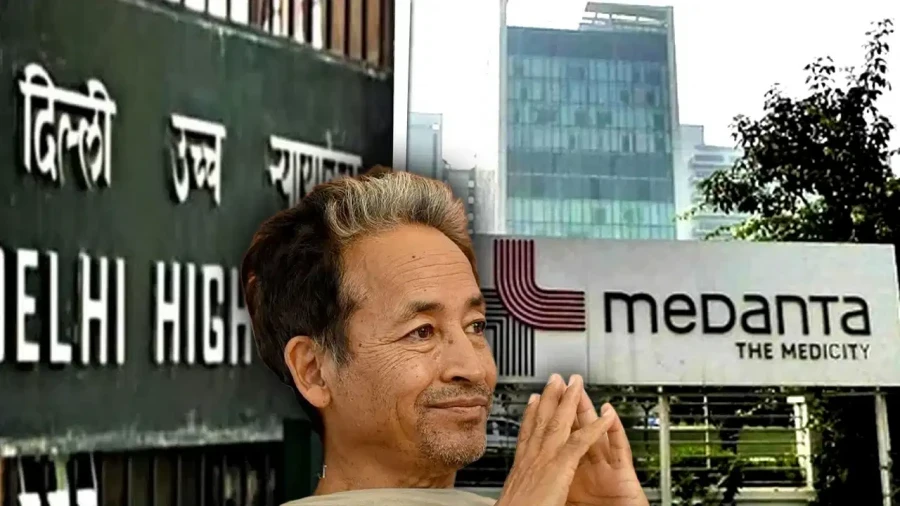
The Delhi High Court has issued a significant directive regarding the medical care of activist Sonam Wangchuk, ordering his immediate transfer from Safdarjung Hospital to Medanta Hospital, while this decision was prompted by growing concerns over his declining health parameters, specifically his low hemoglobin levels and platelet counts. The court's intervention came during the hearing of a petition filed by Wangchuk's wife, Gitanjali, who sought specialized medical attention for her husband. The Central Government also expressed its agreement with the proposal to shift Wangchuk to Medanta, ensuring that he receives treatment at a facility of his choice while remaining under strict medical supervision.
Medical Reports and Expert Analysis
During the proceedings, the court closely examined a medical report from Onquest Laboratories, which was based on blood samples taken recently. The bench inquired about the presence of AIIMS expert doctors to interpret these findings. A medical expert appearing before the court confirmed that Wangchuk's blood cell count is Notably low and doesn't fall within the normal range. The doctor highlighted that for a male resident of Ladakh, a hemoglobin level of 11 is considered very low, as individuals from high-altitude regions typically maintain higher levels. On top of that, the white blood cell (WBC) count was noted to be low, which poses a severe risk of infection due to weakened immunity. The court also referred to an affidavit, specifically page 15, where the treating doctors emphasized the necessity of regular and rigorous monitoring in a hospital setting.
Dr. Tandon provided further insights into Wangchuk's condition, expressing deep concern over his ability to fight off infections. The doctor noted that the activist's platelets are low and require further investigation. A critical observation was made regarding Wangchuk's lack of calorie intake, which could lead to the breakdown of substances in the liver or create an acidic environment within the body. The rising levels of uric acid were cited as a clear indicator of muscle wasting. Dr, while tandon emphasized that while certain physiological changes are expected during a fast, the current indicators aren't normal and necessitate constant medical supervision. "I support what is happening in the hospital; he needs continuous monitoring," the doctor stated, highlighting the risks associated with the activist's prolonged fast.
Legal Arguments and Government Stance
Senior advocate Kapil Sibal, representing Sonam Wangchuk, informed the court that while Wangchuk's condition is currently stable, he remains on a hunger strike as an exercise of his rights. Sibal brought to the court's attention a letter written by Wangchuk detailing the restrictive conditions at Safdarjung Hospital. According to the letter, Wangchuk was under constant police surveillance and was denied access to a telephone. In response to these concerns, the court proposed shifting him to Medanta Hospital, while solicitor General Tushar Mehta, representing the Central Government, stated that the government has no objection to the transfer, acknowledging Medanta as a reputable institution. However, Mehta insisted that Wangchuk must not be discharged without formal medical advice from the doctors at Medanta. "His health condition can have external impacts; he needs medical monitoring, and it's essential," Mehta argued, stressing that the decision to discharge should be based on medical advice rather than the patient's own preference.
Final Court Directives
The Delhi High Court concluded the hearing by formalizing the order to shift Sonam Wangchuk to Medanta Hospital for continued treatment. The court directed that all medical records, treatment history, and reports from Safdarjung Hospital be handed over to the medical team at Medanta to ensure a smooth transition of care, while the bench expressed its gratitude to the medical experts and AIIMS doctors for their assistance in interpreting the complex medical data. The court reiterated that Wangchuk's health and safety are the primary concerns, and the shift to Medanta is intended to provide him with the best possible care in an environment where he feels comfortable, while the formal order was scheduled for release following the lunch recess, marking a pivotal step in addressing the activist's health crisis.