
- India,
- 01-Aug-2026 10:18 PM IST



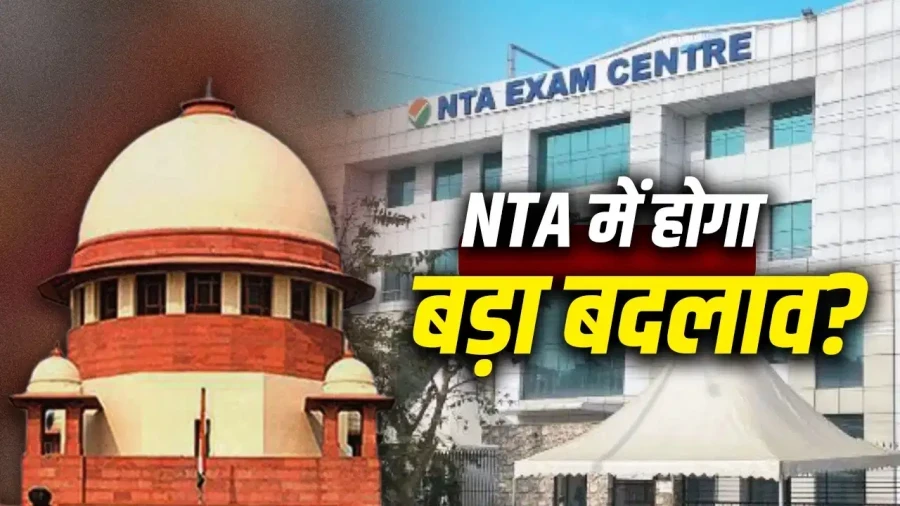
The Delhi High Court has initiated a significant administrative overhaul within the Delhi Higher Judicial Service (DHJS) by ordering the transfer and new appointments of 138 judges. Among the most notable changes in this large-scale reshuffle is the transfer of Special Judge Anu Grover Baliga, who was previously designated to lead the Special Fast Track Court specifically established to handle cases related to paper leaks and public examination irregularities. Following this judicial transition, Special Judge Ajay Gupta has been appointed to take over the proceedings and will now hear all matters connected to paper leak cases.
Major Reshuffle in Delhi Higher Judicial Service
The recent order by the Delhi High Court marks a comprehensive restructuring of the judicial landscape in the national capital. Out of the 138 judges affected by these transfers, 13 have been specifically assigned to the Special Courts located at the Rouse Avenue Court complex. These judges are tasked with presiding over highly sensitive and serious criminal matters, including those registered under the Unlawful Activities (Prevention) Act (UAPA), the National Investigation Agency (NIA) Act, the Narcotic Drugs and Psychotropic Substances (NDPS) Act, and the Maharashtra Control of Organised Crime Act (MCOCA).
New Appointments for NIA Special Courts
As part of this administrative exercise, the Delhi High Court has designated 6 judges as Special Exclusive NIA judges at the Rouse Avenue Court. The judges named in this transition are Anu Grover Baliga, Vikas Dhull, Prashant Sharma, Amit Bansal, Kiran Bansal, and Pulastya Pramachala. According to the official notification issued by the High Court, these judicial officers are scheduled to formally assume their responsibilities in the Special Exclusive NIA Courts starting from August 4. This move coincides with the establishment of new NIA courts at the Rouse Avenue complex, which are set to be inaugurated this coming Monday.
Centralization of MCOCA and NDPS Courts
In a strategic move to streamline judicial proceedings, the courts handling cases under the Maharashtra Control of Organised Crime Act (MCOCA) and the NDPS Act have also been shifted to the Rouse Avenue Court complex. Previously, the NIA courts were primarily functioning out of the Patiala House Court, while MCOCA and NDPS courts were distributed across various district courts in Delhi. This consolidation at Rouse Avenue is expected to centralize the handling of organized crime and drug-related offenses under specialized judicial oversight.
Focus on Paper Leak and Public Exam Irregularities
The Special Fast Track Court at Rouse Avenue was recently constituted by the Delhi High Court with a specific mandate to address criminal cases involving the NEET examination paper leak and other irregularities in public exams, while the court was established following a formal notification from the High Court, which stipulated that this fast-track mechanism would deal exclusively with cases involving unfair means and paper leaks under the relevant provisions of the law. The formation of this court came in the wake of intense protests in Delhi regarding examination integrity and followed an announcement by Prime Minister Narendra Modi regarding the creation of fast-track courts to ensure swift justice in paper leak cases. While Judge Anu Grover Baliga was the initial appointee for this role, the responsibility now transitions to Judge Ajay Gupta as part of the broader DHJS reshuffle.