
- India,
- 10-Nov-2026 08:08 PM IST



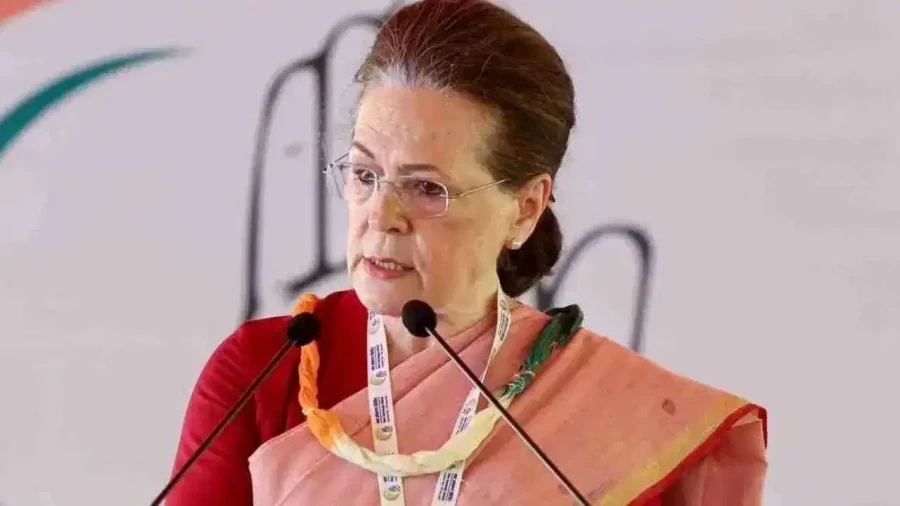
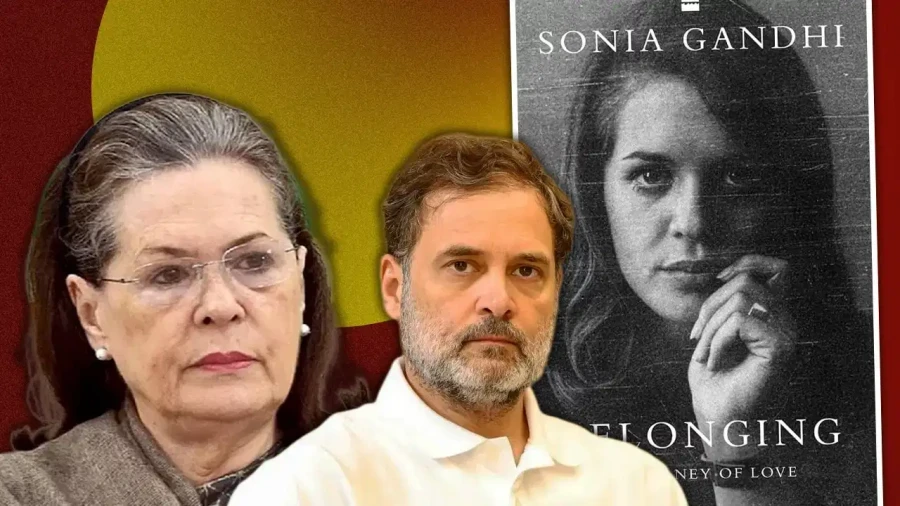
Congress parliamentary party leader Sonia Gandhi is much anticipated 544-page memoir titled Belonging: A Journey of Love has now been published and is available to readers. In this comprehensive autobiography, Sonia Gandhi has analyzed several important chapters of Indian politics in great detail, especially the electoral successes and bitter defeats of the Congress party. Ever since this book entered the public domain, it has sparked intense reactions and discussions both within and outside the political corridors. Through this book, Sonia Gandhi has attempted to clarify how the country is political landscape has shifted over the past two decades and how her party coped with these monumental changes.
In the pages of her autobiography, Sonia Gandhi has openly mentioned the primary reason behind the Congress party defeat in the 2019 Lok Sabha elections. According to her, the biggest factor for the defeat in the 2019 general elections was the Pulwama terrorist attack followed by the Balakot airstrikes. This sequence of events completely altered the entire political atmosphere and the public mood across the nation. It's noteworthy that in those 2019 Lok Sabha elections, the Congress party had to settle for just 52 seats, while the Bharatiya Janata Party, or BJP, achieved a massive mandate by winning 303 seats.
Sonia Gandhi further writes in her book that the Pulwama terrorist attack and the subsequent Balakot airstrikes Notably influenced the political environment prior to the 2019 Lok Sabha elections. Despite this challenging backdrop, Rahul Gandhi took full moral responsibility for the defeat and stepped down from his position as the Congress party president. This move was widely regarded as a significant milestone of political accountability and morality within the party leadership, which Sonia Gandhi has elaborated upon in her memoir.
In another crucial section of the book, Sonia Gandhi has vividly and elaborately recalled the unexpected victory of her party in the 2004 Lok Sabha elections. At that time, the formidable and established political partnership of Atal Bihari Vajpayee and Lal Krishna Advani held absolute power in the country. The central question was how to defeat this seemingly invincible pairing. Sonia Gandhi has explained in depth how political strategies were meticulously crafted to alter the prevailing power equations and secure a remarkable triumph for the Congress-led alliance.
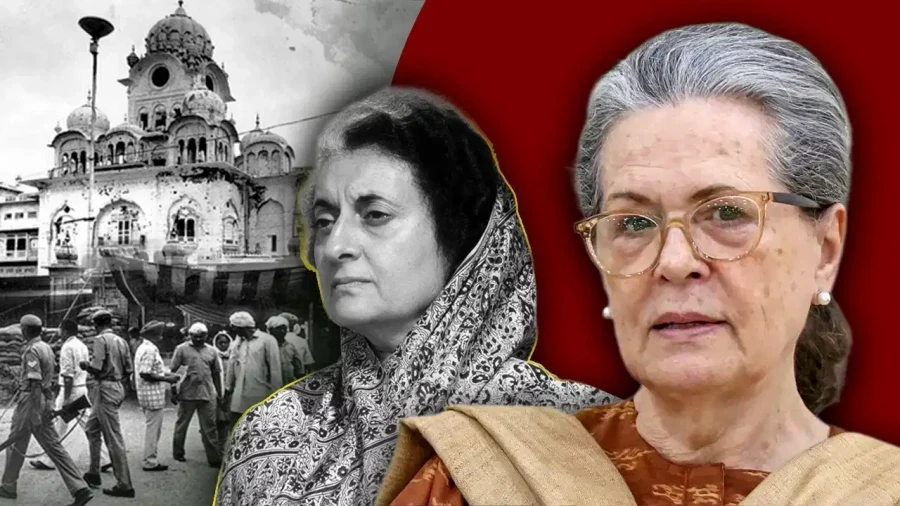
Sonia Gandhi writes that when she initially entered politics, she had only two core objectives in mind. The first objective was to carry forward the unfinished and vital work initiated by Indira Gandhi and Rajiv Gandhi, and the second objective was to ensure that the Congress party retained its central position in mainstream Indian politics. According to Sonia, the BJP was growing stronger rapidly during that era, which prompted her to take the decisive step of stepping into active politics to protect and stabilize the party and the nation.
Recalling the turbulent days of her early political journey, Sonia Gandhi writes that the 2004 general elections turned out to be a battle for survival for the Congress party. During this delicate phase, she exercised two critical precautions, while the first precaution was to keep the party and all its alliance partners firmly united. The second precaution was to ensure that no one even got a hint about who would eventually become the prime minister after the election results were declared.
After the election results were announced, Sonia Gandhi put forward the name of Dr Manmohan Singh for the country is prime ministerial post with the mutual consent of all UPA alliance parties, while according to Sonia Gandhi, Manmohan Singh possessed the image of an impeccably honest leader. Plus, he also had a long and distinguished administrative track record of running the government and managing the economy, making him the most suitable candidate for the highest office.
When it comes to the elections of 2014, Sonia Gandhi has spoken candidly about the causes of the defeat in an interview as well as in her autobiography. Discussing the 2014 defeat, Sonia stated that the central government had faced several serious allegations of corruption during that period. Also, the Bharatiya Janata Party executed its electoral marketing and campaign strategies in an exceptionally brilliant and aggressive manner, which ultimately led to the defeat of the Congress party. Sonia also blamed anti-incumbency sentiment against the government as a major contributing factor for the 2014 debacle.
In her widely discussed autobiography, Sonia Gandhi has also directly held the famous Anna Movement responsible for shaping the adverse electoral environment of 2014. This revelation by Sonia has triggered a fresh wave of political debate. According to Sonia Gandhi, the script of the Anna movement staged at that time was written by individuals belonging to the BJP and the RSS. Sonia writes that Narendra Modi was actively promoted and projected politically through the platform and medium of that very Anna agitation.
As per Sonia Gandhi, the main demand put forward by Anna Hazare was the enactment of a strong Lokpal law, which was eventually implemented, but the irony was that the Congress party couldn't reap any political benefit from it. Throughout that entire political episode, the Congress party lagged behind in the propaganda war and failed to effectively communicate its narrative to the masses, a failure for which it had to pay a heavy price at the ballot box.