- India,
- 11-May-2026 04:44 PM IST



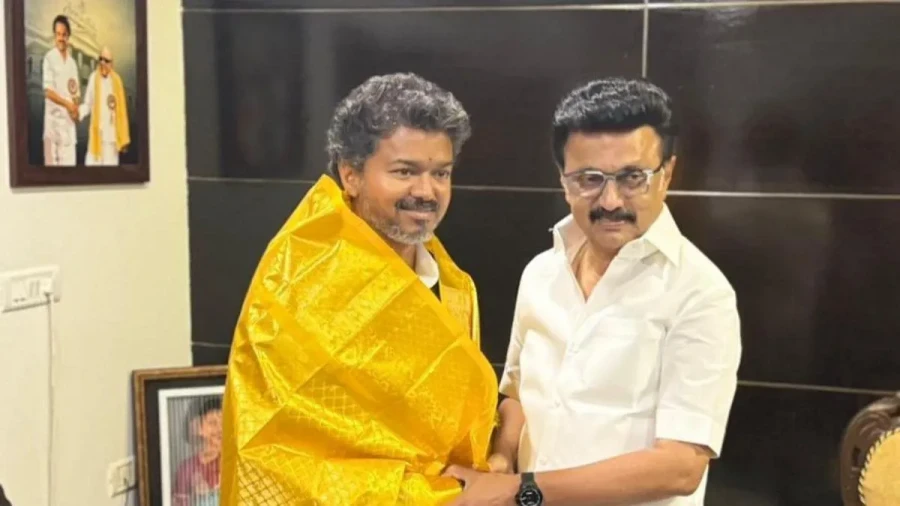
The political landscape of Tamil Nadu is witnessing a significant development as the newly appointed Chief Minister, C. Joseph Vijay, visited the residence of former Chief Minister and Dravidian Munnetra Kazhagam (DMK) chief MK Stalin. This high-profile meeting has triggered a wave of speculation across the state's political circles, coming shortly after a fiercely contested election where Vijay emerged victorious over the veteran leader. The visit to Stalin's Chennai residence is being viewed through multiple lenses, ranging from a gesture of political courtesy to a calculated strategic maneuver in the evolving power dynamics of Tamil Nadu. The meeting is particularly noteworthy as it marks the first formal interaction between the two leaders since the change in government.
A Historic Shift in Tamil Nadu Politics
The formation of the government under the leadership of C. Joseph Vijay marks a historic departure from the long-standing dominance of traditional Dravidian parties in the state. As an actor-turned-politician, Thalapathy Vijay recently took the oath of office as the Chief Minister, representing his party, the Tamilaga Vettri Kazhagam (TVK). Following his swearing-in ceremony, Vijay has actively initiated contact with various political leaders, but his visit to MK Stalin's home remains the most significant interaction to date. While many observers see this as a cordial beginning to his tenure, others are analyzing it as a strategic step to ensure administrative stability in a state that has seen decades of Dravidian rule. The transition signifies a new era for Tamil Nadu's administration.
The Financial Dispute and War of Words
The meeting is particularly striking given the recent verbal exchange between the two leaders regarding the state's financial health. Prior to this visit, Chief Minister Vijay had publicly criticized the previous DMK administration, alleging that they had left behind an empty treasury, while he specifically pointed out that the state is currently burdened with a massive debt of approximately 10 lakh crore rupees. This allegation drew a sharp response from MK Stalin, who took to social media to defend his government's record. Stalin countered by stating that there is no shortage of funds, but rather a need for efficient administration. He further advised the new Chief Minister that running a government is a far more challenging task than conducting a political campaign, emphasizing the complexities of governance over rhetoric.
Key Highlights of the Political Transition
Security Measures and Strategic Implications
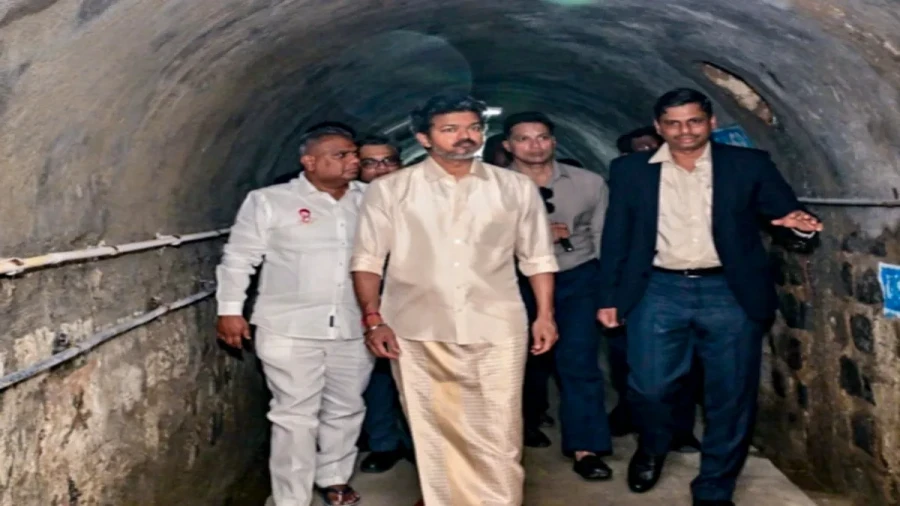
The meeting at Stalin's residence was conducted under heavy security arrangements. Chief Minister Vijay arrived with his core team, and although the interaction lasted for a considerable duration, no official statement has been released regarding the specific details of their conversation. Political analysts suggest that such interactions are essential for maintaining political stability in a state like Tamil Nadu. The transition of power from the DMK to the TVK has placed the DMK in the opposition role, with Udhayanidhi Stalin now serving as the Leader of the Opposition. This setup creates a unique dynamic where both parties must navigate a path between confrontation and cooperation for the state's welfare, especially concerning legislative matters and public policy.
In his post-oath address, Chief Minister Vijay reiterated his government's commitment to the principles of secularism, social justice, and people-centric governance. " As the TVK government begins its journey, the public remains watchful of how the relationship between the new Chief Minister and the seasoned opposition leader MK Stalin will shape the future of Tamil Nadu's administration. The meeting serves as a reminder that despite electoral battles, the functioning of the state requires a level of engagement between the ruling power and the opposition, setting the stage for the upcoming legislative sessions.