
- India,
- 19-Nov-2026 01:16 PM IST



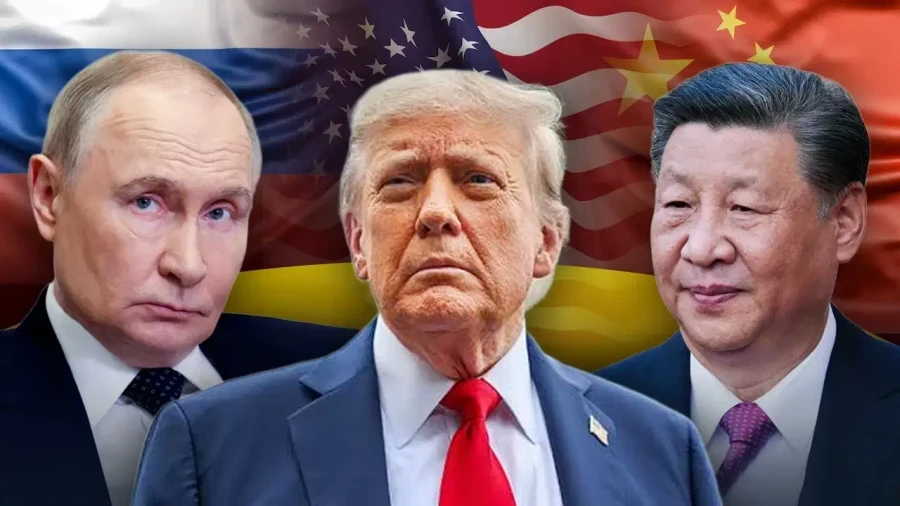
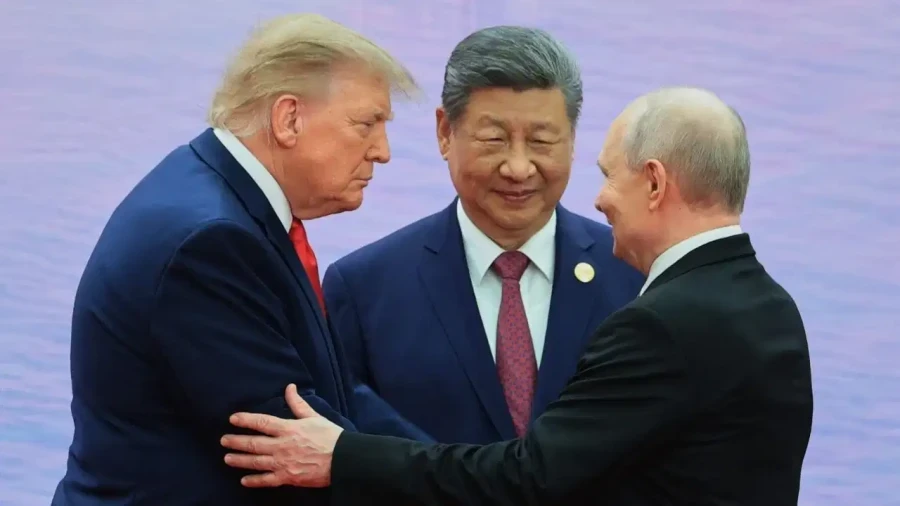
A high-profile meeting involving the top leaders of three major global superpowers is currently taking place in Shenzhen, China, where US President Donald Trump, Russian President Vladimir Putin, and Chinese President Xi Jinping are gathering together. This crucial meeting, held on the sidelines of the Asia-Pacific Economic Cooperation summit, is expected to feature serious discussions on ways to halt the ongoing wars in Iran and Ukraine, alongside addressing the rising number of nuclear weapons across the globe. This trilateral meeting is being closely monitored not only by the United States, Russia, and China, but also by several other nations worldwide, including India.
This high-level diplomatic gathering is being frequently compared to the historic Yalta Conference held in the year 1945. During the absolute final stages of the Second World War back then, US President Franklin D Roosevelt, British Prime Minister Winston Churchill, and Soviet leader Joseph Stalin sat together at one table, while those three legendary leaders made massive decisions regarding what the post-war world order would look like. The current Shenzhen meeting is similarly being viewed as a defining moment capable of reshaping the contemporary global architecture, thereby causing a surge of activity in international diplomacy.
From India's perspective, this summit is considered strategically vital for several reasons. The primary backdrop involves the events of August 2025, when the United States imposed an extra twenty-five percent tariff on Indian goods due to India's continued purchase of crude oil from Russia. If diplomatic talks to end the Ukraine conflict gain substantial momentum during this meeting, the looming threat of fresh American sanctions on both Russia and India could decrease Notably. Also, India's persistent diplomatic efforts to transport grain and food supplies from Ukraine to global markets would also receive a major boost and assistance from this geopolitical development.
The separate bilateral meeting scheduled between US President Donald Trump and Chinese President Xi Jinping in Shenzhen holds immense significance for India as well. Both nations could potentially advance their bilateral trade agreement further toward the year 2027. Although the United States recently enacted strict new regulations designed to prevent Chinese corporations from obtaining remote access to advanced American artificial intelligence chips, President Trump remains reluctant to completely ruin diplomatic relations with China. Consequently, there is ongoing speculation that America's focus on the QUAD alliance in Asia might experience a relative decline. Under such circumstances, it becomes imperative for India to carefully maintain a delicate strategic balance between the United States and China.
All three major leaders stand to gain distinct political and diplomatic advantages from this international encounter. US President Donald Trump will get a golden opportunity to showcase his powerful image alongside other prominent global leaders to domestic and international audiences. Russian President Vladimir Putin will be able to work with this platform to convey a clear message to the world that Russia is by no means isolated on the international stage. Meanwhile, Chinese President Xi Jinping secures an exceptional opportunity to strengthen his global and international image ahead of the crucial Chinese Communist Party meeting scheduled for the year 2027.
On the flip side, traditional allies and partner nations of the United States harbor deep anxieties that Putin and Xi might successfully persuade President Trump to make decisions heavily favorable to their interests, while trump has already openly criticized Ukrainian military strikes targeting Russian energy infrastructure. Besides, critical Starlink and Starshield services essential for the Ukrainian military were temporarily disabled at various points. In addition to these factors, Trump has currently withheld approval for selling fourteen billion dollars worth of weaponry to Taiwan, thereby sustaining regional strategic tensions.
Ukrainian President Volodymyr Zelenskyy has also characterized this clandestine and high-profile Shenzhen meeting as a dangerous event reminiscent of Yalta. Leaders from several European and Asian nations have developed a growing fear that Trump, Putin, and Xi might unilaterally strike backroom deals and make pivotal decisions concerning contentious issues like Ukraine and Taiwan amongst themselves. If such a scenario unfolds, it could severely damage the national interests of other nations left outside the negotiating room.
Nevertheless, several American diplomats strongly dismiss these historical comparisons, arguing that they lack validity, while their clear reasoning is that during the Yalta Conference in 1945, those three nations were united in fighting against Nazi Germany, whereas today, the United States, Russia, and China remain fierce strategic rivals to one another. According to Carnegie Endowment expert Evan Feigenbaum, the United States is completely unprepared to hand over its hegemony and influence in the Asian continent to China, ensuring that diplomatic friction will likely persist in the foreseeable future.