
- India,
- 28-Jun-2026 08:28 AM IST



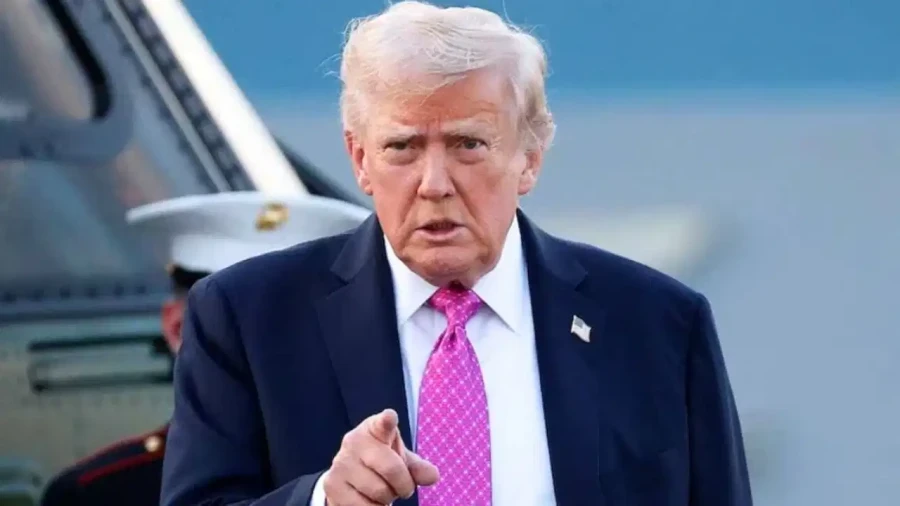
Tensions between the United States and Iran have escalated Notably as President Donald Trump issued a stern warning to the Islamic Republic, while following a second consecutive day of American airstrikes on Iranian military installations, Trump cautioned that if Iran continues to violate the ceasefire and forces the United States to complete its military campaign, the very existence of the Islamic Republic of Iran could be at stake. This development marks a critical point in the fragile relations between the two nations, as both sides trade accusations of breaking agreements and inciting violence in the region.
US Military Action and Strategic Targets
The United States military conducted a series of aerial operations targeting specific Iranian assets. According to President Trump, who shared details on his social media platform, Truth Social, American fighter jets successfully struck locations housing Iranian missiles and drones. On top of that, coastal radar systems were targeted to degrade Iran's monitoring capabilities, while trump emphasized that while the United States has exercised restraint thus far, continued aggression from Iran would lead to a full-scale military operation with severe consequences for the Iranian regime.
CENTCOM Details the Scope of Operations
The United States Central Command (CENTCOM) confirmed that these military actions were carried out under the direct orders of the President, while the primary justification for the strikes was an Iranian suicide drone attack on the M/T Kiku, a Panama-flagged oil tanker. The vessel was transiting the strategic Strait of Hormuz carrying 2 million barrels of crude oil at the time of the incident.
- Iranian surveillance systems and communication networks.
- Air defense systems and drone storage facilities.
- Capabilities for laying maritime mines in international waters.
- Coastal radar stations and missile launch sites.
This second wave of attacks followed an initial round of strikes the previous day, which also focused on Iran's drone and missile infrastructure. The US maintains that these actions are necessary defensive measures to protect international shipping and respond to Iranian provocations.
Regional Impact and Political Support
In response to the American airstrikes, Iran reportedly launched attacks on targets in Bahrain and Kuwait, further widening the scope of the conflict. Within the US administration, Vice President JD Vance expressed strong support for the military action, while vance noted that while Iran had signed a ceasefire agreement and the US was adhering to it, any violation would be met with force. He stated that while disputes regarding the agreement could be discussed through dialogue, violence from Iran would be answered with violence from the United States.
Uncertainty in the Strait of Hormuz
The ongoing military exchanges have raised serious concerns regarding the security of the Strait of Hormuz, one of the world's most vital oil transit routes. With both nations accusing each other of breaching the ceasefire, the delicate agreement is facing its most difficult test to date. The international community is closely watching the situation as the threat of a broader conflict looms over the Middle East.