
- India,
- 25-Nov-2026 09:02 AM IST



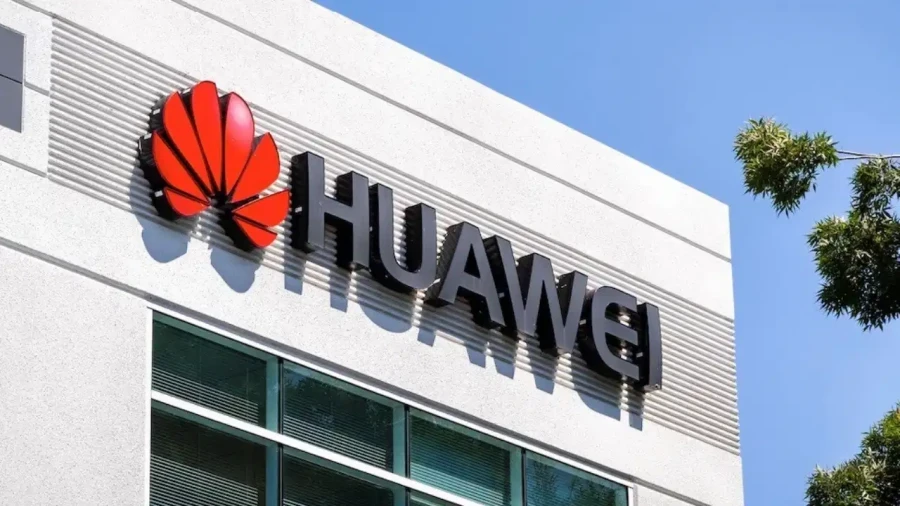
Chinese tech giant Huawei has suffered a major legal setback in the United States as a federal jury found the company and its three affiliate entities guilty on 10 out of 12 criminal counts. The charges brought against the corporation involve a conspiracy to steal trade secrets from American companies, bank fraud, wire fraud, and violations of strict US sanctions. This landmark verdict could potentially force the telecommunications giant to pay billions of dollars in criminal penalties, sending shockwaves through the global technology and business sectors.
Legal Proceedings and Jury Verdict
The high-profile federal criminal trial against Huawei took place in the US District Court for the Eastern District of New York in Brooklyn. Following extensive deliberations, the jury convicted the company and its subsidiaries on 10 of the 12 counts presented by prosecutors. However, in a partial relief for the firm, the jury acquitted Huawei of the most serious racketeering charge. Also, the company was found not guilty of conspiracy to obstruct justice, a development that Huawei's legal defense team highlighted as a significant victory. Following this verdict, the presiding court has officially scheduled the sentencing hearing for September 14, 2027.
Allegations of Stealing US Technology
Prosecutors detailed a long-standing and systematic pattern of technology theft by Huawei. According to the indictment, the corporation utilized unlawful and unfair methods to gain a competitive edge in the global market. The trial revealed that Huawei stole or misappropriated trade secrets, source codes, router manuals, and antenna and robot testing technology from prominent American and international companies including T-Mobile, Cisco Systems, Motorola Solutions, Quintel USA, and Fujitsu.
Specific Instances of Illicit Activities
According to court evidence, Huawei once sold internet routers containing source codes directly copied from a competitor. In another striking incident, a Huawei employee covertly entered a competitor's exhibition booth during a trade show in Chicago and secretly photographed the internal circuitry of networking devices, while in yet another instance, a robotic arm was temporarily removed from a rival company's laboratory solely for the purpose of photographing its intricate mechanical setup.
Involvement of Company Executives
Court records and investigative documents further revealed that Huawei's top leaders and senior executives were actively involved in misleading US authorities. The records state that these executives directly participated in criminal activities, including lying to the United States Congress, deceiving financial institutions, violating American trade bans, and attempting to obstruct the very criminal investigation that ultimately triggered this landmark federal case.
Huawei Defense and Appeal Plans
In response to the verdict, Huawei dismissed the allegations as an overblown narrative built around old trade secret disputes. Throughout the trial, defense attorneys argued that US investigators unfairly stitched together a grand conspiracy narrative based on the alleged misconduct of only a few individuals among Huawei's workforce of more than 2 hundred thousand employees, claiming the government heavily exaggerated the charges.
The company maintains that the government's accusations are entirely baseless and that Huawei has always adhered to business integrity and is fully committed to complying with all applicable laws and regulations. Notably, the United States initially filed criminal conspiracy charges against Huawei in early 2019. Following the recent verdict, Huawei announced its intention to formally appeal the court's decision in a higher appellate court.
Stance of the US Department of Justice
Overall, Huawei was convicted on 10 out of the 12 criminal counts. According to the US Department of Justice, the formal sentencing hearing has been officially set for September 14, 2027. As a consequence of these convictions, Huawei could face billions of dollars in combined criminal fines, property forfeitures, and financial restitution.
Brooklyn US Attorney Joseph Nocella Jr. strongly condemned the company's actions, stating that Huawei spent years attempting to jeopardize United States national security, subvert rules governing American commerce, and obstruct the administration of justice. He emphasized firmly that no individual or corporation, regardless of its size, is above the law.