
- India,
- 03-Sep-2026 05:48 PM IST



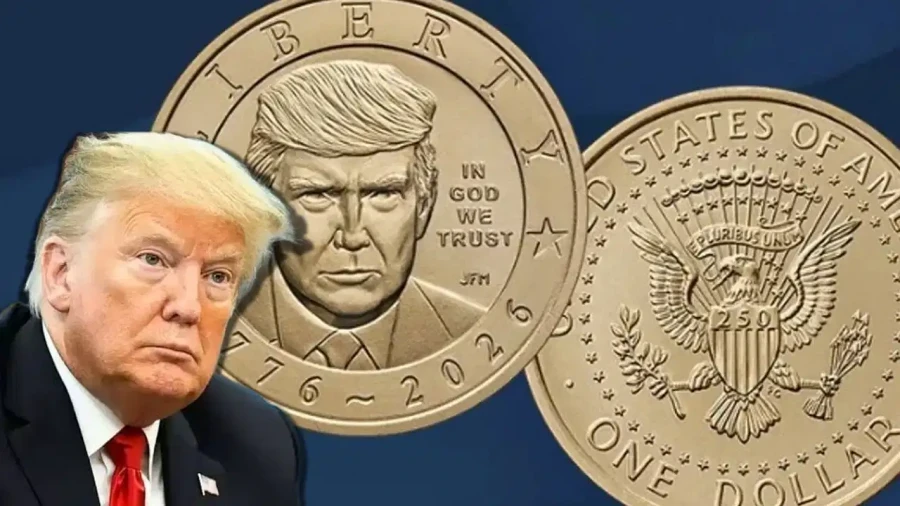
The United States Mint has officially released a new golden-colored 1 dollar coin featuring the portrait of President Donald Trump, a move that has ignited significant discussion and controversy across the nation. This release marks a rare departure from a long-standing American tradition that generally avoids placing the image of a living person on the country's currency. The coin has been issued as part of the preparations for the 250th anniversary of the United States, which will be celebrated in 2026. This milestone, known as the Semiquincentennial, is being commemorated with various special initiatives, and the inclusion of a sitting or living president on a coin has not been seen in nearly 100 years. The announcement has led to questions regarding the legality and the precedent such a move sets for future American coinage.
Design and Symbolism of the New Coin
The US Mint made the coin available for sale on Wednesday, highlighting its golden hue and intricate design. On the obverse, or the front side of the coin, there is a detailed depiction of President Donald Trump. Surrounding his image are the traditional American inscriptions: LIBERTY and IN GOD WE TRUST. On top of that, the dates 1776~2026 are prominently displayed to signify the two and a half centuries of the nation's history since its founding. The reverse side of the coin features the official seal of the President of the United States, with a shield that bears the number 250, further emphasizing the anniversary theme. According to the US Mint, the design is intended to reflect the identity, pride, and heritage of the United States. However, the choice of featuring Trump has immediately turned the coin into a subject of political and legal debate.
The Historical and Legal Context of Living Figures on Currency
The controversy surrounding the coin stems from old regulations regarding the depiction of living individuals on government currency. This tradition dates back to 1866 when Congress established a rule following an incident where a government official allegedly placed his own portrait on American currency. This regulation is commonly referred to as the Thayer Amendment. Under this rule, the depiction of any living person on US banknotes is strictly prohibited, while while the rule was primarily aimed at paper currency, the tradition has largely extended to coins as well. Also, US federal law generally specifies that portraits on American currency and government securities should be of deceased individuals. While supporters of President Trump have previously attempted to introduce legislation to modify these rules, those proposals had not successfully moved forward in the past.
How the Trump Coin Navigates Legal Boundaries
The most critical aspect of this development is how the coin is considered legal despite the existing traditions. Reports indicate that the coin isn't being viewed as illegal due to a specific piece of legislation passed in 2020. This law is known as the Circulating Collectible Coin Redesign Act of 2026 (CCRA). Interestingly, Donald Trump himself signed this act into law during his first term in office, while the CCRA granted the US Treasury the authority to create special designs for 1 dollar coins to mark the 250th anniversary of the United States. The law included a specific provision stating that the reverse side of the coin must not feature the portrait of any individual, whether living or deceased. However, because the portrait of Donald Trump is placed on the obverse or front side of the coin, it appears to comply with the technical requirements of the 2020 law. Consequently, while the coin challenges long-held traditions, it's currently regarded as legal under the existing statutory framework provided by the CCRA.