

- India,
- 14-Apr-2026 01:49 PM IST


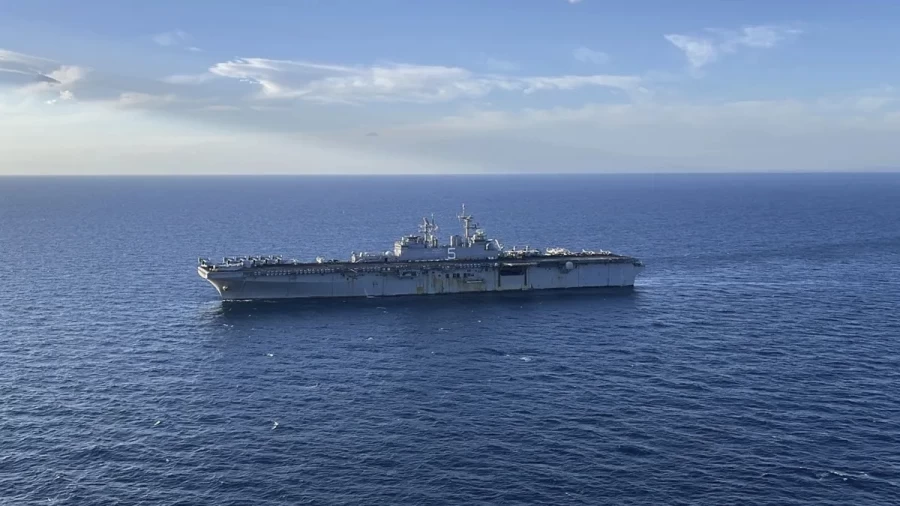
Tensions in the Middle East have escalated Notably following President Donald Trump's order to the US Navy to initiate a blockade of Iranian ports. According to a report by CNN, at least 15 warships are currently stationed in the region to enforce this directive. The fleet is led by the aircraft carrier USS Abraham Lincoln and includes 11 destroyers. This military maneuver comes during a previously announced two-week ceasefire, signaling a shift from diplomatic efforts to direct naval pressure.
Failure of Islamabad Negotiations
The decision to implement a naval blockade follows the collapse of high-stakes diplomatic talks held in Islamabad, Pakistan. Representatives from the United States and Iran engaged in over 21 hours of discussions aimed at resolving long-standing disputes. However, the talks concluded without a formal agreement, particularly concerning Iran's nuclear ambitions, while following the failure of these negotiations, President Trump issued the order to surround Iranian ports, asserting that the United States is prepared to maintain unilateral pressure to achieve its security objectives.
Composition of the US Naval Fleet
The US Navy has deployed a formidable array of maritime assets to the region, while the 11 destroyers identified in the fleet include the USS Bainbridge, USS Thomas Hudner, USS Frank E. , USS Delbert D. Black, USS John Finn, USS Michael Murphy, USS Mitscher, USS Pinckney, USS Rafael Peralta, USS Spruance, and USS Milius. On top of that, the Tripoli Amphibious Ready Group is present, consisting of the USS Tripoli, USS New Orleans, and USS Rushmore. Some auxiliary support vessels are also en route, navigating through the Suez Canal or around the African continent to join the blockade.
Dispute Over Nuclear Weapons and Uranium
The core of the confrontation remains Iran's nuclear program. President Trump has reiterated that the United States won't permit Iran to possess nuclear weapons. A major point of contention is the enriched uranium currently held by Iran. The US administration has demanded the return of this material, with Trump stating that the US will ensure its removal one way or another. Vice President JD Vance confirmed that Iran has not provided any guarantees to abandon its nuclear weapons development, leading to the current military posturing.
Strategic Positioning and International Support
While the US warships are spread across a vast maritime area, their strategic positioning is designed to effectively choke Iranian port activities. President Trump claimed that several other nations have offered to assist in the blockade, though he declined to name them specifically. He emphasized that while the US doesn't strictly require external assistance, the offers remain on the table. The President warned that if no agreement is reached by the end of the ceasefire period, the situation for Iran will deteriorate further as the blockade tightens.
