
- India,
- 02-Aug-2026 08:12 AM IST



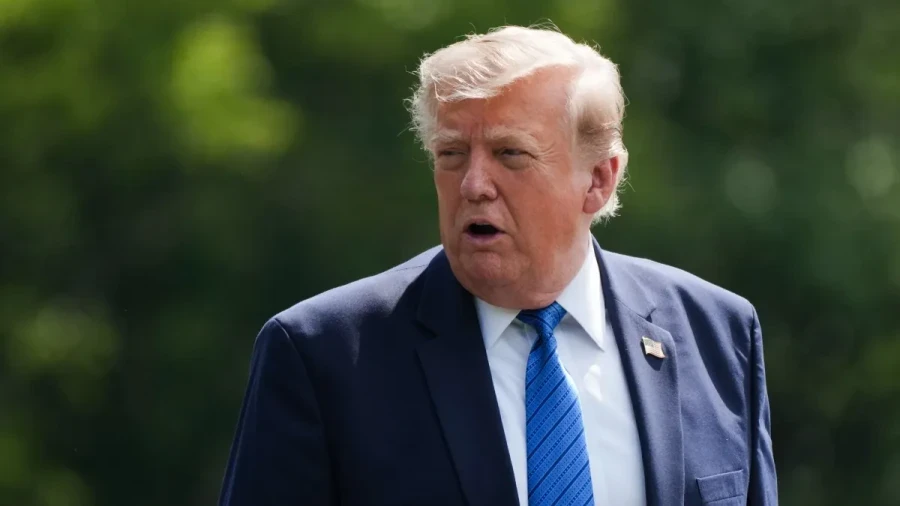
United States President Donald Trump has issued a formidable warning regarding a potential large-scale military strike against Iran, signaling a significant escalation in Middle Eastern tensions. S, while government has released a critical security advisory for its citizens currently residing in or traveling through the region. The advisory explicitly instructs American nationals to consider departing from the Middle East immediately or to remain in a state of constant readiness for evacuation. This move comes amid growing concerns that the security environment could deteriorate with little to no notice, potentially leading to widespread disruptions in international travel and regional stability.
Escalating Regional Security Concerns
S. State Department's security alert emphasizes that the regional security situation remains highly complex and volatile. According to the official communication, the situation has the potential to worsen rapidly, while americans in the region are being urged to exercise extreme caution and to prepare for various contingencies, including the sudden cancellation of commercial flights and the closure of regional airspace. The advisory notes that those currently in the Middle East should evaluate their departure options now, as escalating tensions could make leaving the region Importantly more difficult in the near future. The State Department has specifically warned that many airlines may cancel their flights in the Middle East in the coming days, making it imperative for citizens to act swiftly.
Provocations and Military Warnings
The heightened state of alert follows reports of aggressive actions by Iran in the region. Iran has reportedly carried out drone attacks in Kuwait and has also targeted commercial vessels in the strategic Strait of Hormuz. These actions have prompted President Trump to warn of severe consequences and a strong military response. During a cabinet meeting at the White House, President Trump indicated that the United States is prepared for a sustained military campaign against Iran if necessary. S. would strike Iran very hard for as long as Iran is capable of sustaining such attacks. This rhetoric underscores a shift toward a more direct military confrontation.
Threats to Diplomatic and Global Interests
S. diplomatic facilities, businesses, and institutions on a global scale. S, while state Department has warned that Tehran has recently expanded the scope of its potential targets to include countries that were previously not targeted, such as Egypt. S. citizens residing outside the region reconsider any plans to travel to or transit through the Middle East. S. S. Consulate in Dubai out of the United Arab Emirates.
Violation of Agreements and Diplomatic Stance
White House Press Secretary Karoline Leavitt has accused Tehran of violating a memorandum of understanding that had temporarily halted hostilities last month. S. soldiers. She stated that President Trump wouldn't stand by and allow such acts of terrorism to occur. The administration has made it clear that military pressure will continue until Iran returns to the negotiating table in a manner that President Trump deems meaningful. This stance reflects a total breakdown of the previous temporary truce.
Regional Conflict and Failed Ceasefire Attempts
The situation is further complicated by ongoing military actions involving Israel. Israel has conducted overnight bombings in central and northern Gaza, as well as strikes in Lebanon. These actions come despite a previous ceasefire framework mediated by the United States, in which Hamas had expressed a willingness to lay down arms and stop fighting. However, the ceasefire appears to have collapsed shortly after it was proposed, as Israeli strikes intensified. While the Israeli government has not officially responded to the Hamas statement, National Security Minister Itamar Ben-Gvir has publicly rejected the framework, calling it unacceptable and asserting that Israel must achieve a total victory. This internal and external pressure continues to fuel the instability across the Middle East.
Instructions for U.S. Citizens
S. government has provided specific instructions for its citizens to ensure their safety. Americans are advised to avoid public demonstrations and to stay informed by monitoring regional news reporting. They're also urged to remain vigilant near sites associated with the United States and to maintain updated emergency contingency plans. Plus, the State Department has encouraged all citizens to register with the Smart Traveler Enrollment Program (STEP) to receive real-time security alerts and updates. The advisory serves as a stark reminder of the unpredictable nature of the current geopolitical climate in the Middle East.