

- India,
- 30-Dec-2025 06:01 PM IST


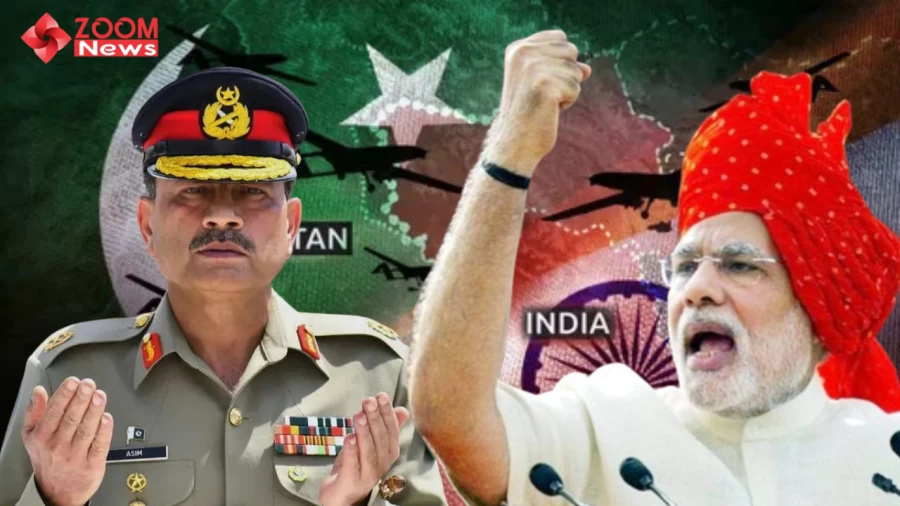
The Council on Foreign Relations (CFR), a leading and influential American think tank, has issued a stark warning, predicting a potential armed conflict between India and Pakistan by the year 2026. This alarming forecast is detailed in CFR's comprehensive report titled 'Conflicts to Watch in 2026,' which assesses potential global flashpoints in the near future, while according to the report, escalating terrorist activities in the disputed Kashmir region could serve as the primary catalyst for a confrontation between these two nuclear-armed neighbors, with severe implications for regional and global stability.
The CFR report specifically identifies the surge in terrorist activities in. Kashmir as a critical factor that could trigger an India-Pakistan conflict. While there have been no major terrorist attacks in Jammu and Kashmir recently, intelligence agency reports paint a concerning picture. These reports indicate that over 30 Pakistani terrorists are actively operating in the Jammu region this winter, raising fears of potential large-scale attacks in the future.
The presence and potential actions of these militants could Importantly heighten tensions in the area, potentially leading to a military standoff between the two nations. This situation isn't only perilous for the local populace but also poses a grave threat to peace across the entire subcontinent.
The Accelerating Arms Race and Military Preparedness
The report further highlights that both India and Pakistan have Notably accelerated their arms purchases following the ceasefire on May 10, while this move is widely interpreted as a preparation for any potential future conflict. In India, the Defence Acquisition Council (DAC) recently approved defense deals worth 79,000 crore rupees. These acquisitions include advanced drones, air-to-air missiles, and guided bombs, all designed to bolster India's military capabilities. By acquiring these sophisticated weapons, India aims to enhance its air defense and offensive strike capabilities, ensuring it can effectively counter any external threats.
Pakistan's Defense Preparations and Lessons from 'Operation Sindoor'
Concurrently, Pakistan is also actively working to address its military vulnerabilities. According to the report, Pakistan has initiated discussions with Turkey and China to acquire new drones and air defense systems. The primary objective of these procurements is to rectify weaknesses identified during 'Operation Sindoor. ' During this operation, Pakistan reportedly experienced deficiencies in its air defense and surveillance capabilities, which it now seeks to overcome through these new weapon systems, while this ongoing arms race could further exacerbate mistrust and tension between the two nations, thereby increasing the likelihood of conflict.
Potential for Afghanistan-Pakistan Conflict
The CFR report extends its warning beyond India and Pakistan, pointing to another significant regional threat. According to the think tank, there is a possibility of. An armed conflict between Pakistan and Taliban-ruled Afghanistan by 2026. However, CFR believes that this conflict would have a relatively lesser impact on US interests. In October, fierce clashes erupted along the 2600-kilometer Durand Line between Pakistan and Taliban-controlled Afghanistan. During these skirmishes, both armies reportedly exchanged fire in several areas, with claims of border outposts being destroyed. These incidents have severely strained relations and trade between the two countries, maintaining persistent tension along the border.
Warning for US Policymakers and the Report's Significance
This CFR report is based on an extensive survey of US foreign policy experts. Its primary objective is to alert American policymakers to regions where conflicts could erupt in the future. The report categorizes conflicts into three tiers—Tier-1, Tier-2, and Tier-3—based on their likelihood and potential impact on US interests. This classification aids policymakers in prioritizing issues and formulating strategies to address potential crises. Reports from institutions like CFR play a crucial role in shaping the foreign policy of the US government, influencing the White House and Congress. CFR assesses global crises, wars, and geopolitical situations to provide. Warnings about future possibilities, helping policymakers take necessary steps proactively.
South Asia as a Geopolitical Hotspot
The report clearly indicates that South Asia could once again become a focal point of significant geopolitical tension in the coming years. The risk of deteriorating situations on both the India-Pakistan and Pakistan-Afghanistan fronts remains high, which could lead to increased instability in the region. This scenario is a matter of concern not only for regional powers but also for the global community, given the involvement of nuclear-armed nations in the area. Any major conflict could have far-reaching consequences for the global economy and security.
Other Global Threats Highlighted by CFR
In addition to the India-Pakistan conflict, the CFR report also outlines four other major global threats that have a high probability of escalating by 2026:
Potential Intensification of the Russia-Ukraine War
According to the report, the war between Russia and Ukraine could intensify further by 2026, while both countries might escalate attacks on each other's cities and critical infrastructure, deepening the humanitarian crisis. This conflict would have a significant impact on European security, and the possibility of direct US involvement remains. An expansion of the war could also affect global energy. Markets and food supply chains, leading to increased economic instability worldwide.
Rising Violence in Gaza and the West Bank
There is a high probability of increased conflict between Israel and Palestinians in the Gaza Strip and the West Bank. The confrontation between Hamas and the Israeli army is expected to exacerbate the humanitarian crisis, potentially destabilizing the entire Middle East. An escalation of violence in this region could spread unrest to neighboring countries and hinder global peace efforts. CFR considers this conflict a significant threat to US interests.
China-Taiwan Tensions Escalating into a Military Crisis
China's increasing pressure on Taiwan could evolve into a major military crisis by 2026. The report suggests that this confrontation could directly draw the United States and its allies into a war, classifying it as a high-impact threat. Any military action in the Taiwan Strait could severely disrupt global trade and technology supply chains, having widespread repercussions on economies worldwide.
Risk of Iran-Israel Confrontation
Due to Iran's nuclear program and its supported organizations, there is a risk of a direct war with Israel, while according to CFR, such a conflict could engulf the entire West Asia in warfare and cause severe damage to US interests. Rising tensions in this region could lead to a sharp increase in oil prices. And pose a threat to global energy security, creating new challenges for the international community.
About the Council on Foreign Relations (CFR)
The Council on Foreign Relations (CFR) is a prominent and influential American think tank established in 1921. This institution conducts in-depth research on US foreign policy, national security, and international relations, regularly publishing reports. CFR comprises experienced professionals, including former diplomats, military officers, professors, and policy experts, who provide analysis based on their extensive knowledge and experience. The reports and recommendations from this think tank influence the policies of the US government, the White House, and Congress, playing a crucial role in shaping American foreign policy. CFR assesses global crises, wars, and geopolitical situations to issue warnings about future possibilities, helping policymakers take necessary actions in a timely manner.
History of India-Pakistan Conflicts
India and Pakistan have engaged in five wars to date, with Pakistan facing defeat in all of them, while pakistan's most significant defeat occurred in the 1971 Bangladesh Liberation War, when East Pakistan emerged as an independent nation, Bangladesh, and 91,000 Pakistani soldiers surrendered to the Indian army. This historical context lends further gravity to CFR's current warning, as the two nations share a long and complex history of tension. In any future conflict scenario, it will be crucial to consider this historical background.
